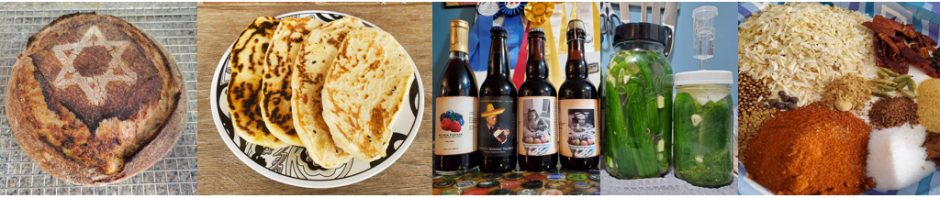
Catching up: Over the past 6 months I’ve baked sourdough pretty much every week. In doing so I’ve settled into a routine that has allowed me to always have nourishing whole grain forward sourdough bread available for my family at all time. Most weeks I bake 4 loaves split into 2 recipes, one sandwich bread recipe and one crusty loaf recipe. However, I’ve recently swapped the crusty loaf recipe for sourdough focaccia a couple times. Lastly, as you’ll see in this video, I also make a sourdough pizza in my Ooni outdoor pizza oven when time allows.
Recipe formulation: When I first started my sourdough baking journey I relied on online baking calculators to make sure I was creating recipes that would actually translate into the flavor profiles etc that I was envisioning. However, over time experience has taught me to trust and apply my mastery of baker’s math, time tested baking and starter management processes, and culinary knowledge. Doing so in order to come up with recipes that most of the time come out quite close to my expected end result.
With sourdough baking being a constant learning process I’ve realized that it’s not always going to the be the case where I come up with recipes on the fly when feeding my starters and weighing out ingredients on Wednesday nights. In fact, I’ve recently gotten back into planning out recipes days in advance and doing research to find similar recipes to put my own twist on. This has allowed me to dial in my percentages and be more ready for adjusting recipes over time.
Using recipes as guides: Even after I find a recipe that I can see myself baking, I often do some additional research to in order to read up on and decide whether I want to include additional elements in my final recipe (formula). Doing so allows me to keep in mind that recipes are best when used as guides rather than a rigid set of ingredients and instructions. After all, one’s sourdough starter is a living culture, each flour has its own protein level and absorbency potential, and every kitchen (home) has its own temperature and humidity level. This being said, when adapting a recipe to factors such as one’s tastes, starter characteristics, and baking experience level. It is important to adjust ingredients and variables in a manner that does not compromise the basic techniques and/or ingredient percentages outlined in the recipe’s instructions and introductory paragraphs. For example, one can use their 100% hydration starter instead of a stiff starter. However, one should use the same percentage of starter and pay attention to how his or her bulk fermentation rate and dough temperature differ from those listed in the recipe being used.

My base sandwich loaf recipe: A glimpse into my recipe formulation and baking process/es
Key Factors: Lately I’ve been using 60% whole grain flours in this recipe to add more flavor and nutrition to my loaves. At this percentage there’s enough of a base of bread flour in order to still include a variety of whole grain flours and avoid a dense crumb texture. Next, after some trial and error I decided to stick to 10% each sugar and fat in order to get the crumb text I want no matter which flours I use and not have to include eggs. Lastly, for the purpose of getting to know my loaf pans and placate my own anxieties. I decided to start my recipe with 530-550g of flour to loaf. Doing so in order to ensure I end up with the size loaves that I prefer after taking into account dough loss throughout the dough preparation process (mixing through shaping).
Recipe Breakdown: While it’s important to scale up or down to your loaf pans I’ll share my recipe as 500g of flour per loaf for two loaves or 1000g total of flour.
600g Whole grain flour blend (for example, 100 rye, 200g spelt, 300g whole wheat) (60%)
400g bread flour (40%)
200g starter 20%
23g salt (2.3%)
758g water (78% including water in starter/levain)
100g Demerara sugar
100g olive oil

Process: Mix the flour, water, salt, and starter together. Then pour in the sugar and oil and mix in. Ferment according to your established process and then shape as you would batard (oblong) loaves . Eggwash: I brush on one layer of eggwash before scoring and then another layer after removing the steam pan. Put a pan of hot water under the loaves for the first 25 minutes. Bake at 375F for 45-50 minutes (because my oven is in celsius I bake at 185C with fan) or until the internal temperature of each loaf reach 200-205F (93-95C). Let cool in pan for 5 minutes and then transfer to a cool rack to fully cool before slicing. If stored well (I wrap my loaves in aluminum foil and then put them in a zip tock bag).










 thebrewedpalate.com
😉 What – no beer in your bread???? That’s still my stick – I need beer instead of water, and I never add sugar to my bread. I have added a tad of honey before or today I actually added molasses, but that was for testing someone else’s recipe.
I do the same thing as you, though when it comes to using recipes. I usually just read them and then adjust to my liking and my flour. When using bread flour, I’ve been using the high-extraction flour I get from a local miller (it’s really thirsty!), but most of my flour is freshly milled. I use a mix of red & white wheat, spelt, rye and sometimes triticale. And I also started added sprouted grain (about 30g dry make about 60g sprouted wet) to my starter when I mix the levain. I put the sprouted grain in the mini Cuisinart, crunch it up somewhat, then mix that with water & flour for my levain. That makes a supercharged dough! I got the Idea from Rudy from Instagram. Check out his website Recipe Sprouted whole wheat bread – Baking Bread NL https://baking-bread.nl/blogs/recepten/recipe-sprouted-whole-wheat-bread . This also works as a pan bread.
Happy baking! Oh, btw – I got a new kitchen and a Miele steam oven now. 😉
Sabine