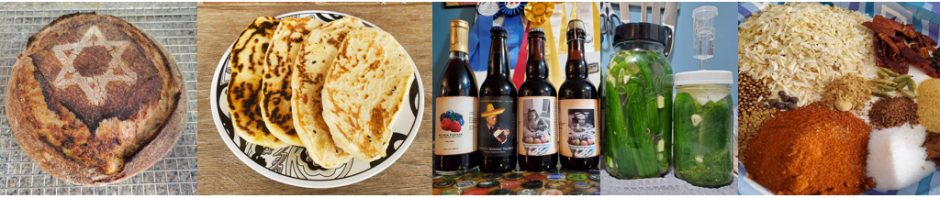
Since my last update I’ve continued with two of the three projects that I shared my progress on (sourdough bread and ethnic (international) cooking), and took on one fortunate additional project. I was able to make my first batch of homebrew after taking a four month unplanned break from doing so. On Sunday, June 21st I finally made my first Ethiopian tej mead and am looking forward to sharing updates on its progress with you in future posts.
Now, why did I call this post “living food?” While ethnic or spice driven cooking does not contain living yeast like my two sourdough starters (aka Randolph and Mortimer). The spices, herbs, and vegetables used are full of healthy and sustaining nutrients and leave me feeling like I’m truly in touch with each ingredient that I choose to cook with. Furthermore, in recent years old world food preparation and cooking methods have defined much of what it means to be a “foodie.” Living food is defined by fermentation, a process which contributes to the creation of a plethora of aromas, flavors, textures, and probiotic benefits. In other words, it unlocks the life within natural ingredients and allows our bodies to run efficiently and sustainably. Lastly, getting to know each element of what it takes to get the most of each ingredient that we cook with can only increase our appreciation for the end results on our plates and in our glasses. L’chaim to living food and drink!
Current Projects:
Sourdough bread
Since baking my first two sourdough loaves on May 10th I’ve baked nine more loaves. I’m happy to say that despite some steps and end result characteristics not fully meeting my expectations in some cases. All of the loaves looked and tasted great. In addition, to continuing to experiment with different percentages of dark rye and whole wheat flour, I’ve started baking with spices, herbs, and vegetables. As shown in the picture below, I’ve baked an olive/black pepper/lemon zest boule, sourdough focaccia with red onion, green olives, and grape tomatoes, and two roasted garlic/fresh thyme boules. Next, on Wednesday June 24th, I recieved my Brod & Taylor folding proofer and slow cooker after a two month wait due to high demand. I’m hoping it’ll help me dial in my bulk fermentation times and achieve better results overall. In terms of upcoming loaves, I recently purchased loaf pans in order to bake sandwich bread and caraway seeds and a second batard banneton so I can bake two dark rye batards at a time.
Ethnic Cooking
Positive reviews on an Indian meal that I cooked for a friend and his wife on May 25th led to the creation of Make It Kosher meals, a home catering service focusing on kosher ethnic meals for those living in my local area. Reviews have been great and I’ve been able to keep this side gig on a schedule that works well for me and my family. So far all of the menus have been Indian dishes whose recipes I’ve found online and adapted to be kosher (e.g. replacing yogurt with coconut milk). Chetna Makan’s YouTube channel, website, and books have continued consistently providing me lots of great recipes to cook for my menus and for my family. I’ve also purchased a book entitled 660 curries and bounced ideas off friends who also enjoy Indian cooking. In addition, to my cooking of Indian dishes, I’ve started getting back into cooking both Ethiopian and Mexican dishes. After making a fresh batch of berbere spice mix, I made both injera flatbread and a Ethiopian beef stew. The following weekend I decided to make Mexican birria by slow cooking beef in a chile and tomato mole-esque sauce. Over the summer I plan on cooking more Mexican and south and cental American dishes in order to both broaden my horizons and further improve my cooking skills.


Homebrewing
As described above, I made my first batch of mead (or homebrew for that matter) in about four months on Sunday, June 21st. Ever since I started watching Mark Weins’ food travel videos on Youtube. I’ve wanted to make a batch of Ethiopian tej mead. I used a combination of clover and buckwheat honey along with the traditional gesho root to create the must. I then let the wild yeast on the gesho root twigs settle into the honey must for 2 days before adding 4g of Safale US-05, a clean fermenting yeast. Within 24 hours more visible signs of fermentation kicked off and this 3.25 gallon batch has been fermenting nicely ever since. I plan on taking my first gravity sample at the two week mark. By then I should know whether it’s time to wrack the mead off the yeast and gesho root.


Cheers!


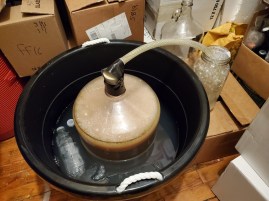 Start of fermentation: Because I’d be brewing my First Fruits quadrupel the following day I decided to ferment this beer using the swamp cooler method in my brew closet. Rehydrating the yeast helped fermentation start within 12 hours of pitching. Surprisingly though there hasn’t been much of a krausen on this beer. There’s evidence of a krausen on the carboy, but since bigger CO2 bubbles cleared there hasn’t been any krausen. Because I haven’t used this yeast before I’ll have to wait until I take my first gravity sample to find out why a persistant krausen didn’t form (being a low gravity beer could be the cause). Notably, when fermentation was at high-krausen (most active), a wierd white substance form on the edge of the blow off jar twice. Once fermentation calmed down it did not come back.


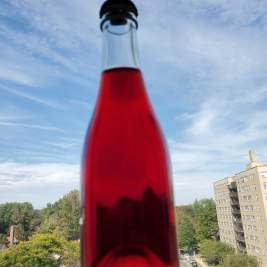


 Next, came my two “baby” beers aka the beers that I brew in honor of each year of my kids lives. First was my daughter’s Belgian quad aka First Fruits quad. For this year’s vintage I went back to my original recipe and split the batch after primary fermentation. The first half was bottled as the “base beer” and the second was aged on oak cubes and bourbon for 28 days. Unfortunately the oak and bourbon did not come through in the finished beer, but both versions are tasting great. Next, time I’ll age the beer on the oak for as long as is necessary to achieve my desired flavor profile
 My most recent two beers came from the same mash… Instead of brewing my usual summer beers aka dry hopped saisons I decided to use one mash to brew 2 kveik pale ales. The first which I named Kveiky! was hopped with galaxy and nelson sauvin hops and fermented with Omega Yeast Lab’s Hornindal strain. It came out tropical and smooth. So while the lemon-lime flavor that I loved in gravity samples quickly faded, I am happy with the beer overall. The second beer aka Dry Heat? pale ale (Jeff Dunham fans may catch the reference) was hopped with citra, azacca, and cashmere hops and fermented with OYL’s Voss strain. The beer turned out citrusy with great melon undertones and ended up being the beer that I prefer drinking on a regular basis.
 Beyond beer I’ve also immersed myself in the world of home mead making. Taking inspiration from Melovino meadery (which is a 20 minute drive from my home), the Modern Mead Makers Facebook group, and the mead subreddit. So far I’ve made 5 meads…1. Maiden Forage- made with mixed berry and clover honey this mead came out quite tasty and I’m looking forward to opening aged bottles. 2. Tempered Decadence– made with dried figs and dates along with avocado blossom and wildflower honey…This mead needed to be tempered with 3 quarts of wildflower traditional in order to not be cloyingly sweet. Deemed a “dessert mead”, it is still more sweet than some may prefer, but I’m happy with the flavor profile and will use the lessons that I learned while making this mead for future iterations of its recipe.
  3. Duvdivnei Rimon (Hebrew for Cherries of Pomegranate More contextual than literal in meaning) – I topped off the aforementioned wildflower traditional mead with both tart cherry and pomegranate juices. Then after re-fermentation was done I stabilized and back-sweetened the finished mead with orange blossom honey. 4. Zing of Nostalgia – this mead is still “in progress” – a base of strong green tea (the water) had orange blossom and fresh ginger added. An initial gravity sample did not have enough ginger character and therefore I racked the mead onto more ginger and it now needs to be racked onto more tea, back-sweetening honey, and lemon zest. 5. Bies Please! – this mead is still in progress- 15 lbs of clover honey have been fermenting with 13 lbs of organic blueberries since Wednesday 8/7/19.
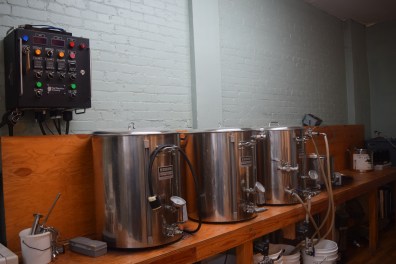 Ever since I fully transitioned to all grain brewing in November 2013,
 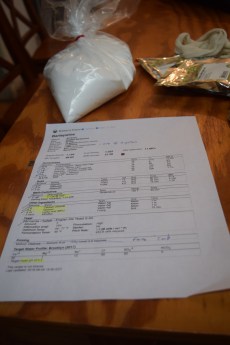 On August 6th I headed to Bitter & Esters for brew day with Jack. Whilst weighing out and milling the grist I learned that due to its density, milling Maris Otter barley twice can improve mash extract yield. Moving along, brew day went quite smoothly until we took an original gravity reading and realized that we’d collected too much preboil wort. In order to compensate for the missed gravity points Jack and I decided that we’d add dextrose to the fermenting beer once primary fermentation had calmed down a bit. So while the realization of the missed gravity points was anxiety provoking, adding the dextrose thankfully proved to be a good decision.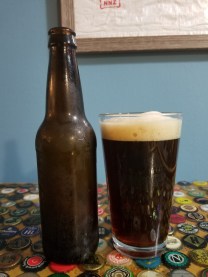
 Extra “Precious” Bitter 2.0
 Drop Kick Nate Saison
 Lion’s Roar Pilsner 3.0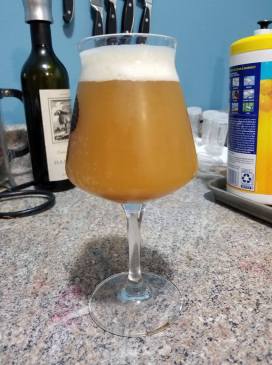










 thebrewedpalate.com