Why 49.5? I’d rather film some quality footage for you guys for HBW #50. So for now please enjoy this quick update on my pilsner. Cheers!
OG: 1.054 FG: 1.007 = 6.2% ABV
Why 49.5? I’d rather film some quality footage for you guys for HBW #50. So for now please enjoy this quick update on my pilsner. Cheers!
OG: 1.054 FG: 1.007 = 6.2% ABV
Disclaimer: My usual audio recorder broke a couple days before this event so make sure to raise your volume as needed. Thank you!
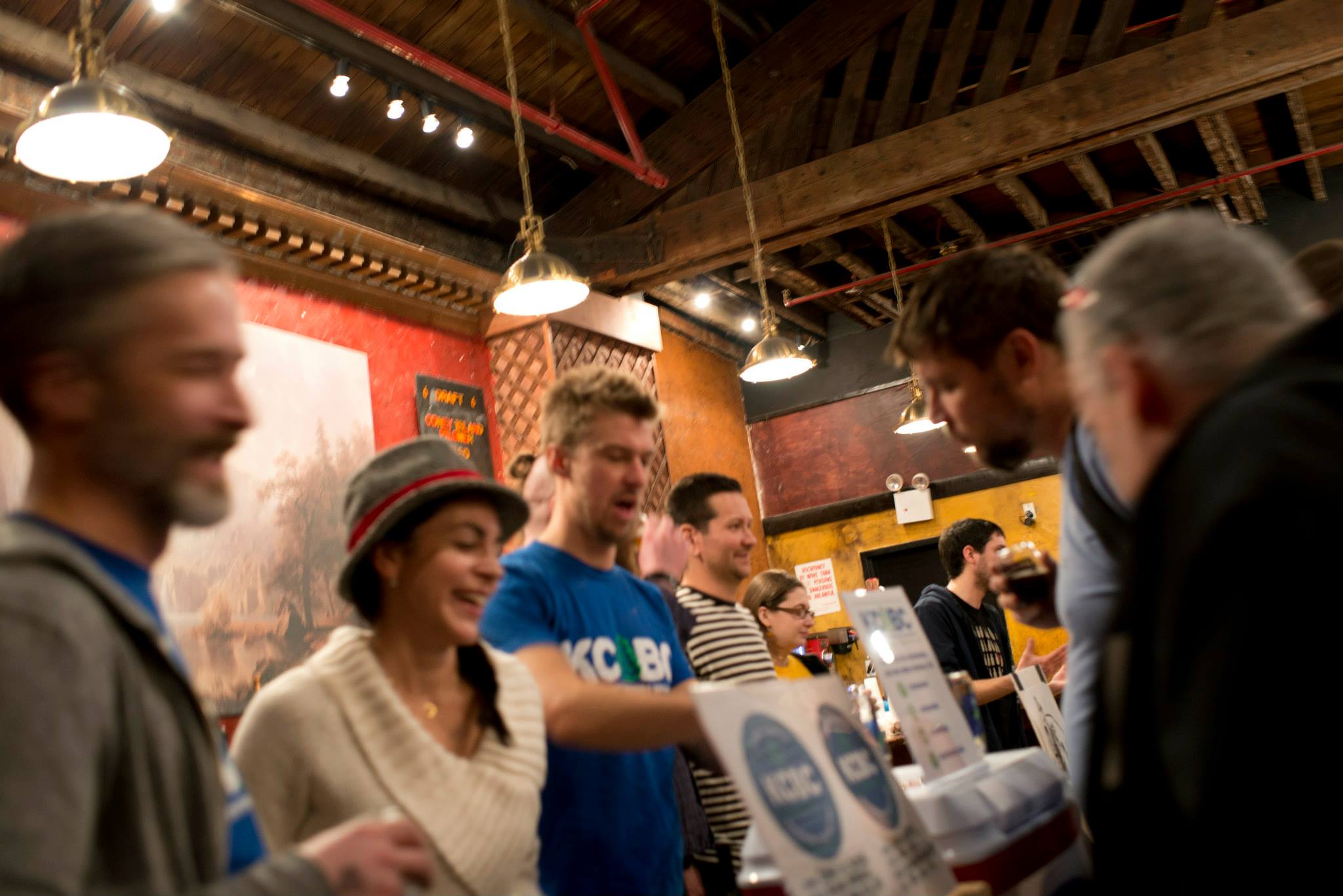
 On Sunday, February 22nd I went to the Bell House in Brooklyn for Brewnity, an event featuring 50 plus home-brews from NYC’s homebrewing clubs with all proceeds going to City Harvest, a charity which rescues food from local restaurants etc. in New York City and distributes it to those in need.
Although I had tried lots of amazing beers brewed by New York City homebrewers before this event, there were a fair amount of beers there that truly blew me away. To mention a few…I tried a great kettle sour and Saphir hopped Vienna lager from the Brooklyn Brewsers club, a great imperial stout by Ed Kurowski of the New York City Homebrewers Guild, a rye lager from the Bitters and Esters SWAP Team called Walk In The Park, and a Belgian dubbel fermented with brettanomyces by Shannon Bowser that was my favorite beer of the event.
 After an amazing performance by the Brewnity Brewisicians (click here for a video playlist of their songs filmed my Carla Coria). I filmed a bunch of interviews of key people in the NYC homebrewing community, three of which are included in the above video. The remaining two interviews that I filmed were of Zack Kinney (Kings County Brewers Collective) and Sean Torres (Pour Standards, Staten Island). Of note Zack Kinney along with professional brewers Tony Bellis and Pete Lengyel plan to open a production brewery in Brooklyn by September of this year. Also, Sean was impressed by how many at-door ticket sales there were considering how many people were expected to attend based on ticket sales prior to the event. Having organized a bunch of big homebrewing events of his own in Staten Island and Brooklyn it was great for him to have his club pouring beers at such a collaborative and well organized event. One of the reasons for not including the aforementioned interviews was due lack of decent quality audio. Hence, the subtitles in the above video during my interview of Bitter and Esters co-owner John LaPolla (transcribed below).
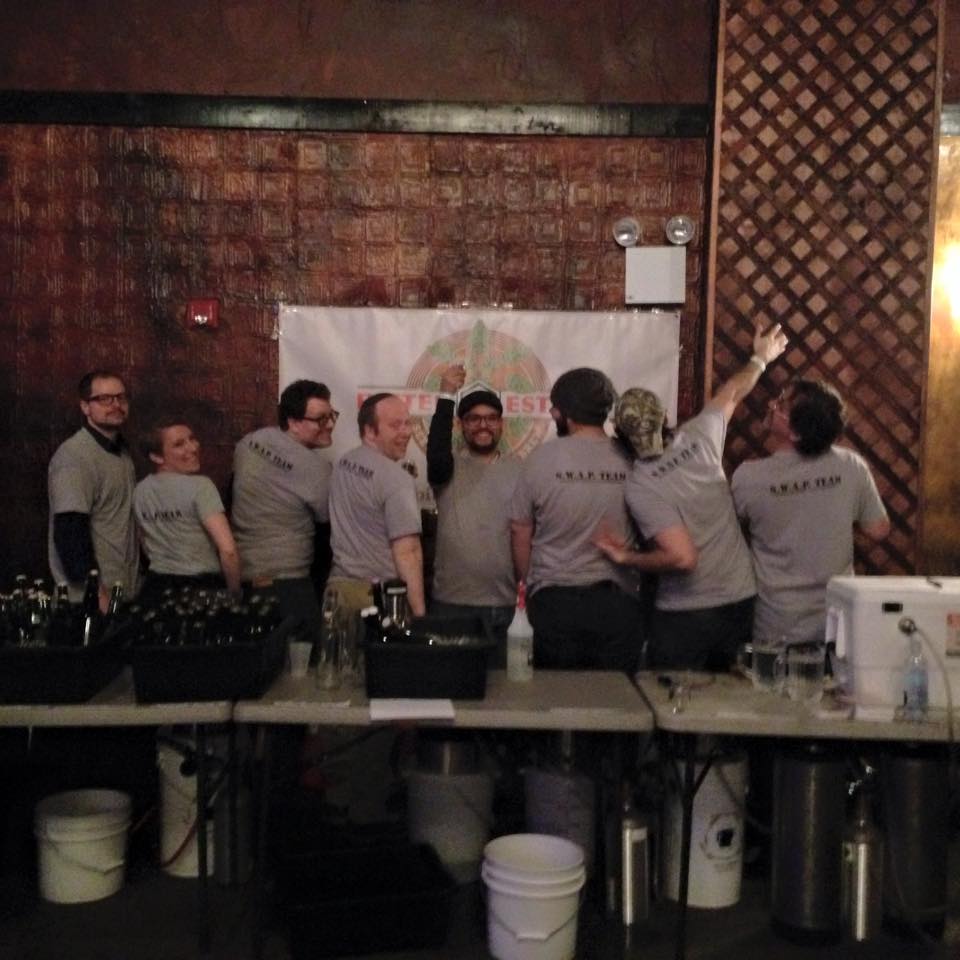 Overall I feel that this inaugural Brewnity event was a major success for two reasons. First, it brought all of the major NYC homebrewing clubs together under one roof to chat and enjoy each other’s beers. Secondly, it brought to light just how creative, diverse, and unified the New York City homebrewing community is nowadays. I feel that this sense of community inspires local homebrewers to be continuously motivated to brew the best beers that they can. I am definitely looking forward to experiencing the continued growth of homebrewing in NYC and to future Brewnity and collaborative homebrewing events.
Cheers and Keep on brewing!
Interview with John LaPolla:
TBP: Ok so I’m here with John LaPolla, one of the owners of Bitter and Esters my go to homebrew shop in New York City. So how’s it going for you here at Brewnity, what’s it been like (for you so far)?
JL: It’s been great, its ‘s much fun. All the proceeds go to City Harvest and it’s great for that, but I can’t believe the amount of people that are you, the quality of the beer that’s happening, the camaraderie, everyone knows everybody. It’s been great and really really fun…How about you? Are you having a good time…
TBP: It’s been awesome. Yeah.
JL: You! Everyone wants your beer, everyone’s asking for Barry’s beers. I love the swap and the great job that the SWAP Team is doing.
TBP: For you as a homebrew shop owner, what’s it look to see homebrewing being so big (prevalent) in New York City nowadays?
JL: It’s (homebrewing) a passion. So to see that passion take off like that (this). How great is that? There’s love in the air, people are having a great time, the beers are f*cking great, that’s amazing, the beers are great.
TBP: So now that homebrewing (in NYC) has been (seen) such a success in New York City, how do you see events like this contributing to the community?
JL: Well, I think it’s going to open the eyes of people that aren’t part of the community to see what community we have. I’ve had a lot of people have to come up to me and say, “I’ve never heard of your swap. I’d like to be part of that swap.” and “I didn’t know this was happening. I didn’t know that was happening.” So the more people know about the beers that are pouring and that (the) fact that they can make it (them), our message is complete, right? Like I said we knew each other as homebrewers around here, but I’ve told a lot of people here that there’s a crazy amount of great beers here that I’ve never had before.
TBP: Right. So I’ll wish you cheers to the expansion of our amazing homebrew community here in New York City.
JL: Hell yeah!
 After not posting a Homebrew Wednesday video last week I thought it would be cool to start with something interesting and unique i.e. to open with footage of me pouring a homebrew Black and Tan consisting of my pilsner and breakfast stout. However, both of my attempts to do so were unsuccessful. Hence, the above title.
Video Summary: After some updates on my recent homebrewing experiences I share some footage of me wax sealing my more recent batch of English barleywine and my recently brewed pilsner’s fermentation.
Check out my pilsner brew day and lagering process videos and posts: Brew Day Lagering Process/Schedule
Cheers!
 While at Brooklyn Brewery for the Wild Horse Porter release I took some time to catch up with brewmaster Garrett Oliver and discuss the beer and the growth of Brooklyn Brewery, NYC craft beer, and American craft beer as a whole. Having known Garrett for five years my interviews with him tend to feel more like friendly chats than a formal interviews. He’s never afraid to show his spunky and classy personality and always seems genuinely excited to see and catch up with me when I see him at events like this one. As someone whose been a major part of the international craft beer industry / community for over 20 years the appeal of his perspective on craft beer has never waned. For Garrett it’s all about capturing the experiences that are created by beers that have been crafted with a combination of quality ingredients and passionate inspiration and making those kinds of experiences as approachable as possible. In turn as Brooklyn Brewery has continues to grow he has plans (e.g. a new pilot system) to creative a bigger variety of craft beer experiences for his ever growing receptive audience. If you have access to Brooklyn Brewery’s beers I’d recommend drinking one while watching this video so you can experience Garrett’s passion on a more in depth level. Cheers!
On Monday, February 9, 2015 I headed down to Brooklyn Brewery for the release of Wild Horse Porter, the newest addition to their Brewmaster’s Reserve series of beers. In line with the previous Brewmaster’s Reserve beer release events that I’ve been to, brewmaster Garrett Oliver quieted the crowd down about an hour after the start of the event and spoke about what inspired him to brew Wild Horse Porter. However, his speeches aren’t like any other beer description, they are full of personality and passion. To quote Gabe Barry, a taproom manager at Brooklyn Brewery, “it’s not breaking news that Garrett is a mod squad trend setter, but his words this evening reached prolific marriage of history and education while vibe checking the mood of the entire evening.” As such, I hope you enjoy the above video as much as all in attendance did and then go out grab a pint of this unique porter…Are you ready for the funk?
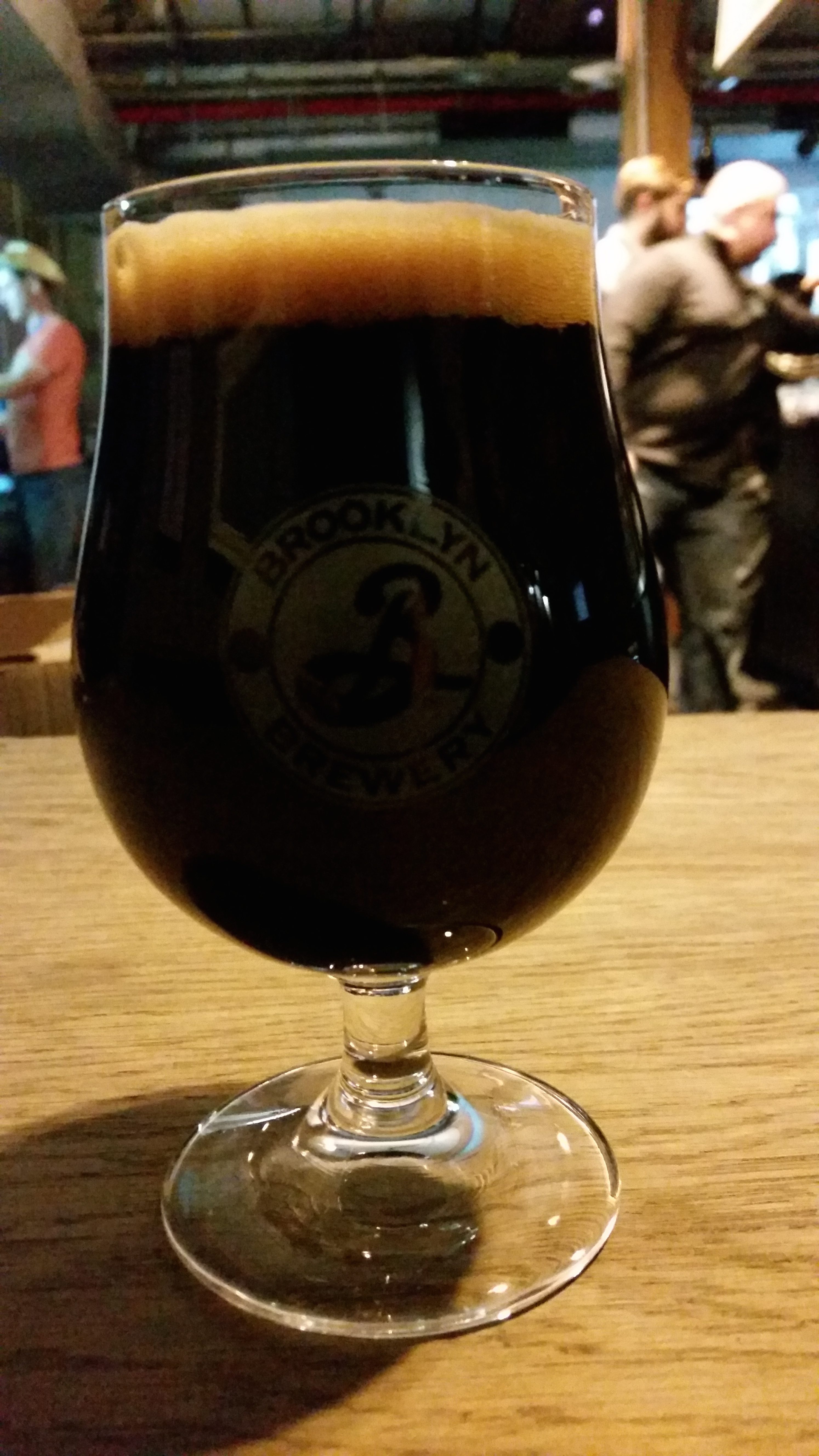 BREWERY’S DESCRIPTION: Wild Horse Porter re-joins us as a limited edition draft-only Brewmaster’s Reserve release. The full Brett fermentation* strikes fast as hay-forward funk wafts from the glass, preceding flavors of dark chocolate, coffee, fresh fruit and caramel. It’s a complex, full-bodied beer that is still approachable to even those unfamiliar with Brettanomyces. When you encounter it, take your chance to ride on the wild side with us. Wild Horse Porter won’t be around for long. *Brooklyn Wild Horse Porter is an English-style porter that was fermented almost primarily with Brettanomyces yeast, then finished with house ale yeast. Brooklyn Wild Horse Porter hit taps on February 9th at a special event at the Brooklyn’s brewery in Williamsburg, Brooklyn and will be available on draft in the coming weeks.
Though I did not pick up on as much of the porter characteristics as I would have liked, I found Wild Horse Porter to have a great brettanomyces character and notes of toffee and cherry that reminded of a lot of the American Wild Ales that I’ve come to enjoy since developing a taste for funky and sour beers. For such a nuanced and ‘big’ beer it was quite drinkable. I could see myself enjoying a couple glasses full with desserts such as chocolate cherry pie and dark chocolate brownies. If you have yet to embrace the funk, Wild Horse Porter is definitely an approachable beer that will get you to that point. Cheers! My Rating: 7.5/10
Up Next: An interview with Garrett Oliver about Wild Horse Porter and the growth of Brooklyn Brewery, NYC craft beer, and American craft beer as a whole.
EPISODE SUMMARY: A tasting of my Hop Cholent Double IPA and footage of my recent keezer upgrade/s.
Now that Hop Cholent Double IPA is kegged and on tap it’s time for a tasting and some reflections on what I learned from the experiences of brewing a double IPA with 13.3oz ounces of high alpha percentage hops. In the above video I share my thoughts on my first full glass, discuss some of the challenges that I had with carbonating the beer, and show you my current keezer set up which allows me to serve two beers while carbonating a third. The following are some key lessons that I learned from brewing this lupulicious ‘stew’ of a beer.
 The Lupulin Threshold Shift – “That we get used to things, or to build up a tolerance, is central to the human experience, albeit one not considered consciously until you’ve gone to a party, finished a bottle and a half of vodka without getting a buzz. You then realise you’ve developed a “tolerance” (and also a problem).”
“It’s no surprise then that people, beer geeks in particular, are capable of building up a tolerance to hoppiness and bitterness. For beer enthusiasts, there is more buzz around hoppy beers than is probably healthy and the push for ever increasing metrics – IBU, ABV, Untappd checkins – means that as your beer journey progresses, your palate is likely to be challenged with increasingly powerful flavours, causing you to undergo a lupulin threshold shift.”
– Full Article: http://drunkenspeculation.com/2014/03/12/wtf-is-a-lupulin-shift/
As mentioned in this past Friday’s update video this week’s HBW video consists of footage of me taking a gravity sample, giving my tasting notes on it, and then dry hopping my Double IPA. Enjoy and Happy Homebrew Wednesday. Cheers!
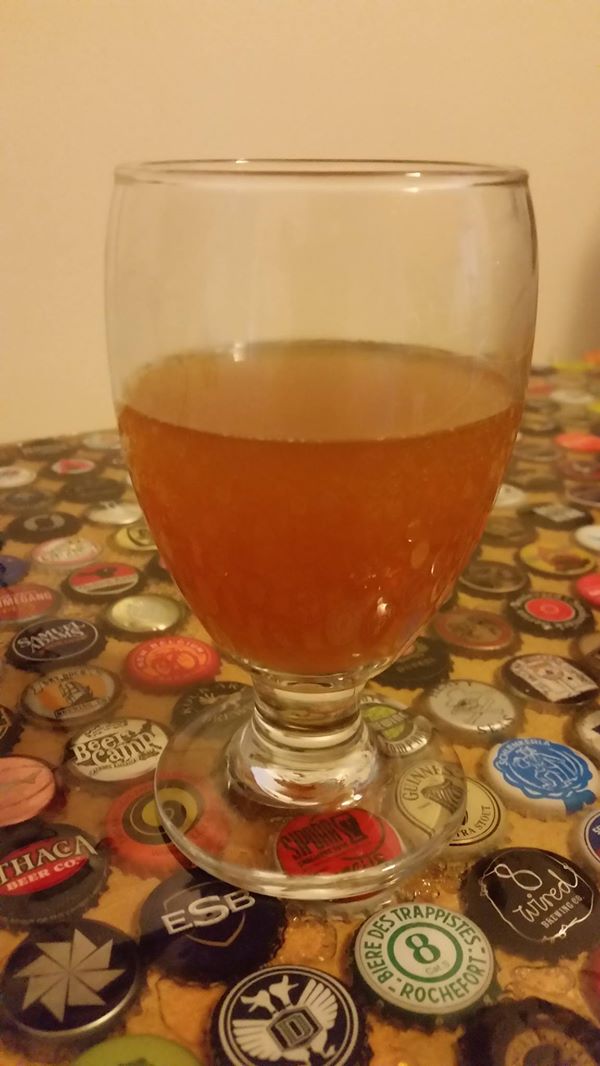 Dry Hop Regimen
El Dorado (1.30oz) – El Dorado® is a special dual purpose variety with exceptional aroma qualities and high alpha acids. It was developed by CLS Farms, LLC in 2008 and released in 2010. El Dorado® consistently elicits responses of fruity notes, specifically tropical fruit flavors. Other fruit notes offered have been pear, watermelon and stone fruit. Alpha Acid 14-16%, Beta Acid 7-8%
Citra (1.25oz) – Citra® (HBC 394) is an aroma variety that was released in 2007 by Hop Breeding Co. Ltd., a joint venture between John I. Haas, Inc. and Yakima Chief Inc. It has fairly high alpha acids and total oils, and it imparts a distinctive citrus character to beer. Alpha Acid 11-13%, Beta Acid 4.5-5.5%
Amarillo (1.20oz) – Amarillo® (VGXP01 cv.) is an aroma variety of recent origin, discovered and introduced by Vigil Gamache Farms Inc. in Washington State. It is most often used as a late kettle or dry hop addition to American style Pale Ales and IPA’s due to its signature aroma characteristics. Alpha Acid 8-11%, Beta Acid 6-7%
Centennial (1oz) – Centennial is an aroma variety that was released in 1990. It was derived from three-quarters Brewer’s Gold with minor contributions from Fuggle, East Kent Golding and others. It is among the most popular varieties for U.S. craft brewers and is sometimes referred to as a super Cascade. Alpha Acid 9.5-11.5%, Beta Acid 3.5-4.5%
Simcoe (1oz) – Simcoe® (YCR 14 cv.) is a bittering/aroma variety bred by Yakima Chief Ranches and released in 2000. It is used for its bittering properties and aroma qualities that impart a unique, pine-like aroma. It is very popular in American style Ales. Alpha Acid 12-14%, Beta Acid 4-5%
All of the above information was taken from this usahops.com .pdf
Dry Hop Process: 5 days at 64-66F (18-19C) followed by step down cold crashing i.e. lowering the beer’s temperature by 5 degrees F every 9-12 hours for 2.5 days.
On Wednesday January 14th I went to Mug’s Ale House for the january meeting of the Malted Barley Appreciation Society. The evening’s guest speaker was Flagship Brewing Co. head brewer Patrick Morse. In this video Patrick talks about the history of Flagship and the three beers that he brought for the meeting’s attendees to enjoy.
 As one of NYC’s newest craft breweries Flagship in my opinion has a lot of potential due to the passion and experience level of its brewers. However, after trying three of their beers I was left with the impression that they’re still in their initial growth phase i.e. they’ve been using a limited amount of yeast strains in order to save money and keep their beer production pipeline going. Over time I hope that they move away from this method in order to best capture the flavor profiles of the beer styles that they produce (e.g. the round malt and ester qualities from an English yeast strain for their Wee Heavy).
With all the new NYC breweries getting their feet wet in the craft brewing community it’s been great to experience the feeling that NYC finally has it’s own local craft beer culture made up of great craft breweries, brewpubs, and craft beer bars. I sincerely hope that all the breweries that have recently opened and those that will be opening in the coming year or so will be successful and work together as they establish NYC’s mark on the US craft community / industry.
Cheers!
As promised in my last HBW video. Here’s the full brew day video for my Hop Cholent Double IPA.
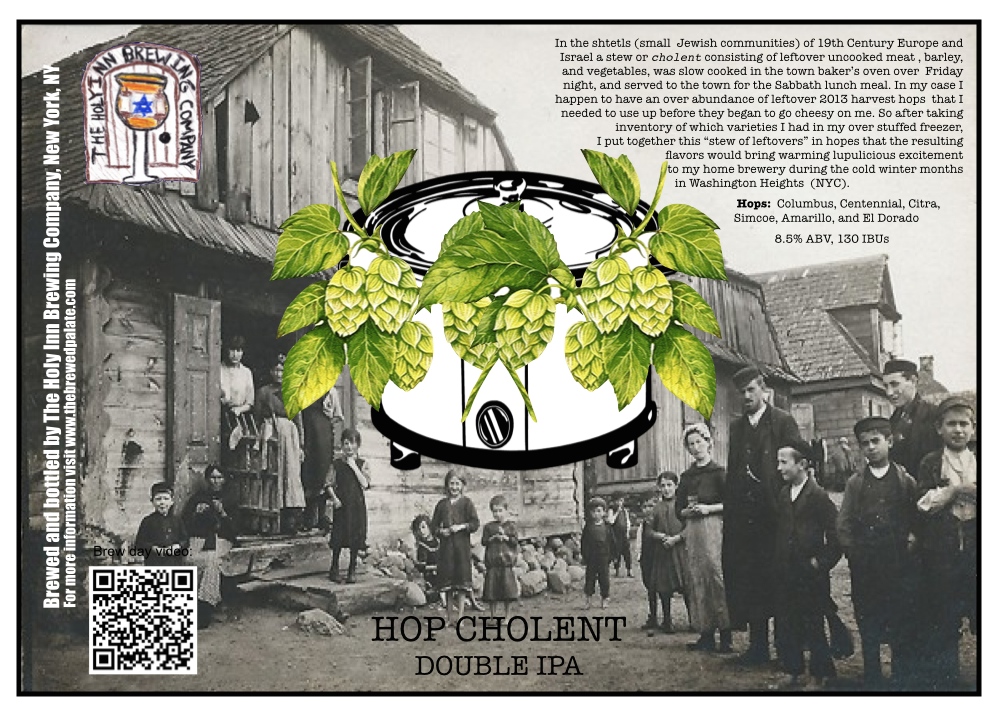
Inspiration behind this beer’s name: In the shtetls (small Jewish communities) of 19th Century Europe and Israel a stew or cholent consisting of leftover uncooked meat , barley, and vegetables, was slow cooked in the town baker’s oven over Friday night, and served to the town for the Sabbath lunch meal. In my case I happened to have an over abundance of leftover 2013 harvest hops that I needed to use up before they’d begin to go cheesy on me. So after taking an inventory of which varieties I had in my over stuffed freezer, I put together this “stew of leftovers” in hopes that the resulting flavors would bring warming lupulicious excitement to my home brewery during the cold winter months in Washington Heights (NYC).
Hops: Columbus, Centennial, Citra, Simcoe, Amarillo, and El Dorado
OG 1.080 Target FG 1.016 = 8.5% ABV, 130 IBUs
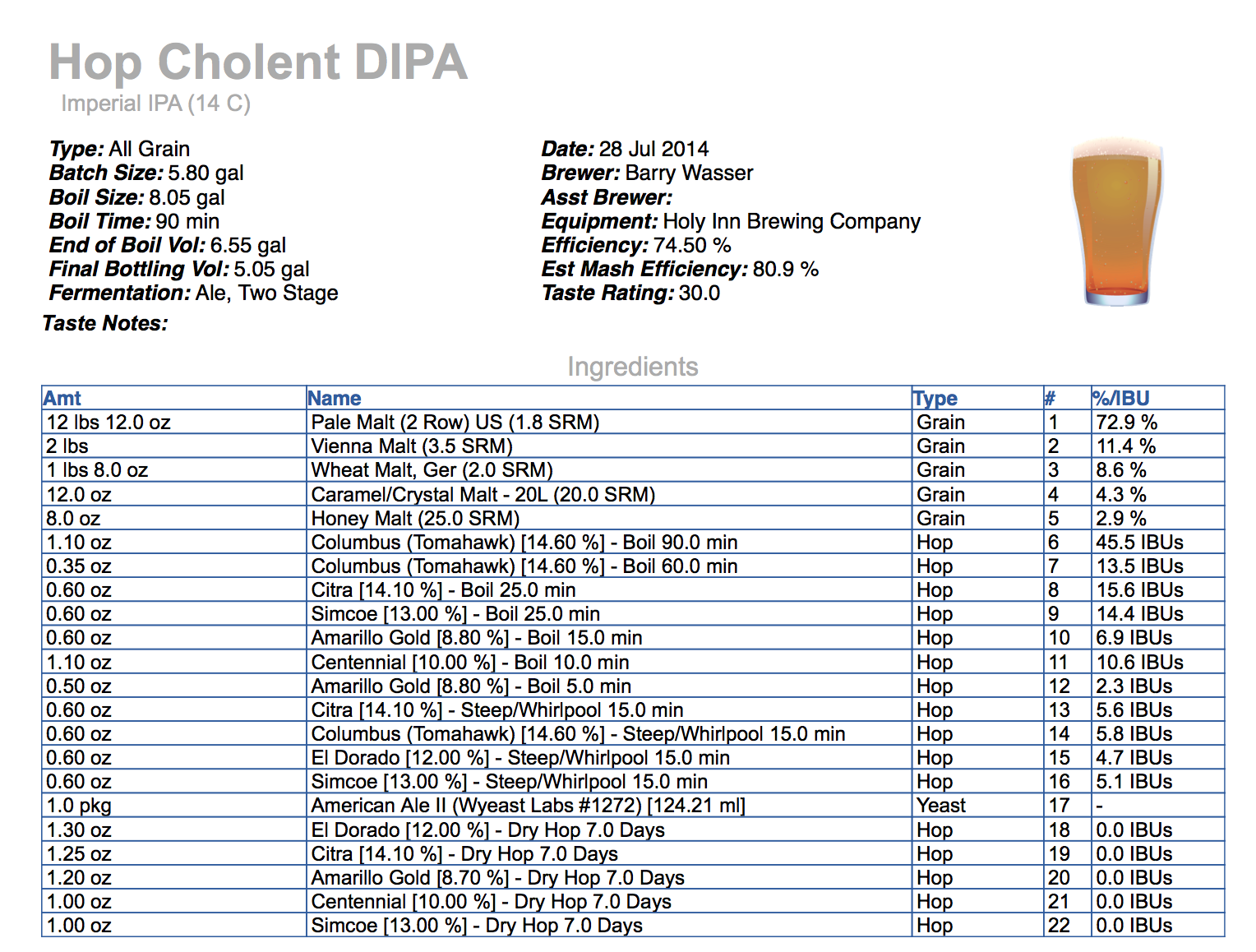

Not Shown: I tossed in 0.30oz of Amarillo while chilling the wort.
All hops were provided by Yakimavalleyhops.com for use in my beers and to help other homebrewers learn how to best utilize the ever expanding variety of hops available nowadays. Please check out their website for great prices and truly unparalleled selection of hop varieties.
For this week’s Homebrew Wednesday video I’ve decided to introduce a new “approach” or format that I’ll be using for HBW videos. Meaning, I’ll start with a detailed description of recently utilized homebrewing techniques and any tips that I’ve learned or come up with since my previous HBW video and then share any footage of recent homebrewing and/or craft beer experiences that I’ve filmed since my previous HBW video. All with the goal of helping my fellow homebrewers continue to learn how to brew the best beer that they can. Please let me know what you think of new this approach / format in the comments section below.
Cheers and Happy Homebrew Wednesday!!!
Show Notes:
 Featured Homebrew: Can O’ Corn cream ale from Dan Edelman or Jew Brew – Funky Farm Brewery. Having not tried that many cream ales (professionally or home-brewed) I was a bit puzzled by this beer once it’s initial floral and citrus hop aroma faded. The flaked maize character at times reminded me of diacetyl, which was never offensive but did take away from my enjoyment of the beer. From what I’ve heard traditional cream ales are supposed to have similar flavor profiles to adjunct lagers, but have more sweetness upfront and a bit extra bitterness in the finish. By choosing of Cascade hops for this beer Dan was able to achieve both of those characteristics. I just wish the cascade flavor came through more and masked some of ( or blended more with) the sweet corn aroma and flavor. If you’ve brewed a cream ale before please comment below with what flavors and aromas you aimed for and or achieved.
 Hop Cholent Double IPA Brew Day Thoughts: This past Sunday I brewed up a double IPA using a bunch of 2013 hops that I needed to use in order to make some room in my freezer for 2014 hops. I’ll be posting a separate brew day video and blog post about the recipe etc.. In this week’s HBW I discuss my use of Gypsum and Calcium Chloride to accentuate hop character and provide balance to the beer. While discussing this beer’s fermentation I talk about my use of Fermcap-S to control the amount of foam etc. that was being pushed through the blow off tube and the drop per gallon rate needed to do so.
Gypsum – “The most common way to add sulfate is by adding gypsum.” “Sulfate can make the hop character more assertive, or dryer, but many brewers find at very high levels it reduces the quality of the bitterness and can taste minerally. In relatively moderate amounts (200-400 ppm) it is said to increase the ‘linger time’ of the bitterness, and accentuate the hop flavor and aroma. However, many Czech and German lager brewers avoid sulfates entirely, because they find that it ruins the soft noble hop character of Pils and Helles style beers” (Water, pg. 148).
Calcium Chloride – “Chloride is a common addition for water and beer. It provides a rounder, fuller, sweeter quality to the malt character and the beer. It can be added as CaCl2 (Calcium Chloride) in order to add calcium to lower the residual alkalinity or it can be added to the boil as CaCl2 or NaCl (use non-iodized salt, free of anti-caking agents) in order to round out the malt character.” “Concentrations greater than 300 ppm can have negative effects on beer clarification, body, and colloidal stability. Concentrations above 400 ppm are said to have adverse effects on beer flavor. Fermentation rate is affected when concentration exceeds 500 ppm. We are recommending that the concentration in mashing water not exceed 200 ppm” (Water, pg. 149).
Tips of the week:
1) Beer Smith Recipe Archive – This past Monday night I was looking over my Hop Cholent double IPA recipe an accidentally clicked the delete icon when attempting to close the program. After a moment of panic I copied and pasted the version of the recipe that I copied to my Beer Smith cloud folder for when I went to pick up the ingredients for the beer. Then the next morning I decided to attempt to find a way to retrieve the deleted version of the recipe and was pleased to find it after clicking the View drop down menu and clicking Recipe Archive. So if you’re ever in this situation now you know where to look.
2) CAUTION – I accidentally knocked over my 5000ml erlenmeyer flask add its neck broke off. It was literally on the floor and I knocked it off at just the right angle etc. to ‘shatter’ its neck. So while most of us homebrewers think about carboys when discussing being careful with glass brewing equipment. Please remember to place your erlenmeyer flasks in a place where they won’t get knocked over.
Footage:
1) Installation of my Perlick faucets and pouring my first glass of beer from them – I discuss the 630 SS faucets that I purchased from beveragefactory.com, how I sanitized my new beers lines, and then pour my first glass of beer.
2) Brew Day Clips – as mentioned above I’ll be posting a separate brew day video, but decided to included a few clips in this week’s HBW video.
Cheers and Happy Homebrew Wednesday.






(Click pic for more info.)

 thebrewedpalate.com