Homebrew Wednesday 45: One Excited Palate

Lately I’ve been getting excited about the flavor profiles that I’ve been able to create in my home-brews. Therefore, I decided to start this video with a detailed tasting of my english barleywine aka The Innkeeper 2014. I then show you the homebrewing related items that I purchased with my holiday gifts money and talk about the aesthetics of my home brewery. Finally, I talk about my experiences at the January 2015 bottler swap at my local homebrew shop (Bitter and Esters), show you some beers that I received from my good friend Dan Edelman, and talk about my the first few beers that I’ll be brewing in 2015. I hope this video gives you a good picture of my passion for brewing great tasting beers and inspires you to explore how your palate can develop as you take advantage of more homebrewing and craft beer opportunities. Cheers!


Posted in TBP Podcast | Tagged , , , | 1 Comment

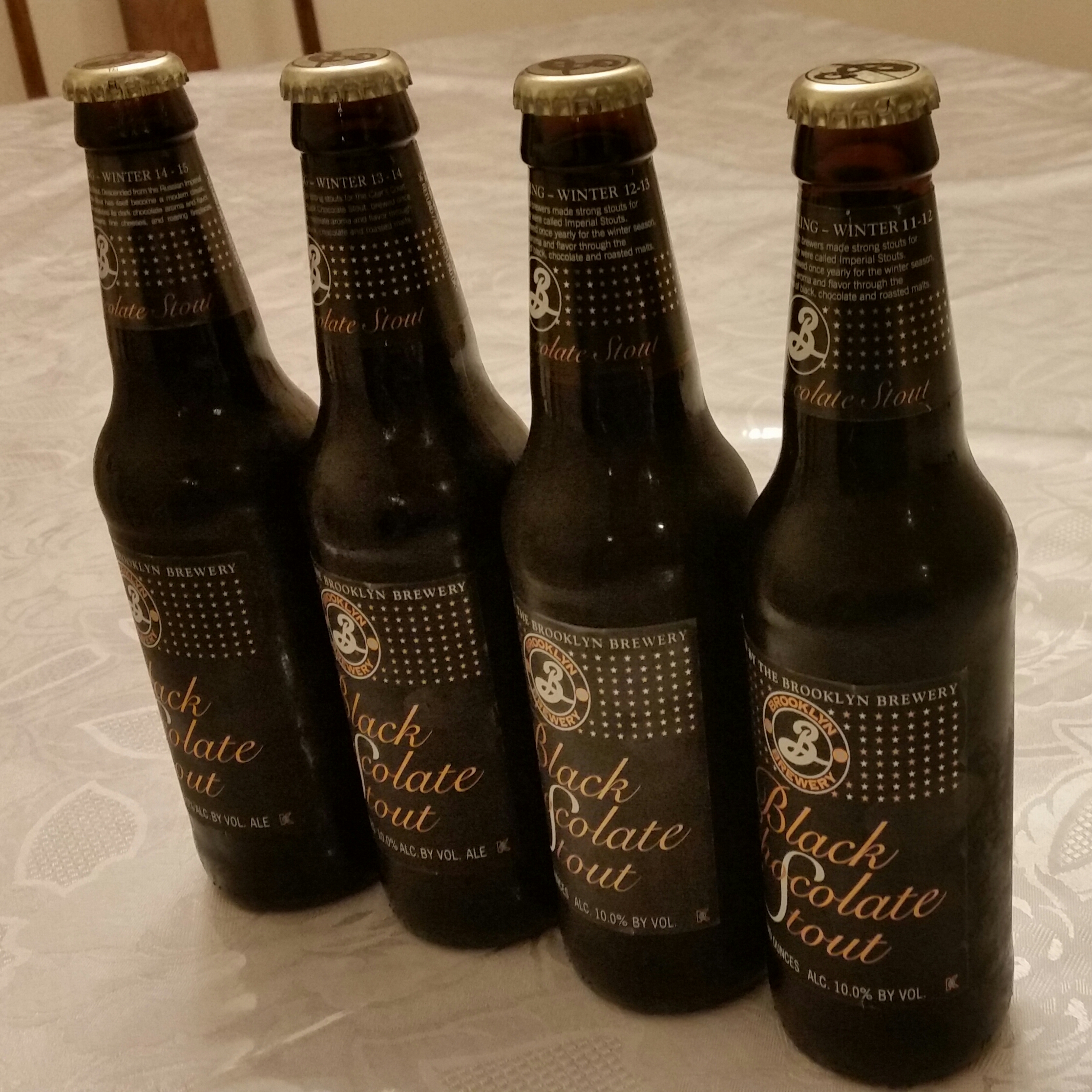
Brooklyn Black Chocolate Stout Vertical Tasting Winter 11-12 to 14-15

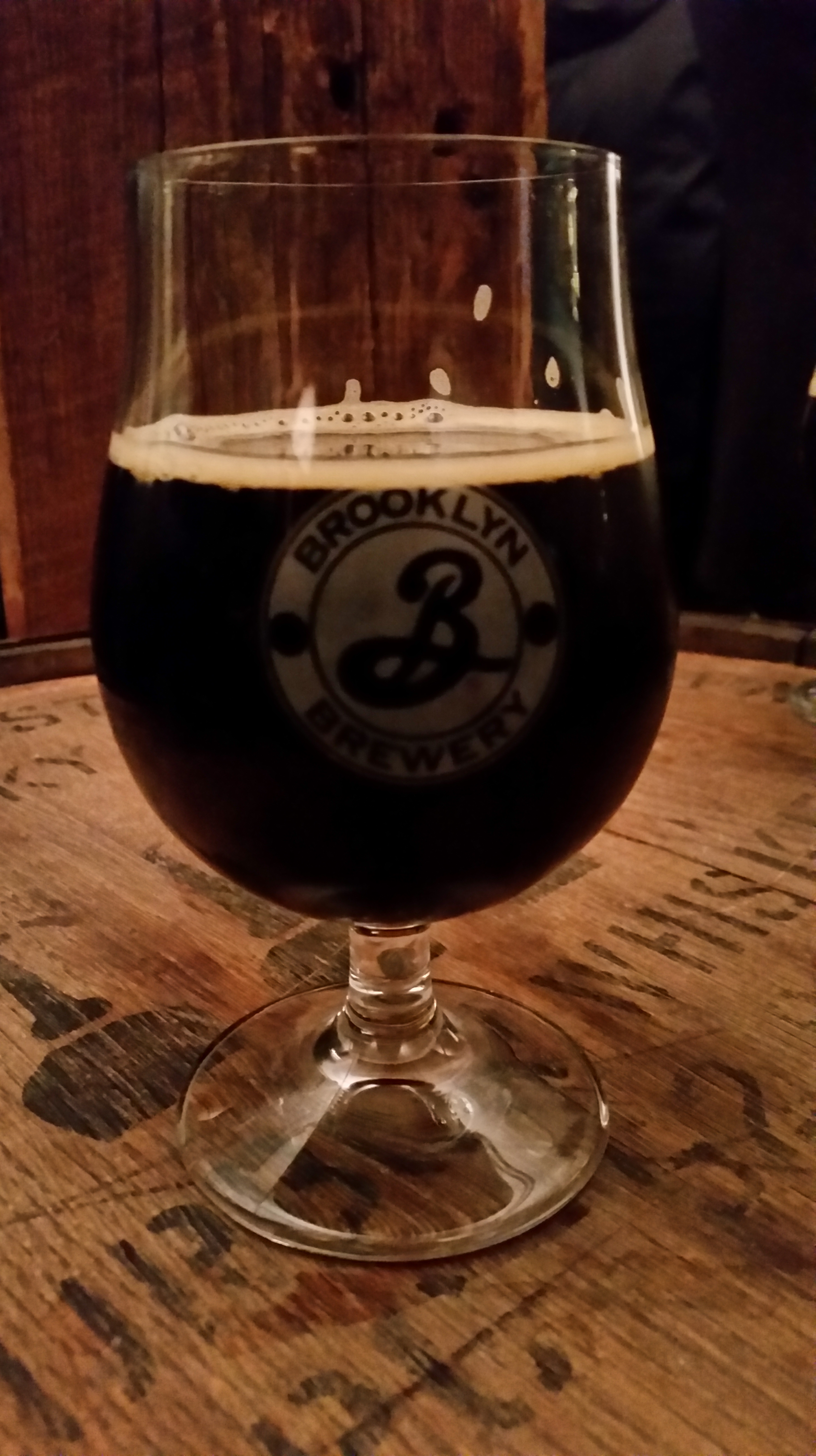
20150103_210341-3Ever since developing a taste for imperial stouts back in 2008 I’ve made sure to buy at least one four-pack of Brooklyn Brewery’s Black Chocolate Stout every year. Though for some reason I’ve only aged bottles for long enough to compare one year’s release to its immediate predecessor. So when my older brother told me that he recently organized his beer cellar and found Winter 2011-12 and 2012-13 bottles of Black Chocolate Stout I knew it was time or a vertical tasting spanning four vintages of this sought after beer.

Instead of pouring out all four vintages at once my brother and I decided to pour each vintage on it’s own, jot down our initial impressions, and then begin comparing them against each other as they got closer to room temperature. At 10% abv all four beers benefitted from warming up and the differences amongst them became more apparent as we sipped on.

Before moving on to my tasting notes I should note that the Winter 2011-12 and 2012-13 vintages were aged in my older brother’s basement cellar in NJ and the Winter 2013-14 and 2014-15 were aged in my New York City apartment.

Tasting Notes:

20150103_222802

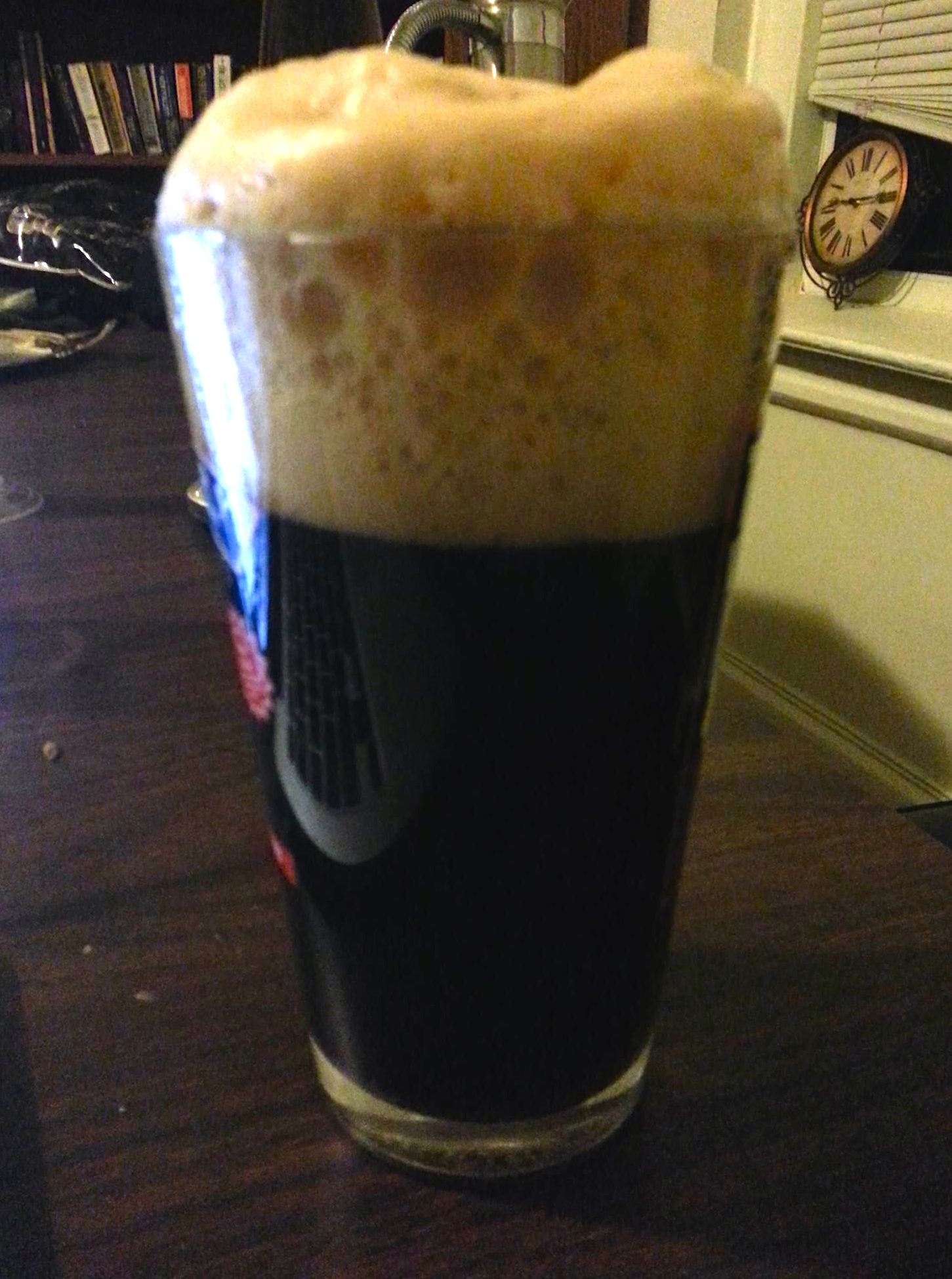
Winter 2014-15: As per style the beer poured an opaque black with a ring of light brown head around edges like a cup of black coffee. In the aroma this vintage was textbook Russian Imperial Stout with lots of dark chocolate, dark fruit, hints of roasted malt, and yeast ester astringency. Before I discuss the taste of this vintage I should note that one of the reasons that craft beer enthusiasts age this beer is because of its roasty astringency and alcohol heat. So at first like in the aroma the astringency was more apparent and I picked up some booze.  Dark chocolate flavor was the most dominant flavor, but it was quickly followed by dark fruit, and a roasty / alcohol astringent bite. Then as it warmed up the astringency became less of a nuisance to my drinking experience and allowed me to admire the beer’s complexity when compared to other vintages with notes of espresso coffee and roasted malt coming to the forefront.

Winter 2013-14: In terms of appearance all the vintages looks pretty much the same, though this one poured with a touch more head, but that may be attributable to my pour. In the aroma their was less booze and complex notes of fig, date, chocolate, and dry cocoa. As I sipped on I attributed the richer dark fruit notes to the astringency’s fading. In addition, the dark chocolate flavor was stronger and reminded me of a dark chocolate bar flavor with a cherry/raisin finish.  So although there was still some dry astringency left on my palate, the beer’s balance was most enjoyable/noticeable in this vintage.

Winter 2012-13: Over time one of the signs of a beer’s oxidation that I’ve seen is bubbles on the bottom of the cap. Surprisingly while their were oxidation notes in both the aroma and flavor, there weren’t any bubbles on the seal of the cap. The aroma and taste were similar to the previous two vintages with sharp dark fruit in the aroma and at mid palate and notes of dry cocoa and chocolate fudge. As the oxidative notes faded I picked up more dark chocolate, cherry, raisin, fig, and a slight umami / soy note with rich cocoa and chocolate in the aftertaste. I should note that while there were lots of enjoyable flavors in this vintage the umami and oxidative flavors became more apparent once I began comparing vintages and I could tell that this one was on the edge of being past its prime.

Winter 2011-12: Again this vintage had some umami and oxidation note, but also had a good seal on its cap. Upon my first sip I picked up a big hit of dried fig which was followed by dark chocolate. But then my tasting notes took negative tone. I was off put by notes of cardboard that reminded me aged Founders KBS all while trying my best to enjoy the dark chocolate, raisin, and cocoa notes that were still present. As the beer warmed it was the fig flavor that saved the overall experience for me, but I came to the conclusion that I didn’t really care for this vintage and didn’t finish drinking it.

Overall Impressions:

Before I began this tasting I read up on how Brooklyn Black Chocolate stout ages beyond one year in Patrick Dawson’s Vintage Beer book and am pleased to say that I had a similar experience to his. For those who have yet to read this book I’ll share two quotes that will explain what I mean. First, “A taste of wet paper comes up around the two-year mark and gradually increases over time. Though not overwhelming, it becomes disagreeable at around five years. However, this is the same time that medicinal notes develop (again, paralleling the aroma’s development), overriding the other aspects of the beer.” Secondly, “How long to age this beer depends on how much roasted character you desire. If you want an espresso quality, a single year of aging will be enough, but barley wine fans will prefer a three-year-old vintage with its combination of sherry, raisins, and dark chocolate” (Vintage Beer, pgs. 95-96). In turn, for me one year of aging is definitely enough for this beer because I feel that the only flaw of a fresh bottle is a slight lack of balance. However, aging it (and all imperial stouts) at the right temperature is key i.e. if you live in a big city apartment I recommend aging this beer at the back of your beer fridge.

I hope to post more vertical and aged beer tasting notes including more of my opinions on how certain beers and beer styles benefit from aging/cellaring in the coming months. If you’ve done of vertical of Brooklyn Black Chocolate Stout please comment on this post and let me know about your experiences. Cheers!

Posted in Beer Reviews, Russian Imperial Stout | Tagged , , , , , , , | Leave a comment

The Brewed Palate’s 2014 Wrap Up

Before I go through each beer that I brewed in 2014 I’d like to share two videos with you that I put together in order to sum up my 2014 craft beer and homebrewing experiences.

Video One: Overview of my experiences 

Video Two: Video and photo collage (with links to videos included)

Also…Here are my 2015 homebrewing resolutions:

1) Brew more hop forward beers. Especially using hops that I’ve never brewed with before.

2) Put more effort into perfecting my brewing process steps e.g. managing boil off rates and mash out steps.

3) Work on perfecting recipes that came out close to perfect in 2014.

4) Enter more homebrew competitions.

5) Use brewing knowledge gained in 2014 to come up with new well thought out recipes. Especially when it comes to trying out new beer styles.

6) Be more consistent about recording the progress of each homebrew both in my written brewers long and on thebrewedpalate.com.

Cheers and Happy New Year!!!!!

Posted in Craft Beer Advocacy | Tagged , , , , , , , | Leave a comment

TBP Podcast: Rob Tod, founder of Allagash Brewing Co. @ Blind Tiger Ale House

Allagash 2014.001

On Wednesday, December 17th I headed down to Blind Tiger Ale House for their annual Allagash Brewing Co. event featuring 14 of Allagash’s best beers. While there I had the opportunity to record a podcast interview with found Rob Tod. We spoke about the recent growth of his brewery in terms of size and amount of creative beers being produced along with many other topics that truly enhanced my appreciation of Allagash Brewing Company’s beers. Happy Holidays and cheers!

Note: Due to lack of a well lit spot inside and outside the bar I chose not to film this interview and post it strictly as a podcast episode. However, I did put together a version of it for YouTube where the podcast is accompanied by pictures that are related to the topics discussed. Click here to view that version.

Topics Discussed In This Podcast Episode:

  • 7th annual Allagash Brewing Company event at Blind Tiger Ale House.
  • Reflecting on 20 years of Allagash beers.
  • Recent growth of both the brewery itself and the variety of innovative beers that its brewers have been brewing.
  • Adding Allagash Saison to their year round line up.
  • 10th Anniversary of Curieux.
  • How many yeast strains are being used at Allagash on a regular basis?
  • Growth of Allagash’s sour / wild ale barrel program and the growth in popularity of sour / wild beers amongst American craft beer drinkers.
  • How do they decide which sour beers will end up being distributed (sold) beyond the brewery itself).
  • Allagash Bourbon Black and their non-wild barrel aged beers.
  • Allagash’s role as an influence for other Belgian focused US breweries.
  • Methodical growth over time and focusing on the company’s core values.
  • Growth in number of Belgian focused breweries opening up in the US.
  • Good wishes and Cheers!
Posted in Brewmaster Interviews | Tagged , , , , , , | Leave a comment

HIBC Holy Beggar’s Breakfast Stout 2014 (V 2.0) Brew Day

Version 1 (2013)

Version 1 (2013)

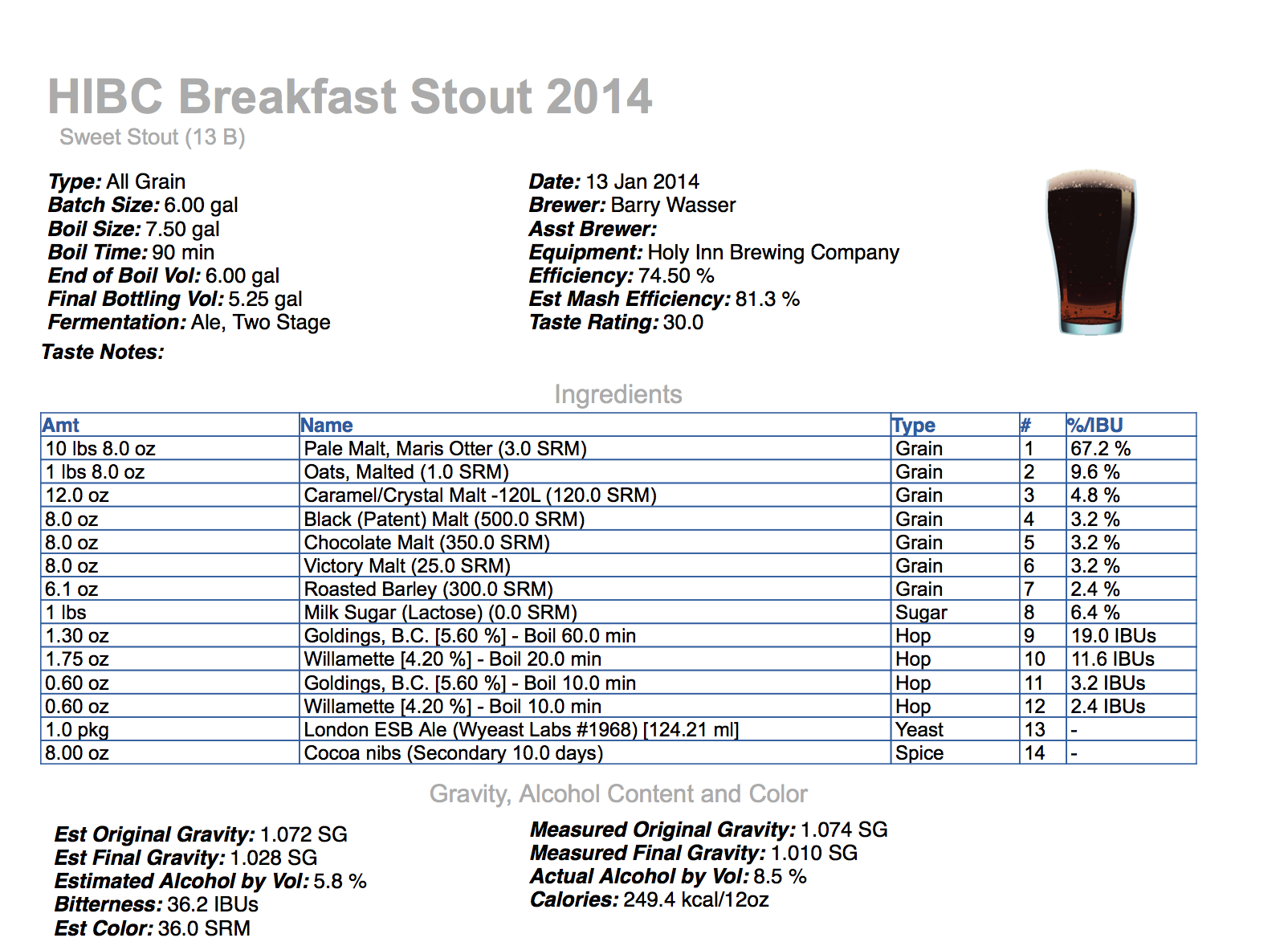
In October 2013 I brewed version 1 of this recipe as my first brew on my current equipment (10 gallon cooler mash tun and 10 gallon brew kettle) and enjoyed the finished product, but knew there was a fair amount of room for improvement. The first change that I knew I’d make when brewing it again was eliminating the cold pressed coffee. Doing so because after testing out a couple coffees with my final gravity sample of version 1 and choosing one that adding some great fruity notes to the beer I was bummed when none of those nuances were present after bottle conditioning. In place of the coffee I chose to cold steeping the darker malts (chocolate, black patent, and roasted barley) to prevent astringency and higher my chances of the beer having a coffee like aroma. Then I knew I’d be able to achieve a less estery aroma, by fermenting the beer in my fermentation fridge instead of using the “swamp cooler” method and choosing a yeast strain that only creates pronounced esters when fermenting over 70F (Wyeast 1968 London ESB instead of 1335 British Ale II). Lastly, I knew I wanted a creamier body and more chocolate flavor. So I chose to add lactose and buy an extra 4oz of cocoa nibs to accomplish those to things.

Looking back on brew day: What I learned from the changes that I made to the recipe.

1) Steeping the dark grains: A) I used 2 quarts of water per pound of dark grains. B) I let the grains steep at room temperature (contrary to what I stated in the video i.e. that I’d put the bowl of grain into the fridge). C) When straining (filtering) the grains I found that using a colander on top of a mixing bowl with a spout worked best . For extra measure I used a cloth coffee filter to do a second filtering. D) I should have started filtering earlier in the bowl because I ended up having to shut off the stove when the filtering was taking longer than expected and bringing the wort back to a boil before adding the dark malt extract and boiling for 10-15 more minutes. E) In order to make sure that my target preboil gravity on Beer Smith would take into account the lack of dark malts in the mash I copied and pasted the recipe (created a second recipe profile), added in an M for mash to its name, and took out the dark malts.

2) Adding Lactose: A) Because I keep kosher and therefore have separate pots etc for meat and dairy cooking I took off some wort before bringing both my kettle (and the second pot) back to a boil and added the lactose to the second pot. B) Then once the boil was over I cooled down my kettle with my immersion chiller to 60F and let the second pot cool with it’s lid open a bit. Next, I transferred the kettle’s wort into a 6 gallon carboy and then added the second pot’s wort on top of it. C) To my dismay I realized that I should have separated the wort for the second pot earlier because I collect 6 gallons of wort instead of 5.5. Luckily, this only translated to missing my target original gravity (1.078) by 3 to 4 points. 

10849089_826128377410209_1995492903832458364_o3) Switching The Yeast Strain: A) I made a 1.55 liter starter the night before. B) Because I collect an extra half gallon of wort I had to cold crash the starter overnight and pitch the next morning. C) Fermentation (66-68F, 19-20C) started after about 5 hours and was going nuts (blowing off foam and trub) by the 9 hour mark. In fact the next morning I woke up to a big mess and quickly cleaned it up and kept an eye on the fermentation for the next 12 hours or so in order to prevent another mess. DBoth times I’ve used Wyeast 1968 London ESB fermentation starter faster that I expected it to. I think I’ve found a new go to English yeast strain to use for my malt forward beers.

Screen Shot 2014-12-11 at 7.06.58 PM

Posted in Brew Day Videos, Homebrewing | Tagged , , , , , , , | Leave a comment

TBP Feature Series: Milk The Funk (Facebook group)

10629819_790182927671849_6420982247189904153_n

After maintaining a beer blogs directory on my blog for the past few years I’ve decided to begin a series of blog posts that features beer blogs, Facebook groups, homebrewing clubs etc. that offer brewers (home and professional) and craft beer drinkers a platform to learn a lot about beer. Being that I’ve recently started to take my first steps into the brewing and fermenting of funky and sour beers I’ve chosen the Milk The Funk Facebook group as the first notable homebrewing resource of this new series.

As a new member of this popular group, I didn’t have much of a grasp of the its history and dynamic. Therefore, I chose to contact two of its administrators via e-mail and have them answer a list of questions about both the group and themselves. After reading their answers I decided to post them in interview format in order to keep things simple yet informative.

The Brewed Palate: When did you start the Milk The Funk Facebook group and what inspired you to do so?

Ryan Steagall: The Milk the Funk Facebook group was created on March 6, 2013. Before creating it, one of the first things I did was make sure Brandon Jones with Embrace The Funk didn’t think I was stepping on toes since I wasn’t privy to what he may or may not have planned for ETF and the names shared “the funk” similarity.  To start, I was highly interested in wild, funky, and sour fermentation but there weren’t enough people locally to share knowledge with openly.  I knew that there were brewers from Atlanta to Louisville that were interested and wanted a way to better connect with them.  So, just as quickly as the group was created I added people and brewing friends to the group like: Devin Bell, Matt Warise, and Brandon Jones.  It took off from there.

1243695_794892340521111_6174332696832656414_oTBP: How has the group evolved over time and what do you think has made it so successful (e.g. as a source of great information and conversation about funky and sour beers)? 

RS: First off, we’ve grown faster than I thought, possibly faster than I would have liked, and continuing to snowball.  I’m glad to say that sticking to the basics of what we’re about is what keeps us on track and moving forward. While we don’t have a mission statement, our tagline on our wiki kind of says it all: “Milk the Funk started off as a simple idea to get home brewers interested in more advanced and “funky” topics talking. Since its inception, Milk the Funk has become a communal authority on alternative yeast and bacteria fermentation with an emphasis in alternative brewing techniques.”  That is what we’re about and the drive of knowledge is what is pushing us to create other avenues of communication such as our forum and most recently our wiki. I think this will become a great tool far into the future if it develops with our basics in mind.

Devin Bell: The group started very small, mostly people in Tennessee and southern Kentucky. The small number of people that started with the group are very passionate about sour and funky beers. This is something I think has driven our success. I think our members have added new people that share their obsession and that keeps the posts quality high. That’s another thing driving our success. We strive to keep the posts at a pretty high level. There are thousands of resources for basic and beginning brewing, but virtually none for sour and funky beers. I didn’t want this to become a group where half the posts consist of, “Is this beer infected?” like so many other groups.

TBP: Who comprises the membership of the group? (talk a bit about the fact that both pro and home brewers are part of the group) AND how has the group’s dynamic developed over time?

RS: This group has grown into something far more than I thought it would have.  It started off being just homebrewers, but social networking allowed me to add and invite people along the way that I knew would be an asset to the group.  Before we knew it, we had several microbiologists and professional brewers involved in open discussions.  For an experimental homebrewer such as myself, there is nothing more exciting than to have a conversation with professional craft brewers who are excited and interested in the same brewing subjects you are.  This is a rare time where funky and sour beers are gaining popularity and you are learning in parallel with the Pros.

DB: We are pretty diverse as a group. We have people who are brewing their first sour, advanced home brewers, pro brewers, microbiologists, and people who work for yeast companies. It’s grown over time. Some of our members have transferred from being home brewers to brewing funky beers on a pro level. I think the quality content is useful for home brewers and pro brewers alike.

10253846_714049165285226_8584531332015227909_nTBP: Now that funky and sour beers have become popular in both the homebrewing and craft beer scenes/communities. What role do you feel groups like Milk The Funk play in the growth of this genre of beers?

DB: We are just trying to push everyone to make the best beer they can. Our group is about not following the norm and making your own way. I want people to try their own techniques and see what happens.

RS: We definitively enlighten people and bring new interest to Sour and Funky beers. Hopefully this attention will result in more craft breweries opening experimental divisions much like Yazoo has done with Embrace The Funk.  The world needs more of this kind of thing, from cultural to the arts…. the funk is where it’s at.

About The Group Administrators:

1462855_10205211320786381_7534326358391228349_nRyan Steagall:

How long have you been homebrewing? How did you get into / start brewing funky and sour beers?

I’ve been homebrewing for about 8 years now, but only got more serious into it when I found and joined the local homebrew club – Mid-State Brew Crew

What are your general methods for brewing, fermenting, and aging your funky and sour beers?

Adjuncts are a fun thing to play with and alternate grains.  I’ve discovered the local feed mill for chicken scratch, rolled oats, and raw wheat are good for that.  Sometimes all you need is a hint of something strange to make you go forward with an experiment that you may have otherwise not done.   However, for the most part I really do try and keep it simple as far as my funky and sour brewing goes.  I’ve found keeping it simple with grain bills and hop scheduled really help.  I’ve got to where I really like mashing hops and adjuncts with my grain.  I don’t have to worry as much about hop profiles in the boil and it keeps my boil cleaner with little to no trub.  In turn, its makes for a much easier brew session.

Have you won awards for your beers? If so, list them.

Until recently, I’ve never won an brewing award.  My brew-bud, Matt Warise and I concentrated this whole year on the Music City Brew Off 2014.  We each entered beers we were most responsible for under our names and listed the other as Co-Brewer.  This year I won 3 firsts, a second, and a 3rd Best of Show:  1st American Brown Ale, 1st Straight Unblended Lambic, 1st Barleywine, and 2nd Fruit Lambic (Peach).  The 3rd BOS was represented by my Barleywine. It was an amazing feeling to win that many.  I can now at least say and know that “it didn’t suck” which is a quote that Mike Semich used to say.

What do you currently have fermenting / aging?

Currently fermenting I a spontaneously fermenting coolship at 2 months, a wood barrel of golden sour at 1+ years, a wood barrel of Belgian base sour, and a brett blend pineapple IPA.  In bottles I have blackberry, peach, and mango/pineapple sours all freshly bottled with the golden sour as the base.

What are your favorite beer styles to brew and drink?

I really don’t have a favorite beer style because I like to experiment with so many, but if I had to choose I would say nothing beats a well hopped IPA fermented with mixed sacc. (sacchromyces) and brett (brettanomyces) coupled with interesting adjuncts or fruits like pineapple.  As far as brewing and even though I’m only on my second, my favorite to brew has got to be for a coolship.  There is nothing glorious about brewing a beer.  The good stuff happens before in the planning stages and fermentation.  Coolships are so easy and fast, there is no way it can’t be my favorite.

What advice would you give to a homebrewer looking to start brewing funky and sour beers? Also, What are some good methods for going from more simple brewing/fermenting techniques to more difficult/complex ones?

My advice interested in alternate yeast and bacteria fermentation is not to be scared of it.  Don’t be scared that its going to wreck your brewery.  These “bugs” are everywhere.  They are all over your grain.  When you crush your grains, imagine all that dust and where its going.  Its covered in lactobacillus among other things. As long as you practice sanitation where you should, you’ll be good.  Get a good book or two like American Sour Beers – By Michael Tonsmeire. Lastly, check us out at Milk the Funk.

 

10151380_712241818799294_2525261253316565827_nDevin Bell:

How long have you been homebrewing? How did you get into / start brewing funky and sour beers?

I started home brewing in 2008ish, but I’ve watched my uncles and family members do it since I was a little kid. I’ve always loved saisons and funky beers. I started drinking craft beer at a very young age, I had my first Sam Adams at 16 and started drinking Stone pretty regularly around 18 or 19. Then I went straight into funky beers. When I hit 21 I was scraping together all my money to buy Cantillon. Which for a broke college kid is pretty tough. So when I got into home brewing that’s what I went straight for. My first batch ever was an All Grain Saison kit with Wyeast 3711 from Northern Brewer. After that I brewed a Three Floyds Gumball Head clone from Homebrewtalk and that next batch I brewed a Brett Saison. That’s when I got hooked. I think in the last 3 years I’ve brewed one beer that was 100% sacch. (sacchromyces) and that was for someone else.

What are your general methods for brewing, fermenting, and aging your funky and sour beers?

I’ve been doing a lot of quick sours lately. You start your ferment with 100% lacto (lactobacillus) and keep it hot. Let it get about a 4-7 day head start then pitch a huge starter of brettanomyces to finish the fermentation.

Have you won awards for your beers? If so, list them.

I’ve never entered a contest. I have too many palates around me that I trust. BJCP judges don’t have the best track record for understanding the kind of beers we make.

What do you currently have fermenting / aging?

I just kegged and bottled a Golden Sour on plums yesterday. Other than that I have 5 gallons of a coolship project and 6.5 gallons of a Lambic style base on ECY20 (East Coast Yeast 20 / BugCounty). I’ll probably brew 5 gallons of Berliner and 5 gallons of Gose in the next few days.

What are your favorite beer styles to brew and drink?

Anything low alcohol and easy to drink. Berliners (Berliner Weisse) and Saisons are my favorites to brew and drink.

What advice would you give to a homebrewer looking to start brewing funky and sour beers? Also, What are some good methods for going from more simple brewing/fermenting techniques to more difficult/complex ones?

Just go for it! Hopefully my fastest simplest sour ever article will be done soon. In that, I’m trying to have a good sour beer done in 2-3 weeks. Only real advice I can give is to just read and listen to everything you can get your hands on. That’s how I learned.

Thank you for check out my first feature post of this new TBP series. If you know of any blogs, Facebook groups, etc. that you feel should be included in this series please leave a comment on this post. Cheers!
Posted in Craft Beer Advocacy, Homebrewing, TBP Feature Series | Tagged , , , , , , , , , | 3 Comments

Homebrewing DIY: Finishing a beer cap bar top w/ epoxy (keezer lid)

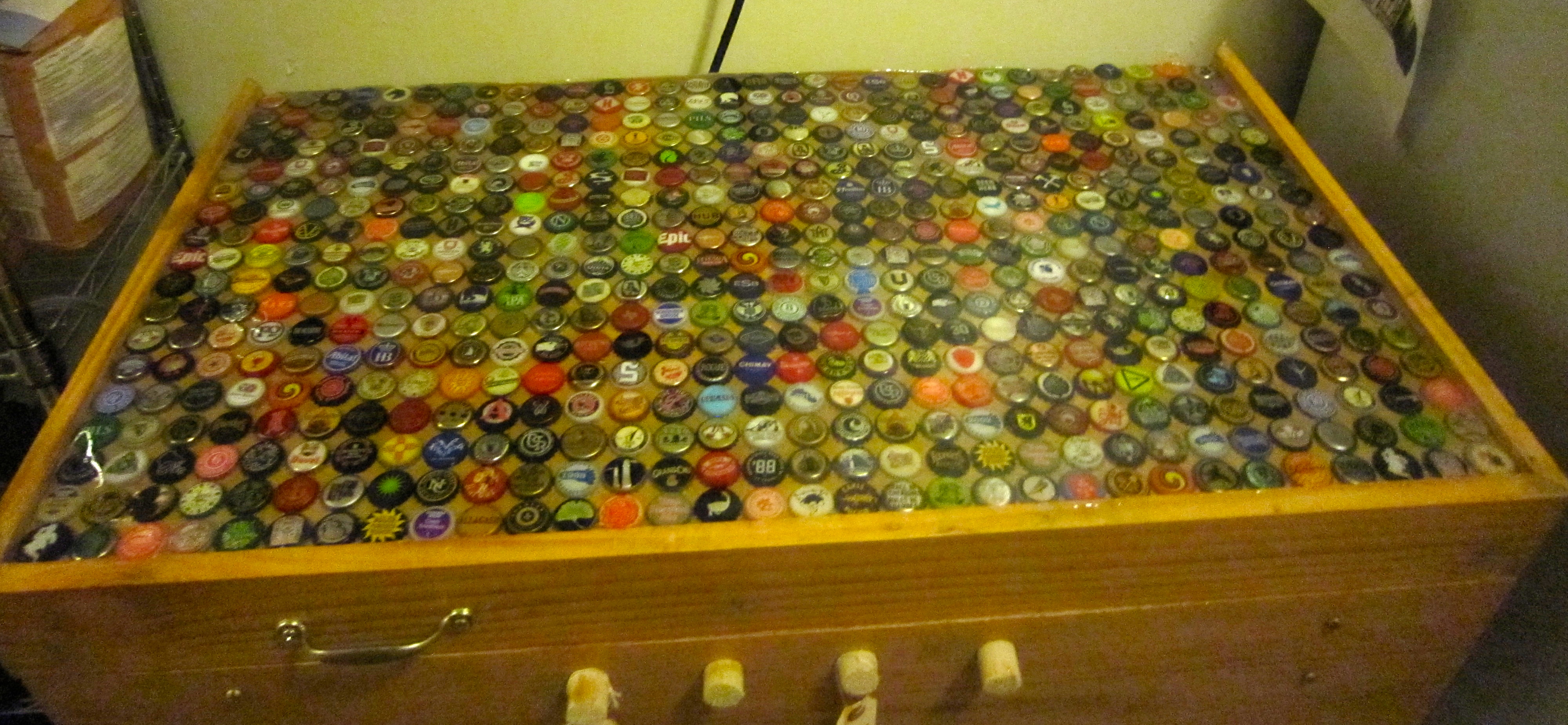
IMG_3430After much stalling and waiting for some more beer caps to add variety I finally completed my keezer lid’s beer cap bar top my filling it with clear epoxy. As you’ll see my biggest obstacle was maintaining a sealed border along the back side of the lid which has no wooden lip and a number of caps sticking over its edge. In turn, this video includes both the steps that I took to complete this project and the up and downs of doing so.

Beer Cap Bar Top Tips:

  • Secure all caps with super glue.
  • Seal edges silicon when needed (see my keezer build videos)
  • Do NOT let caps stick over the bar top / keezer lid / table’s edge/s (when no wooden lip is present).
  • Pour clear epoxy mixture (I used Parks Super Glaze: Ultra Gloss Epoxy) in the center of your “bar top” and led it spread out and begin to self level before using a wooden paint stir stick or plastic putty knife to spread it around.
  • Use rubbing alcohol or a lighter to pop air bubbles.
  • After final coat is applied wait a week for the epoxy to completely harden / set before you put beer glasses etc on top of your new beer cap bar top or table.
  • Follow the instructions that come with the epoxy.
  • Watch the above video for the materials that I use for a border and proceed with caution. I assume that my having caps stick over the edge was the main cause for the leakage that I experienced, but I could be wrong.
  • Use rubbing alcohol to remove epoxy from your hands and other surfaces.

I hope this full length video is useful for all those who hope to create a beer cap bar top in the future. Cheers!

Posted in Homebrewing DIY | Tagged , , , , , , , | 1 Comment

TBP Under The Radar Beer Review: Triporteur from Heaven and Hell

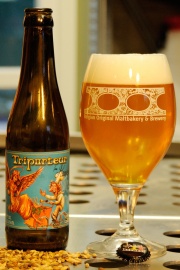
20141126_134507Over the past year I’ve been fortunate to have Artisanal Imports as a sponsor of The Brewed Palate. Though I had a deep love of belgian beers before I asked them if they’d like to sponsor my blog, they have successfully opened my eyes to many belgian beers that I would have not sought out on my own. Being that Belgium has been experiencing its own “craft beer revolution” in recent years, some of the beers that I’ve tried are from newer / up and coming breweries. One of which is the BOM Brewery (stands for Belgian Original Malt Bakery and Brewery), a one of a kind brewery that malts (“bakes”) all of its brewing grains. As yeast forward beers, belgian beers offer the beer drinker a unique opportunity to appreciate how much yeast impacts a beer’s flavor etc.. However, BOM brewery’s goal of crafting every aspect of their beers from “bakery to kettle” takes that opportunity to the next level by giving all of the ingredients a chance to stand out in the final product…

For this review I’ve chosen BOM Brewery’s two core beers, Triporteur from Heaven and Triporteur from Hell, a belgian golden ale and a belgian dark ale or dubbel.

tripTriporteur from Heaven (6.2% ABV, 28 IBUs)

Brewery’s Description: A heavily hopped beer brewed using home-baked malt. Triporteur From Heaven is the modern version of traditional hopped ale. It is a heavenly beer brewed with home-baked BOM malt. The wheat malt in the unfiltered beer can produce a light cloudiness. The taste of Heaven remains evolving in the bottle. Malts: BOM BakedBOM WheatBOM ThorefactoBOM Coriander Sugars: Belgian dark and white candy sugar. Hops: Early hop: East Kent Golding, Styrian Golding. Late hop: East Kent Golding, Styrian Golding, Cascade. Dry hop (minimum): Cascade, Styrian Golding. Yeast: Top yeast beer, second fermentation in the bottle.

True to its name this belgian golden ale poured an attractive gold color with great clarity and a fluffy white foam that stuck around and left a fair amount of lacing on my glass. Its aroma was comprised of rich toasty malt, clove, and lemon and flowed well into the refreshing yet complex flavor profile where rich breadiness was accentuated by lemon and grapefruit hop character. As the beer warmed the lemon flavor intensified and took on a candy like sweetness. Though the beer tasted a bit one note at times, it was this lemon flavor that got me thinking of food pairings. Keeping things light, I would pair this beer with sweet / less pungent cheeses such as brie and goat cheese, greek salad w/ feta, and fresh sea food. Desserts may overtake this beer’s delicate flavors, but I’d risk pairing it with a lemon tart for a great complementary pairing.  Rating: 7.5/10

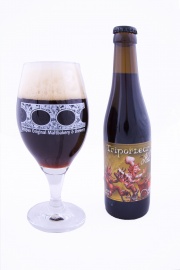
Triporteur_from_Hell_Clean_PackshotTriporteur from Hell (6.66% ABV, 32 IBUs)

Brewery’s Description: Triporteur From Hell is a dark beer brewed with hellish burned and roasted BOM malt. The beer reminds us of chocolate, caramel, recently brewed coffee and freshly baked bread. The wheat malt in the unfiltered beer can cause a slight cloudiness. The taste of Hell keeps evolving in the bottle. Malts: BOM Dark RoastedBOM Wheat RoastBOM SeasaltBOM DRCSugar: Belgian dark cane sugar. Hops: Hell is hopped at an early stage with traditional East Kent Golding and Styrian Golding. Yeast: Top yeasting beer, second fermentation in the bottle. 

After recovering as much beer as possible after the bottle gushed upon my opening it I took my time to fully experience this “hellishly” dark ruby red belgian dark ale. From my first whiff and sip I knew this beer would follow suit by being just as complex (for its style). Richer malt flavors from the speciality malts brought notes of caramel and sweet bread. While the dark candi sugar and yeast contributed both sweet and tart fruity esters such as cherry and raisin) along with a slight spiciness that was left on my palate. At 6.66% this beer was quite drinkable despite its complex flavor profile. For food pairings I’d match bold with bold. Braised meats such as lamb, duck, veal, and poultry; gouda, gruyere, and raw milk cheddar cheeses; and desserts that include semi-sweet and dark chocolate and or dark fruits like cherries, cranberries, and dates. Rating: 8/10

BOM Brewery’s beers are imported by Artisanal Imports’ partner company Authentic Beverage Management. Check out their websites for more information on which beers they import and where you can find them. Cheers!

Posted in Beer Reviews | Tagged , , , , , , , , , , , | Leave a comment

Brewmaster’s Reserve Series Quadraceratops Release @ Brooklyn Brewery

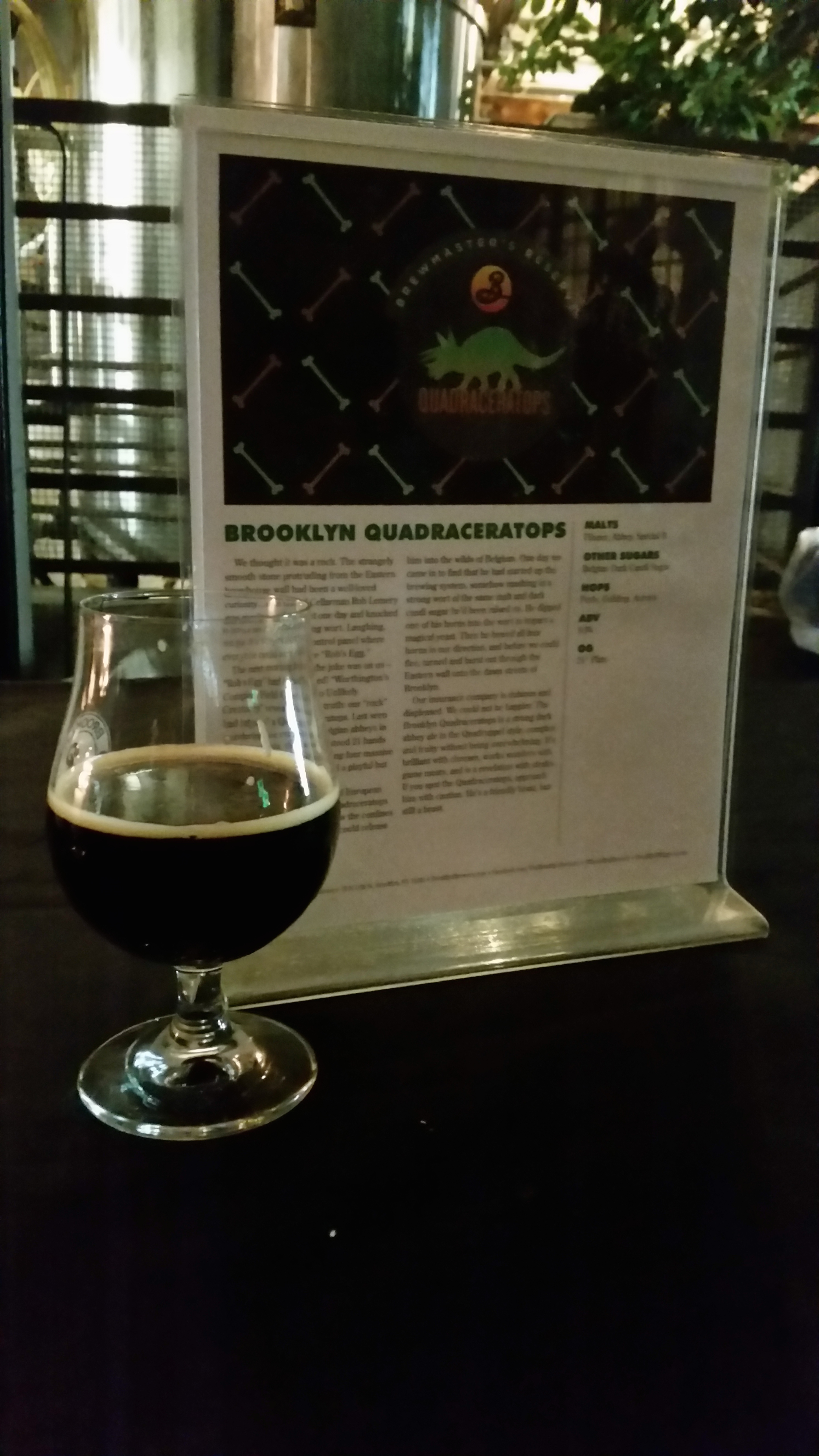
20141110_194540On Monday, November 10 I went to Brooklyn Brewery for a party celebrating the release of their most recent Brewmaster’s Reserve Series beer aptly named Quadraceratops, 9.9% abv quadrupel. In this video brewmaster Garrett Oliver talks about the inspiration behind the beer and then I share some footage from my tour of the brewery that night.

Why this beer stands out amongst the many dark and strong Belgian Ales brewed outside of Belgium? Over the years I’ve tried many Belgian style beers that were brewed outside of Belgium (mostly in the US) and been let down by a fair amount of them. This is because for some reason they fail to achieve the level of complexity that is present in the Trappist and abbey ales of Belgium (and the Netherlands – La Trappe) that I’ve come to love. However, after my first sip of Quadraceratops I knew that it would not end up being yet another let down. Its smooth and balanced complexity made it quite drinkable for a 9.9% ABV beer, however I did my best to savor it in order to decipher its flavor profile. By keeping the yeast in suspension with occasional CO2 additions throughout fermentation, Brooklyn’s brewers were able to keep yeast esters to a minimum and leave it to the dark belgian candi syrup and Special B malt to create complex dark fruit, caramel, and toffee notes. In addition, though this beer attenuated down further than Brooklyn Lager, its malts and abv gave it a smooth medium to full body, a semi-sweet finish, and enhanced my ability to sip more slowly and pick out more flavor nuances (dried cherries and dates) as it warmed up.

Food Pairings: game meats like duck and lamb, steak w/ savory and or sweet sides, cheeses (gouda and gruyere), and sweet desserts (pecan pie, dark chocolate cakes, apple or cherry cobbler).

My Rating: 8.5/10, one of the best American brewed quadrupels that I’ve ever had and very close to being a favorite cold weather. While I enjoyed this beer I spoke to Brooklyn’s brewmaster Garrett Oliver and he told me that he plans to bottle condition a portion of it in the future. I think that doing so will greatly benefit this beer and give it enough wow factor to become a 9/10 i.e. a world class beer. Cheers!

Posted in Craft Beer Advocacy | Tagged , , , , , , , | Leave a comment

Homebrew Wednesday 43: RDWHAHB (contest announcement)

20141110_195735Out of all my Homebrew Wednesday posts (episodes) this one contains a bit of all of the ways that I express my passion for good beer the best. I begin by chatting about cooking with beer while drinking one of my favorite dark beers to cook with, Great Lakes Brewing Company’s Edmund Fitzgerald Porter. Then I talk about my recent visit to Brooklyn Brewery for the release of their newest Brewmaster’s Reserve series beer, Quadraceratops, an amazing 9.9% abv belgian quadrupel (review coming soon). Afterwards I round out this episodes introductory clip with my announcement of The Brewed Palate’s Relax Don’t Worry Have a Home Brew contest (details below). 

For the second half of this week’s HBW I show some clips of me transferring my english barleywine to its secondary fermenter and tasting the gravity sample, and present a show and tell of sorts with my winter saison.

Cheers and Keep on brewing!

Contest Details:

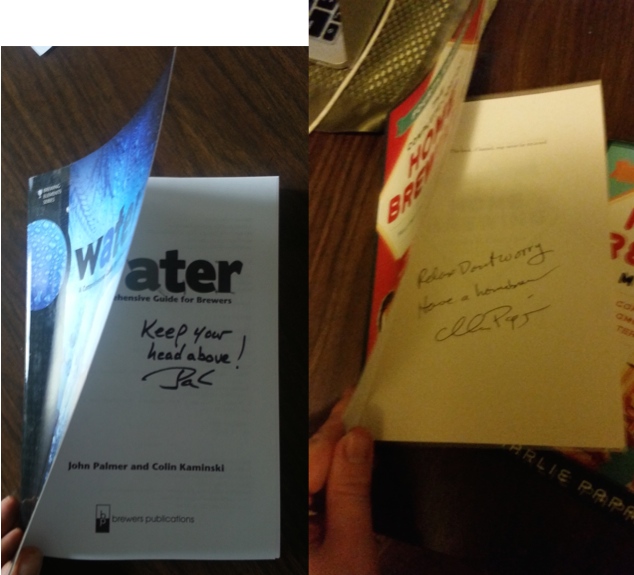
RDW contest.001As homebrewers we tend to get anxious and worry about the nitty gritty details of the brewing process and all too often have to be told to relax, not worry, and have a homebrew. Therefore, for this contest I’d like you to email me (craftbrewadvocate@gmail.com) your RDWHAHB story. It could one instance where you got really worried about a step in the brewing process and then relaxed with a homebrew only to find out that you didn’t have to get so anxious and worried OR A general description of what you usually overanalyze and get worried about only to be told by your fellow homebrewers to relax and have a homebrew. Feel free to include details about how getting anxious or staying relaxed has affected your brewing over time and any other details related your being influenced by Charlie Papazian and or John Palmer. Over the next month or so I’ll read over the contest entries and pick 2 winners.

Prizes:

1st Place : Autographed copies of The Complete Joy of Homebrewing, Fourth Edition, The Home Brewer’s Companion, Second Edition, and Water (John Palmer).

2nd Place (US only): A kit including all the ingredients needed to brew the brown ale recipe that Charlie Papazian designed for Bitter & Esters homebrew shop

Thank you to Bitter & Esters for sponsoring this contest!


Posted in Craft Beer Advocacy, Homebrewing | Tagged , , , , , , , | Leave a comment