HBW 70: Whirlwinds and Reviews

Video posted 1/12/16 – New videos coming soon…

Episode Notes:

12419030_1011687372187641_1739487322160972054_oKelSo / Heartland Brewery gives wort to local brewers: Bitter and Esters homebrew shop and KelSo brewery teamed up and offered local homebrewers the opportunity to ferment 5 gallons of hopped or un-hopped wort as part of their monthly bottle swap at an event called Brewpiphany.

  • Wort Composition: 
    Grain Bill: 
    85.3% Bohemian Pilsner
    5.3% Cara Munich 60
    2.7% Flaked Barley
    2.7% Melanoidin
    2.7% Dark Munich
    1.3% Chocolate
    90min boil
    Hops:
    Bittering (60min): Magnum
    Mid (30min): Select
    Aroma (added at transfer into whirlpool): Hallertau
    -25 IBU
    Recipe provided by: Chris Cuzme
    Brew Crew/Special Ops/Brand Rep, Kelso Beer Co.
    Brewer, Cuzett Libations Inc.
    Co-Host of Fuhmentaboudit! on Heritage Radio Network
    Saxophones, Electric Bass, Craft Beer…and other stuff.
Posted in Homebrew Wednesday | Tagged , , , , , , , , , , | Leave a comment

HBW 69: Happy Brew Year

Happy Brew Year my fellow homebrewers and craft beer enthusiasts…In this episode of Homebrew Wednesday I taste my fellow BrewTuber’s saison and then I both reflect on my 2015 homebrewing experiences and attempt to clearly explain my brewing goals for 2016. If that’s a bit confusing watch the video and you’ll understand my cryptic description of this episode. Cheers!

Posted in Homebrew Wednesday | Leave a comment

Homebrew Wednesday 68: Juggling of the Kegs

Happy Homebrew Wednesday!!! As the title for this week’s episode states I’ve been busy lately especially with transferring beers in and out of my kegs and organizing my current bottled beer stash. Therefore, I’ve decided to break down the footage that I’ve included in this episode of HBW in text form in order to add an educational element to my sharing of recent home-brewing activities.

Cheers!

Clip 1: Bottling the remainder of my Russian Imperial Stout

Since kegging my Russian Imperial Stout a few months ago I’ve been meaning to bottle a portion of it (using the “poor man’s beer gun” method) so I could age it for 6 months to a year. However, it wasn’t until this past Tuesday (12/15) that I actually did so…As shown in the video I decided to split the remaining beer between bottles of just the base beer and bottles with cold brewed whisky barrel aged coffee added. Just to reiterate the coffee, which I bought off my friend Merlin was aged for 6 weeks in a recently emptied 10 gallon whisky barrel and then home roasted i.e. the beer itself was not barrel aged, the coffee that was added to it was.

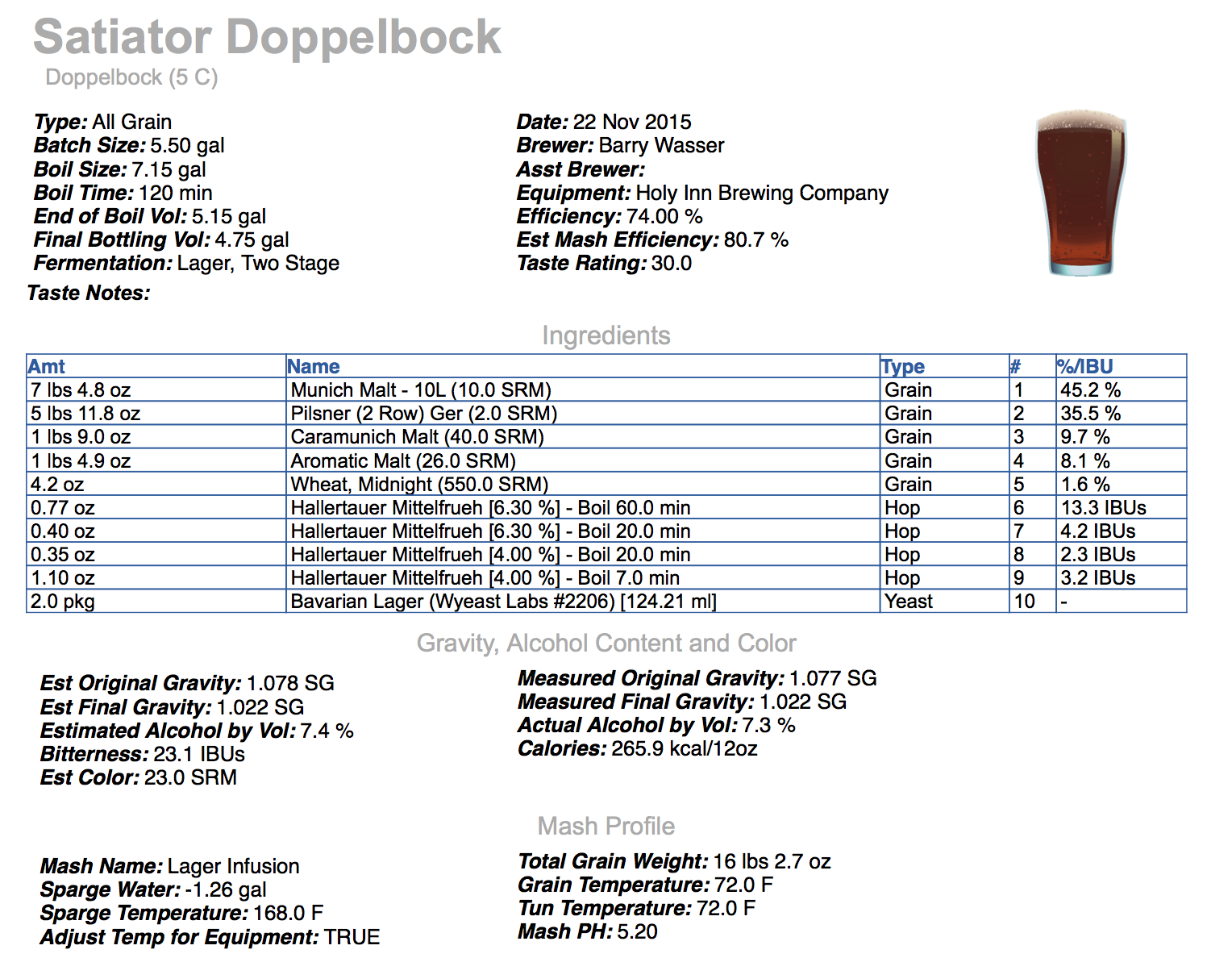
Clip 2: Tasting a gravity sample of my doppelbock prior to kegging.

As mentioned in the video I’ll now share my doppelbock fermentation schedule:

  • 8 days @ 11-12C (51.8-53.6F) – 0.5C higher than with my pilsners to aid attenuation.
  • 2 days raising to low 60s
  • 2 days in low 60s
  • Lowered to high 50s and left for 2 days to aid attenuation to goal of 1.022 (Beer Smith estimated FG).
  • 3 days lowering to 5-6C (41-42.8F)
  • Kegged for lagering in keezer for a month.

Screen Shot 2015-12-21 at 10.45.32 PM

Screen Shot 2015-12-21 at 10.47.46 PM

Clip Three: Splitting my brown ale between my recently acquired 2.5 kegs.

As mentioned in the video it was difficult to make the split even. The primary reason for it being difficult was my not knowing where the 2.5 mark was inside the kegs. However, as shown in the video, another reason was that I didn’t lower the siphon or tip the carboy in time to siphon in as much as I would have liked into the keg of base brown ale. Once one of the kegs kicks and I finish cleaning it I’ll definitely be filling it with 2.5 gallons of water in order to find the 2.5 gallon mark for future reference.

Recipe coming in my next HBW post…

Clip Four: Organizing my current beer stash (homebrew and craft beer).

After showing off the new set of shelves that I purchased recently to consolidate my cases of beer; I talk about a problem of mine that I’ve been meaning to discuss in a video, my “beer graveyard”. I routinely have too much beer on hand and a good amount of it gets lost in the shuffle and becomes either undrinkable or not attractive to drink. Some examples are the following. 1) The leftover beer from a beer and cheese tasting I hosted this past June (shown in the video). 2) Hop forward beers that I don’t get to before their hop character fades beyond recognition. 3) Kegs that take quite a while to kick (finish) and I end up having to growler and or bottle up the last gallon or so. Then some of that left over beer sits around for a while and I end up dumping it. Hence, my decision to dump the last 4-5 liters of my rye IPA (shown in this video)…My goal is to find ways to prevent this problem from continuing on its current coarse. Two solutions that I’ve come up with are brewing smaller batches and or finding more opportunities to share my beers e.g. sending out more beer mail packages.


Cheers and Happy Homebrew Wednesday (or whatever day of the week you read this)!!!!

Posted in Homebrew Wednesday | Tagged , , , , , , , , | Leave a comment

TBP Podcast: Celebrating 20 years of Allagash with founder Rob Tod

The Brewed Palate podcast is back! For the the third year in a row I recently headed to my go to NYC craft beer bar, Blind Tiger Ale House for their annual Allagash Brewing Company event. However, this  year’s event was different in that it was a celebration of Allagash’s 20th anniversary…After catching up with some Blind Tiger regulars I invited Allagash founder Rob Tod outside for our third annual interview to chat about his brewery and the state of American craft beer. Afterwords we continued our celebration with a few Allagash beers and a couple of my home-brews. Both of which he and all those who tried them enjoyed…Now that I finally purchased a new audio recorder I hope to record and post more podcast episodes in the near future. Cheers!

Topics Covered In This Episode:

  • Description of this podcast episode / Intro. [0:00-0:54]
  • Reaching the 20 year mark. [00:55-2:10]
  • 20th Anniversary celebrations in put on by Allagash in Portland, Maine. [2:11-3:50]
  • The “growing up” of the American craft beer industry / Classes of ’95 and ’96 reaching the 20 year mark. [3:51-6:57]
  • What’s gone on at Allagash since Blind Tiger’s 2014 event? [6:58-8:57]
  • Allagash’s use of their three brewing systems with a focus on their current brew house/system. [8:58-10:46]
  • The Brew Palate’s sponsors [10:47-13:02]
  • An update on Allagash barrel program. [13:03-15:13]
  • The impact of recent craft brewery buyouts and sales on the American craft beer industry and community. [15:14-18:40]
  • Wrapping things up…Looking ahead to the future of Allagash [18:41-end]
Posted in Brewmaster Interviews, TBP Podcast | Tagged , , , , , | Leave a comment

The YouTube Homebrewing Community Remembers Paul Wicksteed / Time4Another1

My Fellow BrewTubers,

Thank you to all who contributed to this tribute video by posting their own tribute video/s over the past week. I hope this video serves as a lasting example of how much of an impact Paul Wicksteed had and will continue to have on the YouTube Homebrewing Commmunity.

Cheers and have yourself another one!!!
Barry, The Brewed Palate

While the Youtube Homebrewing Community aka the BrewTubers Community is not yet lauded by homebrewers worldwide as being amongst the most useful resources for brewing information, it definitely deserves to be. To me it represents everything that a growing homebrewing club should be in that it includes likeminded individuals who are all dedicated to helping each other brew the best beers, meads, wines, and ciders that they can all while forming a bond that goes beyond the beverages themselves and creates long-lasting friendships. As such, in Paul’s honor please take some time to check out all that this online community has to offer. Thank you and Cheers!

PS The names of over 30 BrewTuber channels are included in the above video and subscribing to a few will lead you to many more.

Posted in Homebrew Wednesday | Tagged , , , , , , | Leave a comment

Homebrew Wednesday 67: Double, Double Boil and Bubble

10683540_700415683370800_4549150175845858287_oIn honor of the late Paul Wicksteed aka Time4Another1, a pillar of the YouTube homebrewing community from New Zealand I once again share my latest brewing experiences in this week’s episode Homebrew Wednesday. After a brief intro I share footage of my first ever double brew day where I brewed a doppelbock and oatmeal brown ale and then share tasting notes of a 1-week gravity sample of the brown ale. Cheers and Have another one!!!

Tribute video plug video


How I managed brewing two batches on the same day in my NYC apartment:

  1. Instead of setting up my SS InfuSsion mash tun against my kitchen cabinets I opted for doing so again the well opposed my oven.
  2. Upon deciding to use both of my mash tuns I set my older / cooler mash tun  in the same spot wear I stack my brewing vessels (see video).
  3. Being that I decided to do a step infussion mash for my doppelbock it was the first brew of the day.
  4. As I was collecting the first runnings for brew #1, I doughed in (mashed in) my brown ale grains for a 60 minute single infusion mash.
  5. Because both beers were being boiled in separate kettles and didn’t have that many hop additions it was quite easy not to mix them up.
  6. Even though I boiled my doppelbock wort for 2 hours it turned that I was able to get it into it’s carboy (Better Bottle) significantly before the brown ale was done chilling.
  7. In terms of fermentation. After pitching my Wyeast 1275 Thames Valley starter, I utilized the swamp cooler method to control the brown ale’s fermentation temperature for the first four days (see video for details). Then after the doppelbock wort and starter chilled down / cold crashed for 24 hours I decanted its Wyeast 2206 Bavarian Lager starter and pitched it into the wort.

Recipes for these two beers will be posted once the beers have each been kegged and subsequently tapped. 

Label Design:

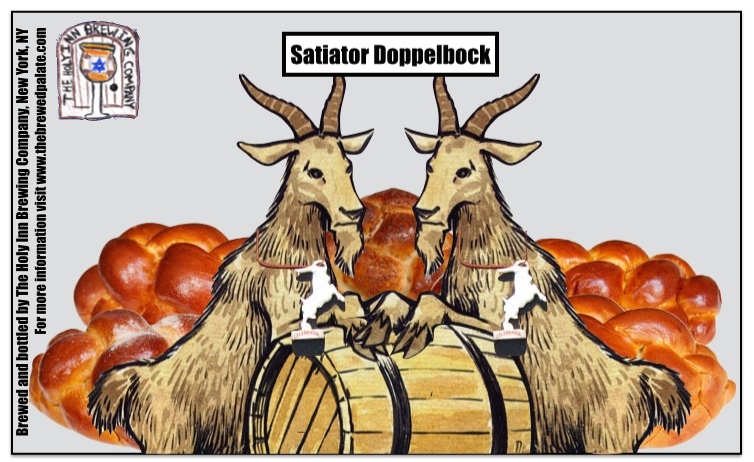
Satiator Doppelbock

HBW 67.001

After brewing two successful pilsners I decided that it was time to brew another one of my favorite lager styles, the doppelbock. When it came time to finalize the recipe for my first attempt at brewing this style I used Ayinger’s Celebrator Doppelbock, my favorite doppelbock, as inspiration for the flavor profile that I hoped to create. Hence, this beer’s label includes two goats wearing the well known and collectable Celebrator goat trinkets that are placed on each bottle after bottling. Next, because the majority of the more well-known German doppelbocks’ names end with the suffix “-ator”, I decided to name my doppelbock Satiator: a) “So you gave up dessert for Lent? Good for you, you wimp! Once upon a time, German monks ate nothing for the entirety of the Lenten fast. No bread, no salad, no fruit—nothing. Beat that. How did they survive, you ask? By imbibing large quantities of heavy, calorie rich beer, of course! Around 700 years ago, German monks in the town of Einbeck developed a specific style of malty, dark, high alcohol beer to help sustain them during intense periods of fasting. This beer became known as Bock, a corruption of the name Einbeck. Later, discontent with the strength of Bock style beer, monks developed an even stronger variant known as Doppelbock, meaning double Bock. This beer was so laden with nutrition that some dubbed it “liquid bread” (full article, catholicgentleman.net)…Doppelbock aka Liquid bread = the monks’ primary source of satiation during Lent. So while I personally am Jewish and not Catholic, I enjoy both brewing beer and baking challah bread. Therefore, I chose to copy and paste loaves of challah behind the goats…As with all of my labels; once this beer is kegged I’ll update its label with the ABV and possibly a short description of its flavors etc.. 

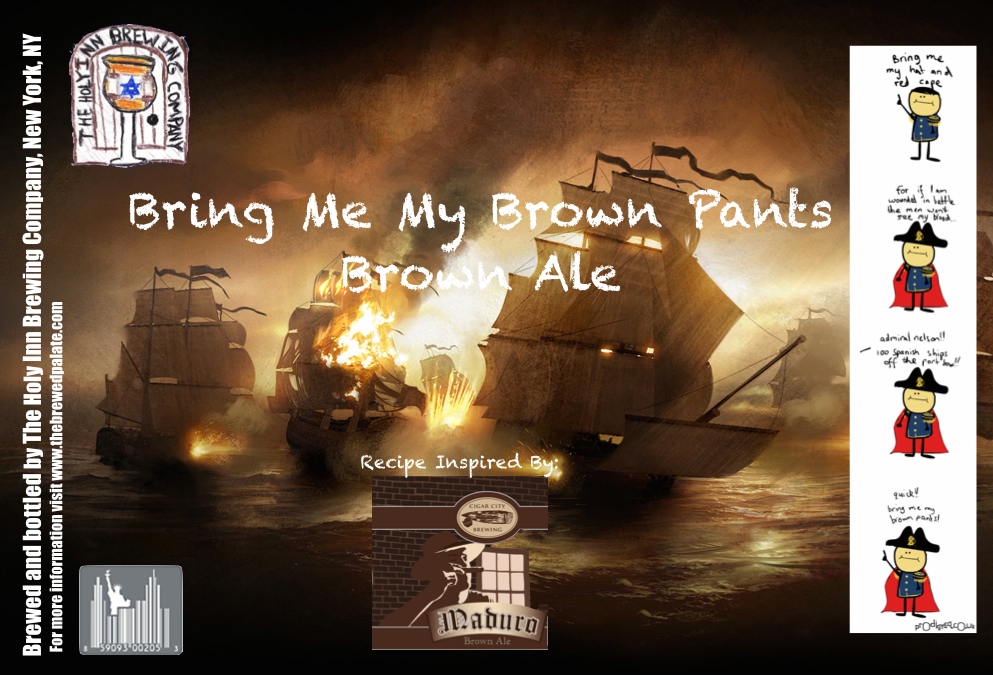
HBW 67.002

Having already brewed an imperial stout and quadrupel in recent months, I decided that my next cold weather beer would be a drinkable yet malty brown ale. However, while I usually have rough drafts of recipes for beers that I want to brew saved in my Beer Smith library. I for some reason never put together a brown ale recipe. So with my go-to brown ales in mind I searched for clone recipes and decided to use a clone recipe for Cigar City’s Maduro Brown Ale  as the base for my brown ale recipe…Though I could explain this beer’s name by typing it out for you; the comic strip that I included in the label will probably do a better job…As with all of my labels; once this beer is kegged I’ll update its label with the ABV and possibly a short description of its flavors etc.. 

Posted in Uncategorized | Tagged , , , , , , , , | Leave a comment

Grain To Glass: Nectar of the Bine IPA (a New England Style IPA)

12303973_786193190907_1478127216644499607_oAfter being blown away by various examples of New England IPAs aka the newest trend in craft and homebrewed IPAs I decided to finally make my first attempt at brewing one. To quote a recent blog post, “Now, you may ask…What’s different about these New England IPAs and pale ales? Simply put, they’ve moved away from the west coast classic profile of a bitter citrusy hop character coupled with a light/dry mouthfeel and opted for a juicy tropical hop aroma and flavor coupled with a smooth, sometimes creamy mouthfeel with little to no lingering bitterness.” Because it at times has taken homebrewers a number of attempts to brew an accurate or “spot on” clone of their favorite New England IPA; I’ve chosen to document my first attempt in the above “Grain to Glass” video and share additional details in this blog post. I hope you enjoy watching the video and reading this post as much I enjoyed brewing the beer itself. Cheers!

Tasting Notes: As noted in the video I took the keg hop bag out of the keg shortly after filming the included tasting clip/s and then gave the beer a couple days to condition before drinking more of it. Note: I scored this beer as a “New England style IPA”.

Appearance: Spot on for a New England style IPA. Pale straw in color coupled with a cloudiness that makes it pretty much opaque. An off white head formed when I poured the beer, but it quickly dissipated. Some lacing  was left behind. (2/3)

Aroma: Primarily a mix of dankness from the Columbus and Simcoe hops mixed with grapefruit peal and rind. Some floral notes and hints of white grapefruit juice surfaced as the beer warmed. Overall, lacking the overt juiciness of New England style IPAs. No off-flavors. (7/10)

Taste: Follows the nose quite well with more grapefruit along with orange and peach notes at mid palate and in the finish. The dankness / resiny quality from the aroma is there, but it doesn’t overwhelm the citrus or add too much bitterness to the beer. When I focused on it I was able to pick up on the grapefruit juice notes that I picked up in the aroma, but the beer was never as juicy or fruit forward as the New England style IPAs that I’ve tried. Some malt flavor was present in the finish, but didn’t contribute to much sweetness. No off-flavors (15/20)

Mouthfeel: Definitely creamy as per it’s IPA sub-style. Some bitterness did linger, but it faded nicely and didn’t dry out my palate like a more resinous West Coast IPA would. Some hop astringency  surfaced as the beer warmed and while some of the New England IPAs that I’ve tried have had astringency I’d prefer it to not be present at all. (4/5)

Overall: As noted above the main component that I found missing in this beer was the overt juiciness and fruitiness that I’ve come to love when drinking New England style IPAs. In order to achieve this in future iterations of this recipe I will probably make sure to acquire and ferment the wort with Wyeast 1318 London Ale III, sub out the Simcoe hops for either more of a variety that’s currently in the recipe or a different variety, and change my Sulfide to Chloride Ratio from 2:1 to 1:1. For my first attempt I’m satisfied overall with the results. (7/10)-probably closer to an 8/10, but I set my expectations pretty high for this recipe.

Score: 35/50

Screen Shot 2015-11-24 at 10.43.35 PM Screen Shot 2015-11-24 at 10.43.58 PM

All hops used in this beer were provided by Yakima Valley Hops for review and homebrew education.

Posted in Uncategorized | Tagged , , , , , , | 1 Comment

Coffee Journal 11/27/15 – Madman visits Irving Farm only to return to Stumptown

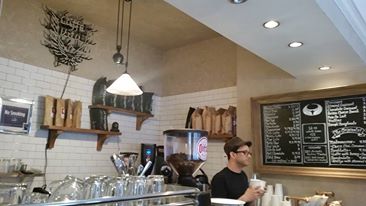
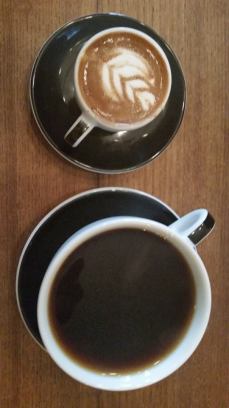
Madman 1Since my last Coffee Journal entry I’ve had some palate pleasing coffee experiences and as I sip my Friday morning coffee (emergency Starbucks Via – Italian Roast in my office at work) I’m writing this entry…On 11/12 (and again on 11/23) I had a dentist appointment on the lower east side of Manhattan and upon a friend’s recommendation checked out Madman Espresso (319 E 14th St, New York, NY 10003). Madman serves coffees from Caffe Vita both as pour over and in their various espresso-based drinks. When I first went there on the 12th I enjoyed a pour over of their Theo blend, which was quite straight forward tasting with hints of chocolate and an herbaceous quality woven into an otherwise generic darker roast coffee character. What saved my first visit was the macchiato that I got along with the Theo pour over. The espresso flavors were rich, chocolaty, and finished with a hint of fruity acidity and were blended quite well with just the right amount of steamed milk. Also, the barista was quite welcoming and open to chatting about specialty coffee and the rotation of single origin and blend coffees that come through this Madman location. Before leaving to head to work I ordered a second macchiato to go because I wanted to continue savoring my experience for just a bit longer…When I went back for my second visit I was happy to be told that the pour over coffee of the day was single origin Kenya AA and I quickly ordered it. Being that I’ve slowly become familiar with Kenyan coffees I was pleased to taste and smell notes of berries, candied citrus, and toffee. Before leaving I ordered a macchiato to go and for some reason it didn’t taste the same as the first two that I had in that it was nuttier and not as bold tasting. Next I go there I’ll have to ask if they also rotate which coffees they use for their espresso-based drinks.

     IrvingFarmOn Sunday, 11/15 I went with my wife to check out yet another NY coffee roaster named Irving Farm Coffee Roasters. The upper west side location that we visited was quite busy which took away from my preferred quiet coffee drinking atmosphere, but I was able to grab seats and then get in line to order my usual pour over and macchiato. For my pour over I chose  El Molino, El Salvodor, which although it wasn’t as bold as some of the Ethiopian coffees that I’ve had, lived up to its cupping notes with flavors of dried Apricot and molasses along with a hint of almond in the finish. The macchiato was good, but not exceptional in that it didn’t have any flavors that made it unique…I’d like to visit either Irving Farm again at a time when this or one of their other locations isn’t as busy in order to have the full/quiet coffee shop experience I’ve come to enjoy.

12184231_785673382607_3052784769053745245_oLastly on Thursday 11/19 I once again went to Stumptown Coffee Roasters’ West 8th Street location to buy some beans and have my usual pour over and macchiato…Instead of going for an African coffee I decided to try Marvin Robles, Costa Rica , a barista’s recommendation. True to its cupping notes it had a great aftertaste of rainier cherries. Since Stumptown always has a large variety of single origin coffees in stock I’ll definitely be continuing my efforts to venture out of my African coffee comfort zone and try coffees from Latin American countries such as Costa Rica and Guatemala.

Current coffees: Stumptown Ethiopia Duromina and my friend Merlin’s whisky barrel-aged coffee.

Posted in Uncategorized | Tagged , , , , , , | Leave a comment

TBP Presents: Brewmaster’s Reserve Series Lord Sorachi Release @ Brooklyn Brewery

LS Logo On Monday, November 16th I headed to Brooklyn Brewery for the release of Garrett Oliver’s newest addition to his Brewmaster’s Reserve Series of beers, Lord Sorachi. This 9.5% imperial saison is the “bigger brother” of Sorachi Ace, Brooklyn Brewery’s year round saison. In his usual fashion Garrett quieted down the crowd about half way into the night’s festivities for a brief speech about Lord Sorachi filled with humor and class. Of course I was ready and waiting with my camera and tripod so that I could film the speech and then share it with the craft beer community. I hope you enjoy watching the above video as much as I enjoyed experiencing it in person. Cheers!

LS releaseBrewery’s Description: The mysteries of the Royal Hop Lines are deep, and many tales are told about them. Long ago, in the 1970s, Lord Beikei of Japan and Lady Saaz of the Czech Lands bore a son, Sorachi Ace, in the Japanese prefecture of Hokkaido. Sorachi Ace quickly became a great hop, legendary for his unusual aromatic character. Opponents came to fear his entrancing “Lemon and Dill Stance” and the equally potent “Lemongrass Technique.” Sorachi Ace found his ambitions suppressed and he fled to the United States, making his way to the Pacific Northwest. There, on the estate of the House of Gamache in the land of Yakima, his powers grew strong…This winter, rejoice as he assumes a new guise—Lord Sorachi! He takes this mighty form to help us through the cold dark days, and to raucously celebrate with us on our holidays. A “Super-Saison,” Lord Sorachi’s bitterness is swift and sure, his hoppy pungency irresistible, and his strength assuring and immovable. Now, for a short time, embrace the mysterious duality of Sorachi Ace and Lord Sorachi.

Style: Imperial Saison
Malts: Pilsner
Hops: Sorachi Ace
Yeast: Our House Belgian Yeast
Alcohol by Volume: 9.5%
Original Gravity: 20° Plato
Food Pairings: Sushi, sashimi, tonkatsu ramen, yakitori dishes, Asian spices, and sturdy cheeses.
Availability: Very Limited Release
Format: Draft Only

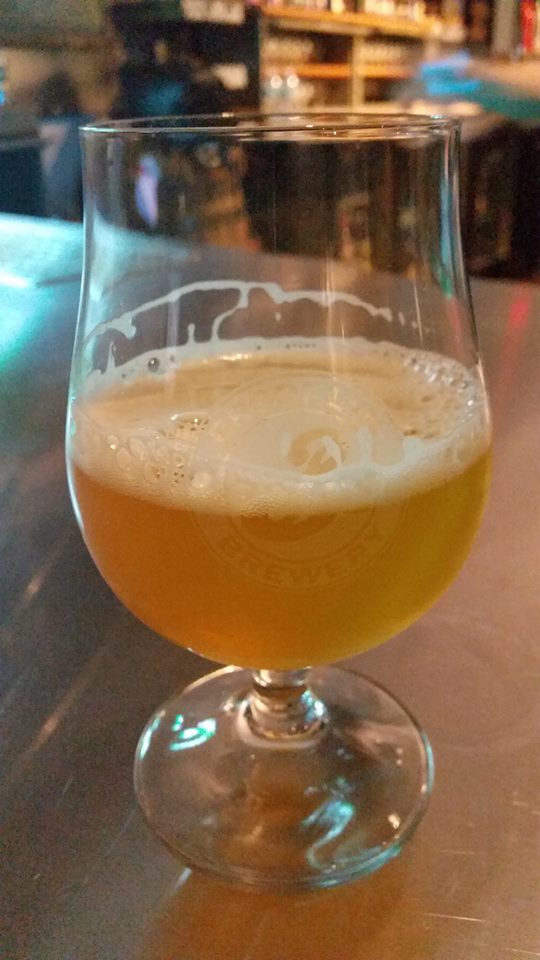
Tasting Notes: With Brooklyn Brewery’s Sorachi Ace being one of my favorite saisons I was quite excited to try its “bigger brother ” or “new evolution”. In the glass it was quite attractive with a yellow to light orange color and white foam which left behind some nice lacing (3/3). As expected the aroma was full of aggressive notes of lemongrass, dill, and Belgian yeast phenols. If Sorachi Ace saison wasn’t already a great showcase of the hop variety which gave it its name, this beer definitely took its characteristic aromas up a few notches from the start (8/10)…However, it was in the taste that the two beers really began to differ. Upfront the hops were the start of the show, but in the finish the malts and higher ABV added some bread-like sweetness and a noticeable booziness which at times detracted from my enjoyment of this drinking experience (14/20).  In terms of mouthfeel the ABV lent a bit of weight to the finish, but overall the beer’s body was on the low end of medium with just right amount of sweetness left on the palate (3/5). Overall, I was left wondering if the beer that I was drinking needed to age a bit. One of the reasons why I love Sorachi Ace saison so much is that it finishes crisp and despite it’s 7.2% ABV it has a refreshing quality that keeps me coming back for my next sip. Therefore, I’d recommend pairing Lord Sorachi with food in order for the added hops to shine and the boozy / “big beer” finish to complement the stronger flavors  and or weight of the dish (7/10). Rating: 35/50 (BJCP) or 7/10 (The Brewed Palate scale)

Posted in Beer Reviews, Brewmaster Interviews | Tagged , , , , , , , , | 1 Comment

Follow Up: My NYC Apartment’s Brewing Constraints.

TBP HIBC.002

Before I get into the topics that I’d like to cover in this post I’d like to thank those that checked out yesterday’s Homebrew Wednesday blog post, especially those who followed the link that I posted in the homebrewing sub-reddit. In total thebrewedpalate.com received 1,732 views (hits). In other words my blog received  the most views that its ever received in a single day. I should admit that as I saw the number creeping up I couldn’t help myself from refreshing my stats page as often as possible. I was so amazed that a short video showing an example of what I’ve been able to cram into my Washington Heights (upper west side of Manhattan, NYC) one bedroom apartment could garner so much positive feedback.

Fast forward to this morning…After reading over and responding to some of the comments that were left on my homebrewing sub-reddit post I realized that I should probably put together a follow up post about exactly what my current constraints are and how I’ve been able to consistently brew 5 gallon all grain batches within those constraints…

My current brewing and serving equipment:
20150719_153805Brewing:

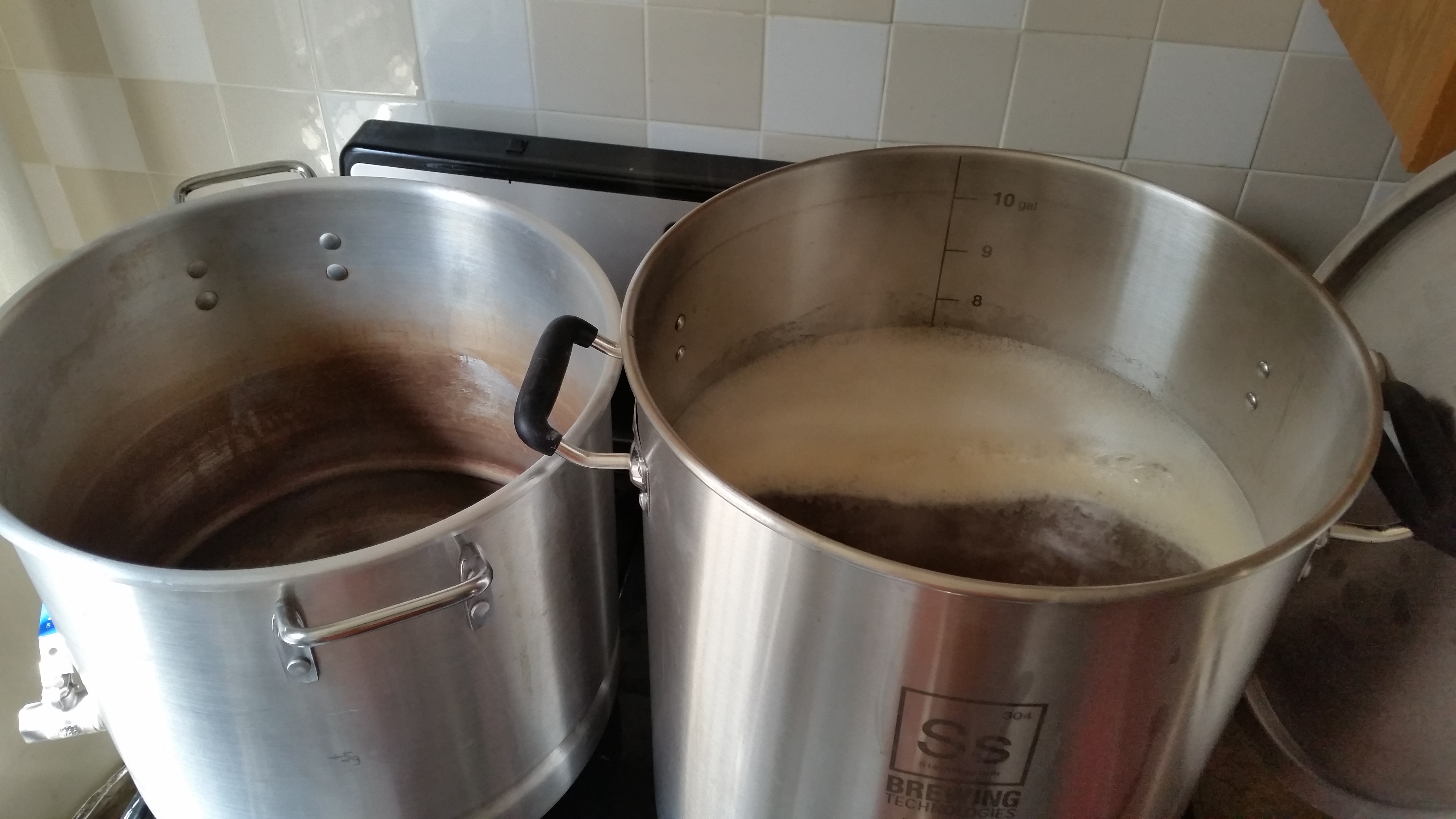
  • Two 10 gallon mash tuns: A DIY Rubbermaid 10 gallon cylindrical cooler with a CPVC manifold AND my new Ss Brewing Technologies InfuSsion mash tun.
  • Two 10 gallon kettles: A 40qt aluminum pot w/ a 2-piece ball valve (currently my HLT) and my new Ss Brewing Technologies kettle w/ a 3-piece ball valve and dial thermometer.
  • Tubing: Thick 1/2in silicone tubing with quick disconnects from Brew Hardware.
  • Chilling: 25 ft copper immersion chiller with garden hose fittings and a submersible pond pump to expedite chilling.

Fermentation:

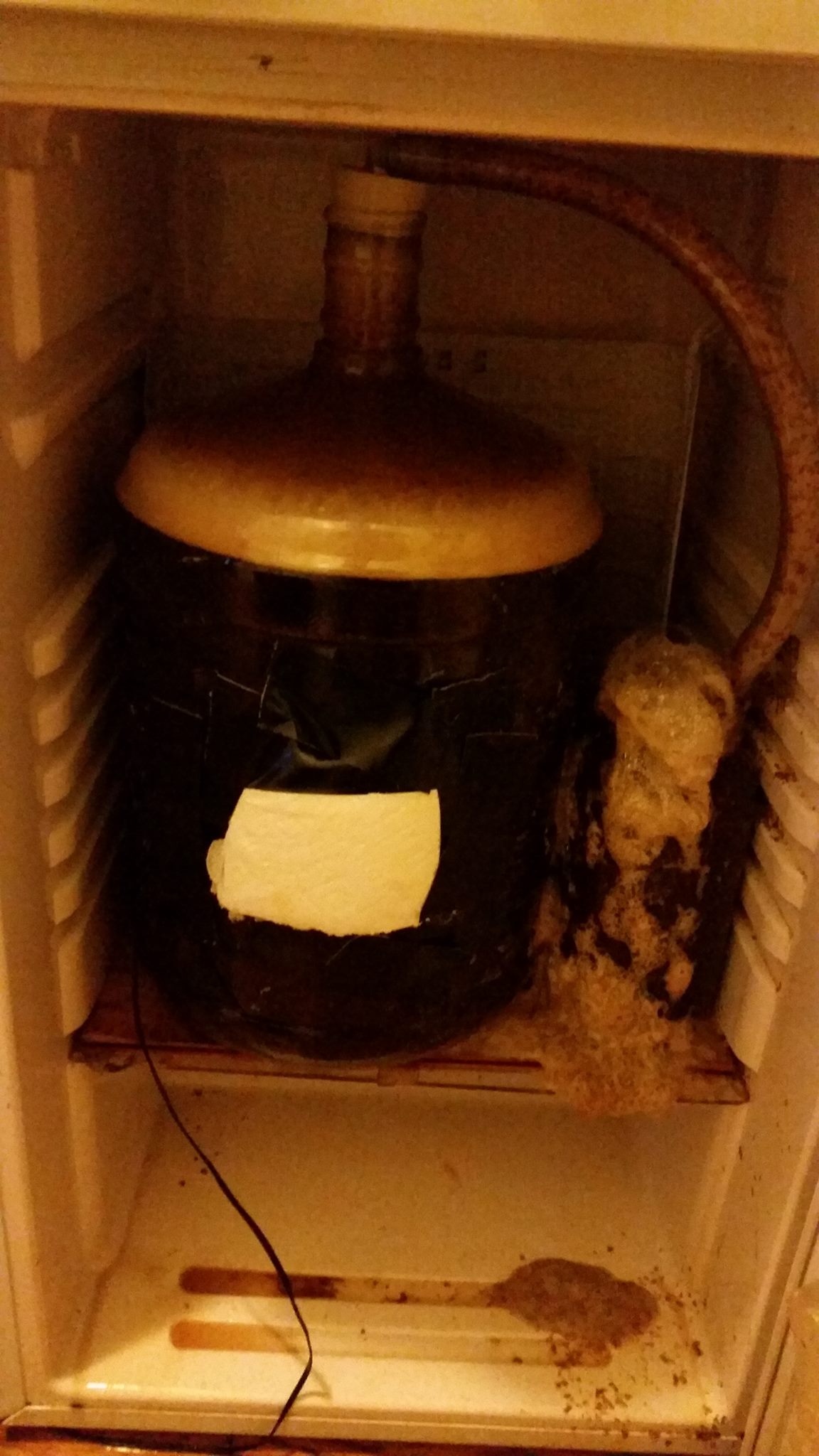
10849089_826128377410209_1995492903832458364_oFermentation vessels: 3 6-gallon PET carboys, 1 5-gallon PET carboy, 2 3-gallon PET carboys, and 2 1-gallon glass demijohns AND my fermentation fridge which can fit one carboy with a blow off tube (#10 rubber bung, plastic barbed elbow, and thick walled vinyl tubing). In needed I have a plastic tub that I use for a swamp cooler.


20150114_112240Serving:

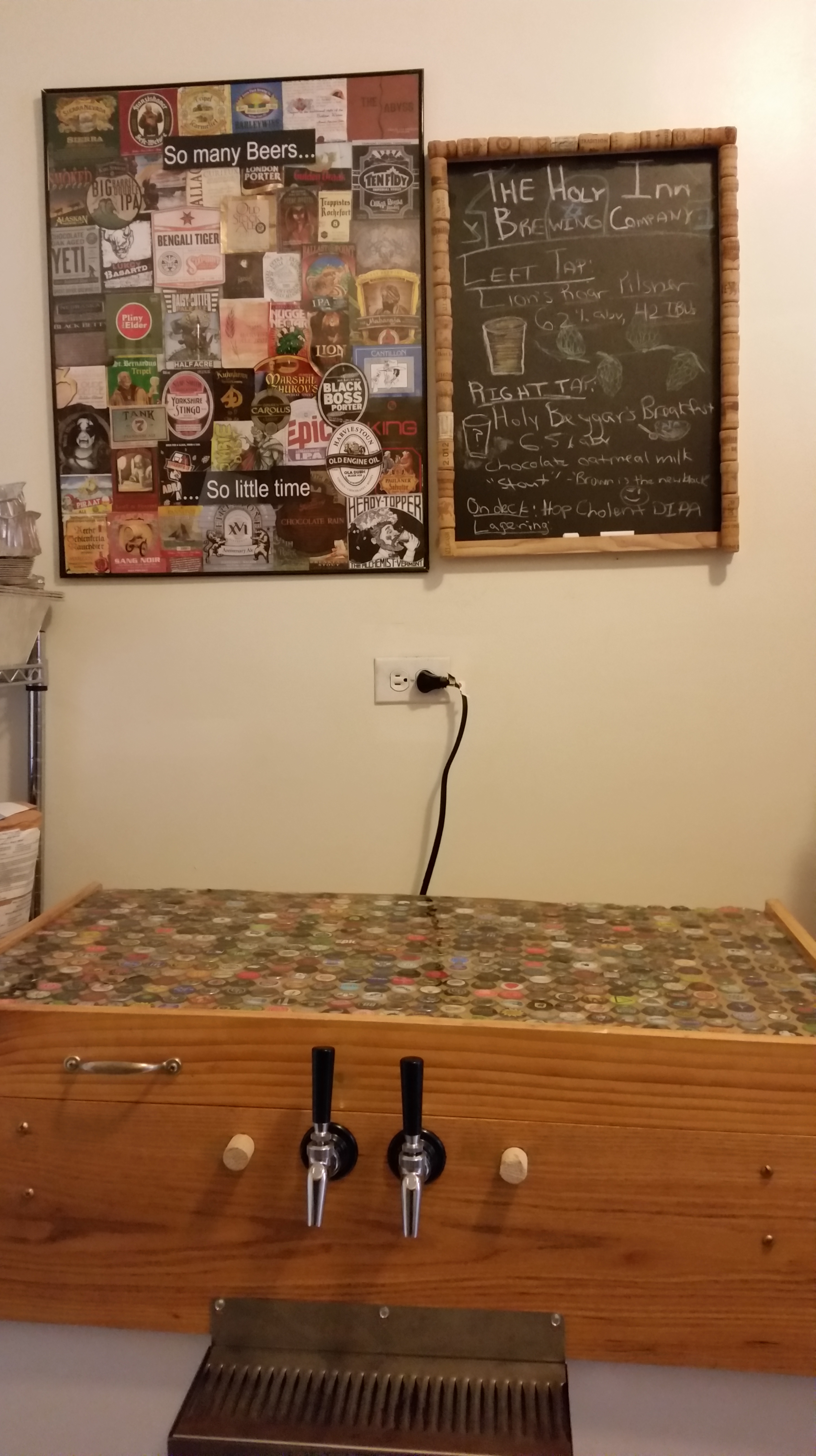
Keezer: 7-cubic foot freezer with 2 Perlick faucets, a drip try, beer cap bar top, primary and dual secondary regulators (one of which has a stainless steel splitter), fits 4 ball lock corny kegs, Eva-dry E-500 Renewable Wireless Mini Dehumidifer, STC-100 temperature controller.

Bottles: I either bottle from my kegs using the poor man’s beer gun method or bottle condition (Belgian beers, sours, and sometimes “big beers”).


My space constraints:

  • Storage: I store some of my fermentation fridge, equipment and most of my packaged beer in a hallway closet which is supposed to my coat closet and stacked along my hallway walls (as seen in yesterday’s post)…
  • My Kitchen: Many homebrewers who commented on yesterday’s sub-reddit post mentioned how small their kitchens are and how they have difficulty maintaining and or reaching a boil on their stoves. In my case I’ve been blessed with a fairly large apartment kitchen where I am able to house (store) my keezer and brewing vessels. Also, though my boil off rate isn’t that great I’m able to maintain a boil on my gas stove that’s adequate enough for me to not have too much difficulty reaching my target original gravity. However, on brew day I have run into some issues that relate to having space constraints. Therefore, I’ll describe my brewing processes in terms of adapting them to my contraints…

My current brewing processes:

  1. Heat up strike water 10-15 degreesF higher than my target mash-in temperature in my boil kettle and then transfer it to my mash tun so I can heat it up before doughing in.
  2. Mash in for a 60-75 minute mash (unless my recipe calls for  step mash).
  3. Vorlauf and collect first runnings. Constraint 1:  Due to my lack of counter space I place my mash tun on a dining room chair and face its ball valve towards on oven because otherwise I’d have to step over my tubing while collecting my wort.
  4. While collecting my first runnings I heat up my mash out water in my HLT and add it to the mash tun once I’ve collected my first runnings.
  5. Once I see that I’ve successfully raised my mash temp to 168F I leave it for a 10-15 minute mash out rest. All while heating up my sparge water in my HLT.
  6. After the mash out rest is over I vorlauf once again using my perforated turkey fryer pan and 1-gallon plastic jug and then begin collecting my second runnings.
  7. Once I’ve collected my first 4 gallons I hoist/lift up the collection bucket  and pour the runnings into my Ss kettle and start bringing them to a boil. Constrain 2: This may be a personal and not much of a space constraint, but I do not currently own a pump to transfer wort and water between vessels and after 2 years of brewing in my current apartment I’m still lifting vessels of hot and cold liquid. While purchasing and utilizing one wouldn’t take up too much space, it would probably take a few brew days to adapt my having a pump to my current brewing processes.
  8. Once I’ve collected my full boil volume I stir the wort to homogenize it and take a preboil gravity sample. I should note that I sometimes wait to add my last 1/4 to 1/2 of a gallon of wort until after taking my first preboil gravity reading.
  9. Contraint 3: Depending on how much wort I collect (I usually collect 7 gallons for a 90 minute boil) and how hot the first four gallons are by the time I’m done collecting the rest, it takes at least 20-25 minutes for the wort to reach a boil on my gas stove. Especially because my Ss Brewtech kettle only fits on one burner.
  10.  Once the boil is over I use my immersion chiller (added at 10 minutes remaining mark) to chill my now hopped wort down to 100 degreesF. Then to overcome a “constraint” that many homebrewers have when using an immersion chiller. I put my submersible pond pump in a fermentation bucket, fill it halfway with cold water, rearrange my chiller’s hoses for use with the pump, and keep adding ice until I’ve reached my target pitching temperature.
  11. I then transfer my wort a sanitized 6-gallon PET carboy, cover it with a sanitized piece of tin foil, and carry it into my hallway.
  12. To aerate my wort I attach a straightened wire hanger to my drill. Once done I pitch my yeast (always a starter) and put the carboy in my fermentation fridge with its boil off tube and a 2 quart mason jar filled halfway with StarSan solution.

So there you have it. While my current constraints aren’t as limiting as most city dwelling homebrewers I’m quite proud of the beers that I’ve brewed since October 2013 (when I brewed my first batch in my current apartment) and appreciate of how much knowledge I’ve gained by sharing my homebrewing experience with both my fellow NYC homebrewers and those that I’ve met / been in contact with through social media. In addition, I’d be remised if I neglected to mention that a major part of why I’ve been able to make the best out of current brewing constraints is that I have an amazing wife who supports my passion for brewing.

I hope this post gave you a better picture of where I stand in terms of brewing in my Washington Heights, NYC apartment and that its content is useful to at least some of my fellow city dwelling homebrewers. Cheers and Keep on brewing!
Posted in Homebrewing, Homebrewing DIY | Tagged , , , , , | Leave a comment