Homebrew Wednesday 66: Homebrews New and Old

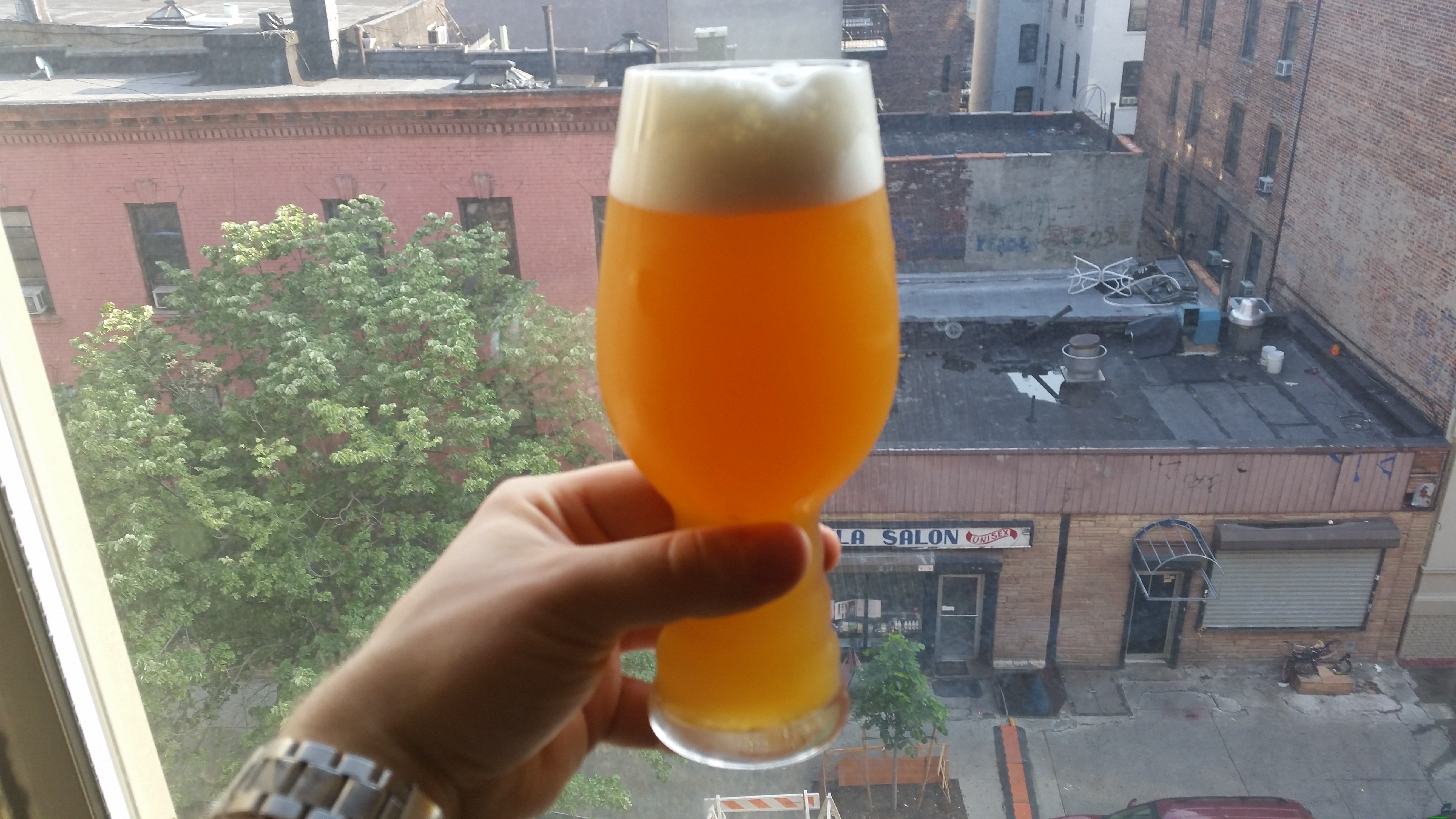
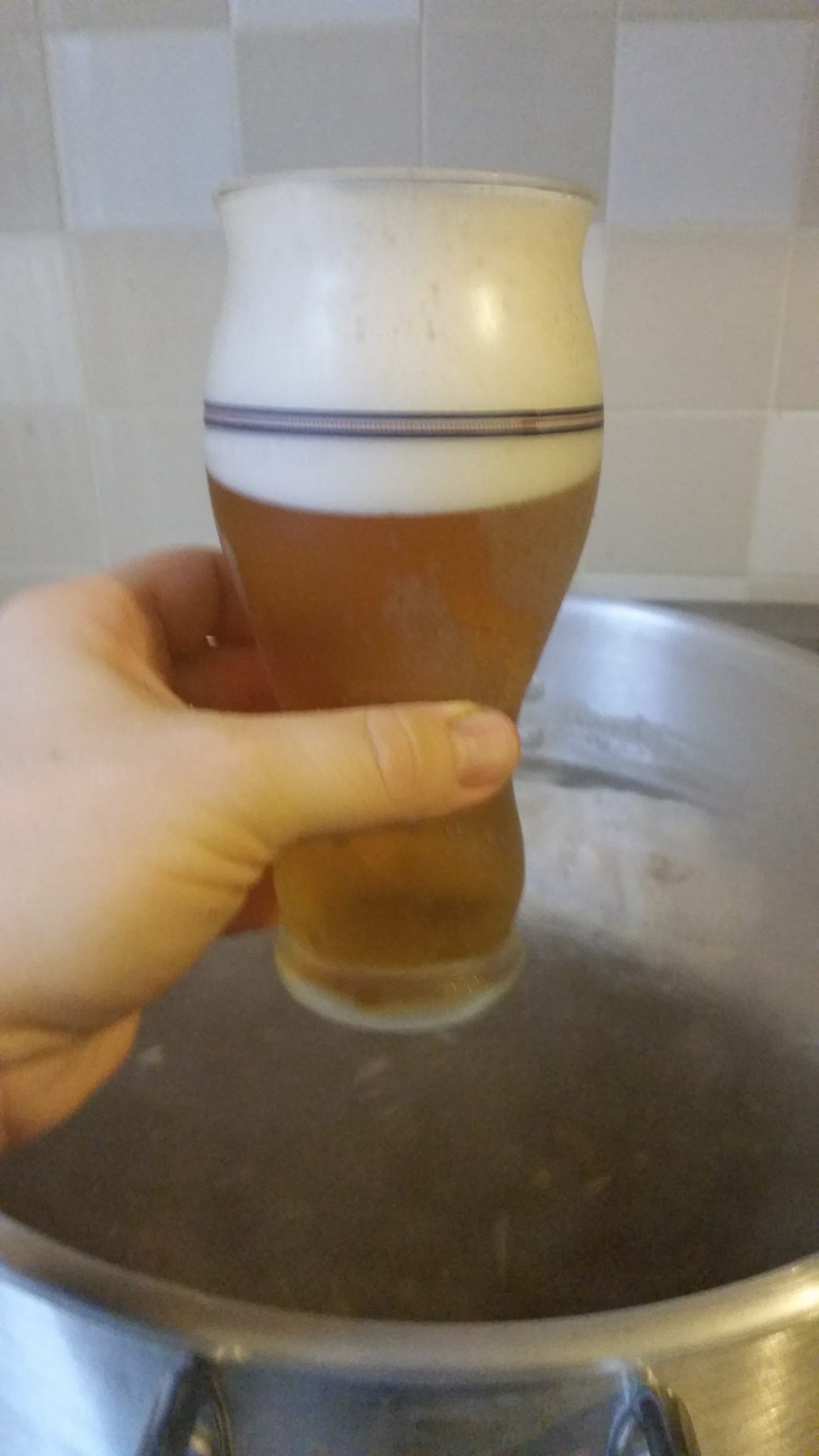
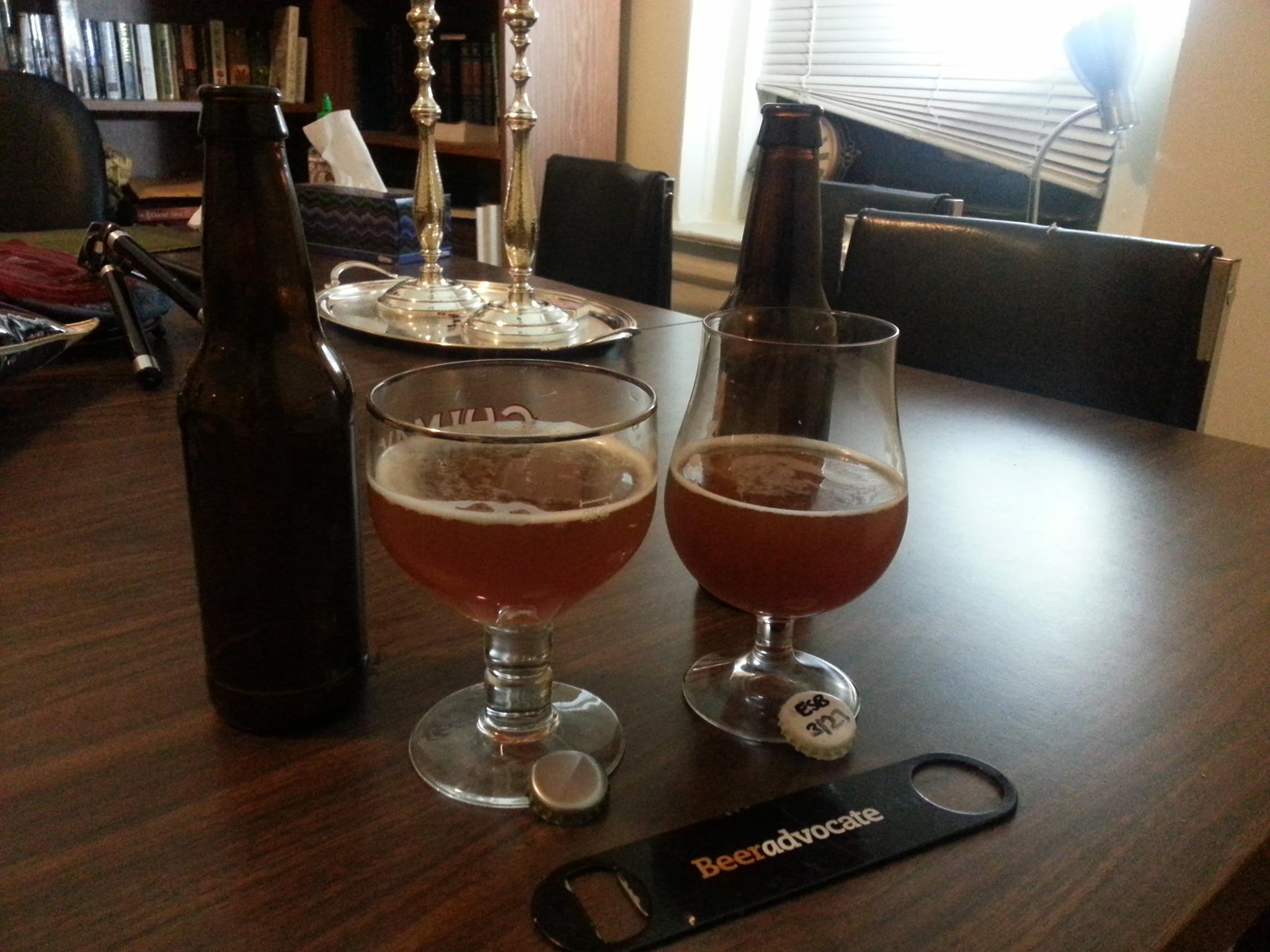
Over the past couple of years I’ve been constantly amazed by how much me and my fellow NYC homebrewers have been able to accomplish in terms of beer quality and how much equipment and packaged beer we’ve been able to cram into our apartments. In turn, this week’s Homebrew Wednesday includes a tasting of my almost year old dark saison which  has been aging in my beer lined apartment hallway, a “tour” of my current beer stash, and a highlight real from this past Sunday’s Nectar of the Bine IPA brew day. All of which are an example of the genuine creativity that can be developed through a passion for brewing quality beer. Cheers!

Related Links:

Posted in Homebrew Wednesday | Tagged , , , , , | Leave a comment

Coffee Journal: 11/9/15 – Changing of the Roasters – Stumptown


Stump2After finishing two great African coffees from Elixr Coffee Roasters it was time to return to my NYC coffee adventures and check out another local roaster’s café. Though they’re not based in NYC, I was excited to check out Stumptown Coffee Roaster’s West 8th Street location. On Thursday, 11/5 I took the A train to West 4th St. and walked a few blocks to the café. Having been to their smaller Ace Hotel location, I was quite impressed by the size and décor of this location. Converted into a café from a bookshop,  the wood laden walls and furniture made it immediately clear that a lot of effort was put into creating a homey atmosphere for coffee lovers.

Stump3After choosing two coffees to try at home I made my way up the line of customers and ordered a pour over of their newest Ethiopian coffee (Ethiopia Kochere) and a macchiato. After a brief conversation, the barista who was taking my order gave me a card which I can bring back to get hole punched and eventually get a free 12oz bag of coffee and said the macchiato was on the house. As if my experience couldn’t get any better, the barista who brewed my chemex pour over did not take any short cuts. She used a timer to time the brewing process, a scale to weigh the beans and water, a hot plate to keep the water at the ideal temperature, and a glass stir stick to stir the coffee grounds during their initial bloom. As a budding coffee geek, her attention to detail only enhanced my experience and  gave me a new level of respect for Stumptown.

Stump1The two coffees that I purchased to brew at home were Ethiopia Mordecofe and Guatemala Bella Vista. So far I’ve brewed them both with my Hario V60 pour over cone. Both of them were true to their cupping notes and packed a bunch with great body and flavors. I’m definitely excited to try more Guatemalan coffees in the coming months, but I’ll definitely make sure to always have an Ethiopian or Kenyan available to brew at home. In other words, I’ve come to prefer the flavor profile of coffees from those countries and want to keep exploring how various factors effect the differences in each coffee’s character (body, aroma, taste).

Posted in Uncategorized | Tagged , , , , , , , | Leave a comment

Homebrew Wednesday 65: Wednesday Night Live!

After returning home from Bitter and Esters’ November bottle swap I decided to cam up and film an update video…

Episode Notes:

  • Northern Brewer purchases: Bottles and custom caps for my Belgian quadrupel and a new PET carboy (The Bubbler).
  • My next beer – Nectar of the Bine IPA, a “New England style” IPA.
  • Planned “Grain to Glass” video.
  • Previously filmed: 2 week gravity sample tasting of my quad.
  • Bitter and Esters haul.
Posted in Homebrew Wednesday | Tagged , , , , | Leave a comment

HIBC Brewer’s Log: Where do I stand in terms of brewing my favorite beer styles?

20150519_175410Over the past two years I’ve brewed more consistently than in my first four years of homebrewing due to my finally taking the necessary steps to purchase my own brewing equipment (rather than brewing with friends who had more space and only occasionally brewing in my apartment). In turn, with various homebrewed iterations of my go-to beer styles now under my belt; I’ve recently found myself in a state of introspection about where my brewing skills stand in terms of brewing  those styles on a fairly regular basis. Therefore, because most if not all of them are quite popular amongst homebrewers, I’ve chosen to compile what I’ve learned from my periods of introspective brewing skills analysis  into a blog post in order to give you yet another glimpse into my homebrewing journey.
SaisonBeer Style: Saison

Examples Brewed (Since October 2013): Imperial Rye Saison, Imperial Rye Saison w/ brett brux and dried apricots, Dry-hopped saison, Dark saison, Saison yeast/Lactobacillus blend saison.

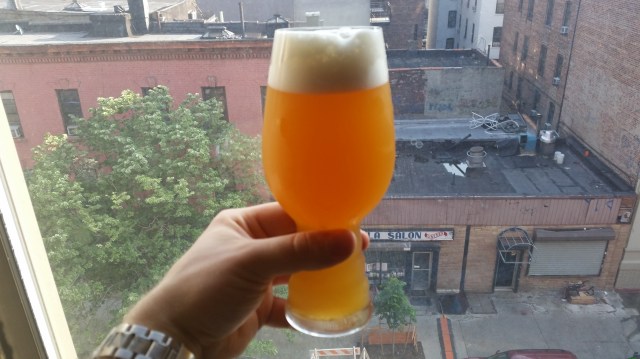
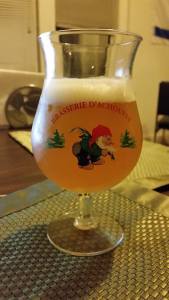
Where I stand: Though I’ve had some hiccups during the fermentation of some of my saisons they’ve all come out tasting good.  However, I feel that I have yet to reach a point where my saisons are on par with my favorite commercial examples of the style. Therefore, my next saison will most likely be a straight forward / no-frills example of the style with a simple grain bill, noble hops, and Wyeast 3711 French Saison. It if turns out well I’ll resume my brewing of variations such as those listed above.
20150812_220849Beer Style: India Pale Ale

Examples Brewed (Since October 2013): Double IPA, 4-grain / 4 new hop variety IPA, Rye IPA, Mosaic Wet Hopped IPA, Imperial Black Rye IPA, “New England Style” IPA (my next beer).

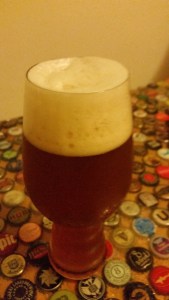
Where I stand: With the exception of my Mosaic Wet Hopped IPA which ended up having a fair amount of diacetyl, all of my IPAs have turned out great. I can’t say they were perfect, but the hop aroma and flavor that I was able to create through late hop additions, dry hopping, and choosing the right yeast strain definitely met my expectations. So what’s still left to work on? I will continue to tweak my current recipes, create new ones with different hop bills, work on mastering IPA water profiles, and use yeast strains other than Wyeast 1272 American Ale II in order to experience the flavors they can bring out of the hops that I use most often.
10900190_726413899087_911703382031358594_oBeer Style: Stout, Porter, and Brown Ale

Examples Brewed (Since October 2013): Chocolate Oatmeal Coffee Stout, American Brown Ale (collaboration), Chocolate Oatmeal Milk Stout, American Porter, Russian Imperial Stout.

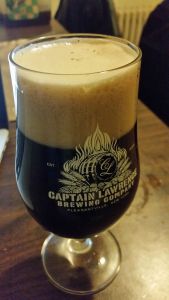
Where I stand: I’ve decided to group these styles together both because of their dark color and because I need to work on correcting similar brewing practices with all of them. The two most related beers are the chocolate oatmeal stouts. The first of which was my first beer after starting to brewing on a more regular basis. My primary issue with brewing darker colored ales started with the Chocolate Oatmeal Milk Stout where despite not having experienced problems with roasted barley (grain) astringency, I decided to cold steep all of the dark grains and add the resulting extract towards the end of the boil. This resulted in a very good tasting stout that fell short of being “great” because it lacked the little bit of roasted malt character that sweet/milk stouts need to cut through the beer’s inherent sweetness. When it came time to brew my American Porter the clone recipe that I was following (Founders Porter) called for a high mash temp and more chocolate malt that I was used to. Therefore, I decided to add my dark grains and some calcium carbonate at mash out. This again resulted in a beer that tasted good, but lacked its necessary roasted malt character…In the future I will add all of my dark/roasted grains to the mash and adjust my mash pH as needed… Because I brewed the collaboration brown ale on a friends equipment I’ll have to tweak the recipe in order to brew my ideal American Brown Ale on my own brewing equipment…Check out this blog post to see what happened while brewing my Russian Imperial Stout, which miraculously turned out to be a great tasting beer.
20150303_094411Beer Style: English Barleywine

Examples Brewed (Since October 2013): Oak Aged Barleywine, English Barleywine (made changes to my barleywine recipe and didn’t age it on bourbon soaked American and French oak chips).

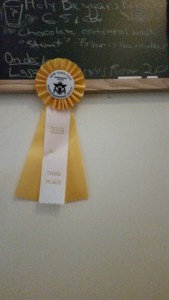
Where I stand: Despite some over carbonation and being oak forward, my first ever English barleywine took 3rd place in the Smoked and Wood-aged beer category of The New York City Homebrewers Guild’s Homebrew Alley 2015 competition. Due to its oak-forwardness I decided to nix the oak aging and amp up the malt character when I brewed my next barleywine. It too was over-primed and in turn scored a 29/50 in the same competition. After putting the remaining bottles in the fridge to stop them from continue to carbonate I wax sealed them and thankfully the beer is aging quite nicely. I’ll most likely brew the same recipe again and either carbonate it in and bottle it  from a keg or use less priming sugar.

10974335_858039170885796_6135479032312340359_oBeer Style: German/Bohemian Pilsner

Examples Brewed (Since October 2013): Lion’s Roar Pilsner versions 1 and 2 (Firestone Walker Pivo Pils clone).

Where I stand: The only significant difference between the two iterations of my take on brewing a clone of my favorite pilsner was my going from 85% to 90% German pilsner malt. Both of them turned out great, but I feel that there’s still room for improvement. Version 2 had some hop astringency in the first month or so of being on tap, therefore I may use a touch less Saphir hops in the whirlpool or dry hop additions. Secondly, I’d like to amp up the malt character by taking out the little bit of Vienna and Munich malts that I used and adding more Aromatic malt. Lastly, because both versions fermented down further than expected and the finished product came out to 6.2% ABV; I’d like to rework my step mash temperatures and or start with less grain in order to hit my target of 5.5% ABV.

11731776_765121468807_1684832535240937744_oBeer Style: Hefeweizen

Examples Brewed (Since October 2013): Hefeweizen (55% wheat, 45% barleywine), Dry Hopped Hefeweizen

Where I stand: Beyond the possibility of adding a ferulic acid rest to the step mash schedule for my base hefeweizen recipe I can’t see myself making any major changes to it. In terms of the dry hopped version, I’m not completely sure why it didn’t turn out well. Either I didn’t use enough Mandarina Bavaria hops (not used in boil) in my dry hop addition or I contaminated the beer when I had to quickly stick my arm in my bucket of StarSan and into the finished beer after realizing that my bottling bucket’s spigot was leaking after I had already racked the beer into it. Either way I don’t think I’ll be repeating this variation on this classic style again.

904223_714461611910220_8083947970518538540_oBeer Style: Big Belgian Beers

Examples Brewed (Since October 2013): Tripel and Quadrupel (currently finished its primary fermentation)

Where I stand: While there was quite a large gap between these two beers, the lessons that I learned from brewing the Tripel (FG 1.016) definitely affected how I chose to manage the first week of my recent Quadrupel’s fermentation. Firstly, I decided to split the candi and demerara sugars between a late boil addition and a second addition on the morning of day four of fermentation. Secondly, I began to raise the fermentation temperature earlier to further encourage attenuation. Thankfully it fermented down to my target FG of 1.010 or 10% ABV. My plan is to bottle it in the next week or so and let it age for at least 5-6 months before opening a significant amount of bottles.

All feedback is well…Cheers and Keep on brewing!
Posted in Homebrewing | Tagged , , , , , , , , , , , , | Leave a comment

The Brewed Palate’s Newest Venture: Specialty Coffee

coffee header

Over this past Summer I began moving away from major chain coffee shop coffees (cough..cough Starbucks aka “Charbucks” to some coffee geeks) and started visiting local specialty coffee roasters; the first of which is located right in my neighborhood. Buunni Coffee is a relatively small roaster of Ethiopian and other African coffees, each of which is sold at various roast levels. Their Washington Heights café is always busy and the staff are just as passionate about brewing high quality coffee as their customers are about drinking it. After trying the majority of their coffees I was inspired to venture out of Washington Heights and try coffees from as many different roasters as possible and boy have I had a great start to my coffee adventure…So just as my one of my primary goals for this blog is to share my homebrewing and craft beer experiences with you so that you can learn from them; I’ve decided to do the same with my specialty coffee experiences.

I should note that I’ve always loved the flavor of coffee and never been one to add more than a touch of skim milk and 1 tsp of sugar or packet of Splenda to my cup. But it took until 2015 for me to take hold of the opportunity to utilize my palate, which I’ve spent years developing, to begin to fully experience the wide range of flavors that specialty coffees have to offer.

All posts will be archived in the coffee journal page that’s linked in the above website header.

10/24/15 – Changing of the Roasters

Before I discuss specific coffees I’d like to discuss my current routine for trying out new coffees (blend and single origin) at home… A) Currently I am the sole caffeinated coffee drinker at home, and therefore despite  my 20oz travel mug which I use 5-6 days a week for my coffee, it’s been taking me a bit longer than in the past to finish off a pound of beans.  B) Due to my tendency to go all out when exploring a hobby that relates to my creative nature I’ve recently started buying two coffees at a time so I can alternate as I so desire. While this may prove to be at times a losing battle in terms of coffee freshness, I plan on continuing doing so as long as time and finances allow. C) Lastly I should note that I store my beans in Vacu Vin Coffee Saver tinted air tight containers that I store in a kitchen cabinet in order to maintain freshness as best as I can.

Elixr KenyaOn to the title of this journal entry… After 10 days (minus 2 where I didn’t drink them) of alternating between Three Africans and Bella Donovan, two of  Blue Bottle’s year round blends I brewed my first pour over cup of Elixr’s Kenya Kiambu this morning. While sipping from my travel mug during my morning commute via subway (NYC), I was surprised to not pick up on any particular fruit flavors beyond the general moderate to high acidity and balanced sweetness that African coffees are known for. However, once I got to work and was sitting in my office eating breakfast, I removed the lid of my travel mug and was surprised to pick up a prominent mandarin orange flavor. Next, while Elixr’s cupping notes describe this coffee’s underlying sweetness as cocoa nib and clove, I perceived it as bakers chocolate with a touch of added sweetness and some earthy undertones. In terms of body, despite the coffee’s acidity creaping up towards the high end of medium and my brewing it via my Hario V60 pourover cone, this coffee’s body was definitely medium and smooth…I’ll have to drink more of it and brew it via French press to form my final opinion on it, but from this first cup/mug I can definitely give Elixr’s Kenya Kiambu a thumbs up.

For those who are interested click here to check a discussion about people’s go to coffee regions on the ‘coffee’ subreddit.

Posted in Uncategorized | Tagged , , , , , , , | Leave a comment

Homebrew Wednesday 64: Back With Another “Big Beer”

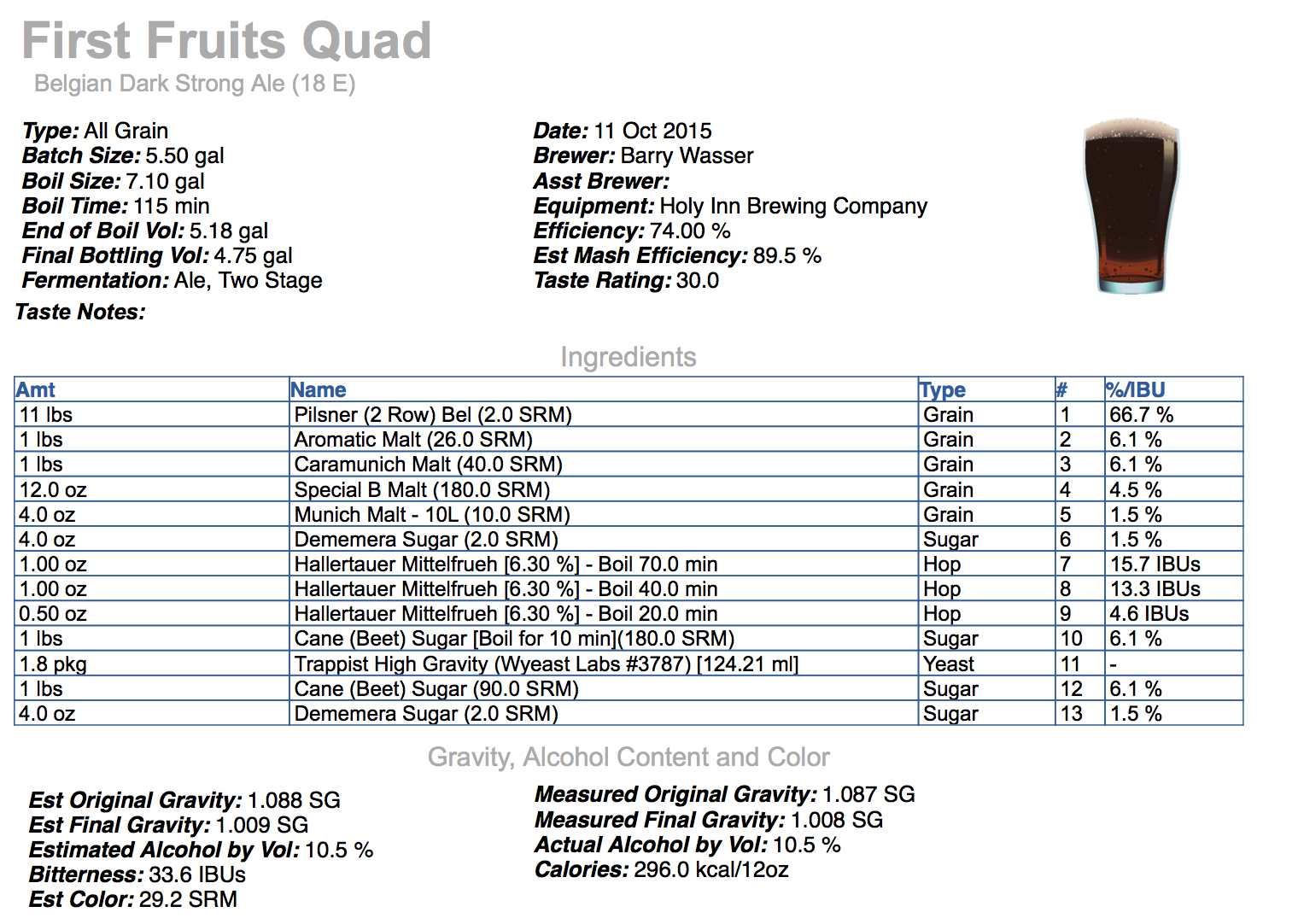
Episode Summary The Holy Inn Brewing Company is back up and running! In this episode of Homebrew Wednesday I first pour a full glass of my imperial stout and share some brief tasting notes. Then I move on to footage from Sunday, October 11th – First Fruits Quadrupel brew day. Enjoy and Cheers!

Second brew day using my new Ss Brew Tech InfuSsion mash tun:

  • After a panic stricken mash process when I first tested out my new mash tun. I decided to revert back to my time tested mash/sparge processes in order to see if I could achieve the same mash efficiency that I was achieving using my cooler mash tun .
  • My “time tested mash/sparge process” includes: Preheating the mash tun, doughing in,  stirring the grain at least twice during the mash to eliminate hot/cold spots, vorlaufing then running off most of my first runnings, adding /stirring in my mash out water, doing a 10-15 minute mash out rest, running off my second runnings slowly while fly sparging.
  • With this brew I ran off my runnings extra slow to make sure that I’d hit my target preboil gravity and thankfully I was able to hit my exact target gravity of 1.060 SG (w/o any of the added sugars). I should note that one additional factor that made my run off slower than usual was that at times I felt that opening the mash tun ball valve half way caused the run off to flow too fast for my liking, but opening it any less than that caused the run off to flow slowly and then stop after 5-10 minutes. Next time I’ll have to find a happy medium to shorten the run off / sparge process a bit.
  • As mentioned in the  above video, one thing I noticed was that the mash tun’s thermometer went up help a degreeF once I starting running off my first runnings, which to me meant that I did not lose as much heat as I had originally thought. If my assumptions/observations (I performed spot checks using my usual digital thermometer throughout the mash) are correct, I only lost just over a degreeF during the mash (watch video for full details).
  • While I think it’ll take another brew day to give my “final verdict” on my new mash tun I’m quite satisfied with it so far and am thankful to have teamed up with Ss Brew Tech whilst I continue developing my brewing knowledge and skills.

Recipe Breakdown:

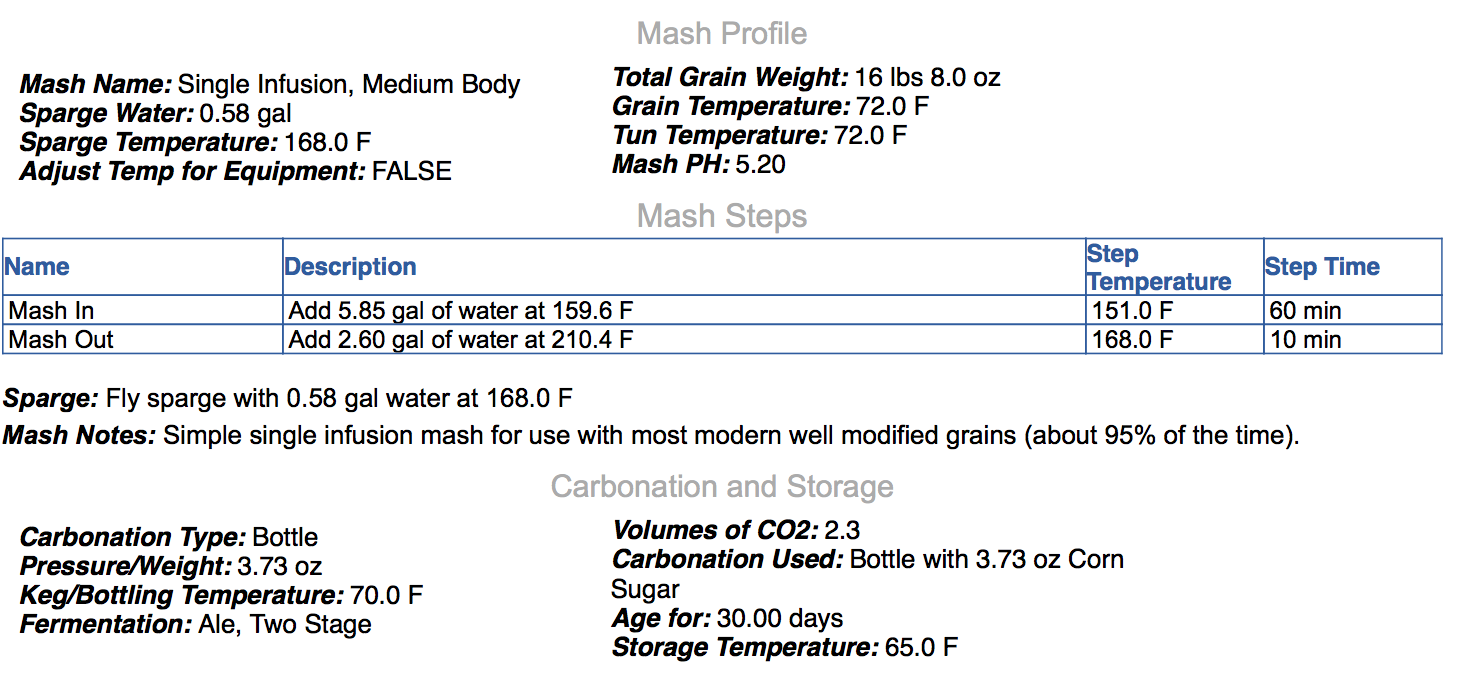
Screen Shot 2015-10-16 at 12.31.24 AM Screen Shot 2015-10-16 at 12.31.46 AM

  • My first goal for the recipe was to have its grain bill complex enough to lend itself to giving the beer the potential to age well. Therefore, after looking over many recipes that I found online and in print, I decided to go with 15% simple sugars instead of leaning towards an amount in the upper teens or even twenty percent.
  • I went for Demerara sugar instead of table sugar because I like it’s molasses/caramel aroma and along with the D180 and D90 candi syrups I hope it ends up adding some nice complexity to the final product.
  • While the mash started at 151F, it was stable at 150F for most of the mash rest. I also used more sparge water than is listed above…Even after I started off with a pretty high grain to water ratio.
  • I decided to split the sugars between the last 10 minutes of the boil and the morning of day four of primary fermentation in order to better ensure that the beer/wort would attenuate down to my target FG (1.009). Note: The 1.008 noted above is just the FG that I input into Beer Smith to check what the beer’s ABV could potentially be.
  • Yeast Starter: 2 smack packs of Wyeast 3787 Trappist High Gravity pitched into a 2.2 liters of starter wort.
  • The hottest that I let the fermentation get was 74F (yeast strain’s high end of 78F) in order to make sure that the final beer doesn’t have too much fruity esters.

In other news: I’ve added a new page to thebrewedpalate.com called “Coffee Journal” (above in blog header). Having started getting into drinking and brewing specialty coffees over the past 5-6 months, I decided to chronicle my coffee experiences on my blog. For now I’m going to keep my posts on this “separate page” in order to keep my homepage focused on homebrewing and craft beer related topics. However, in the future this arrangement may change.

Posted in Uncategorized | Tagged , , , , , , , | Leave a comment

The “New England Style” IPA: Four IPAs from Trillium Brewing Company

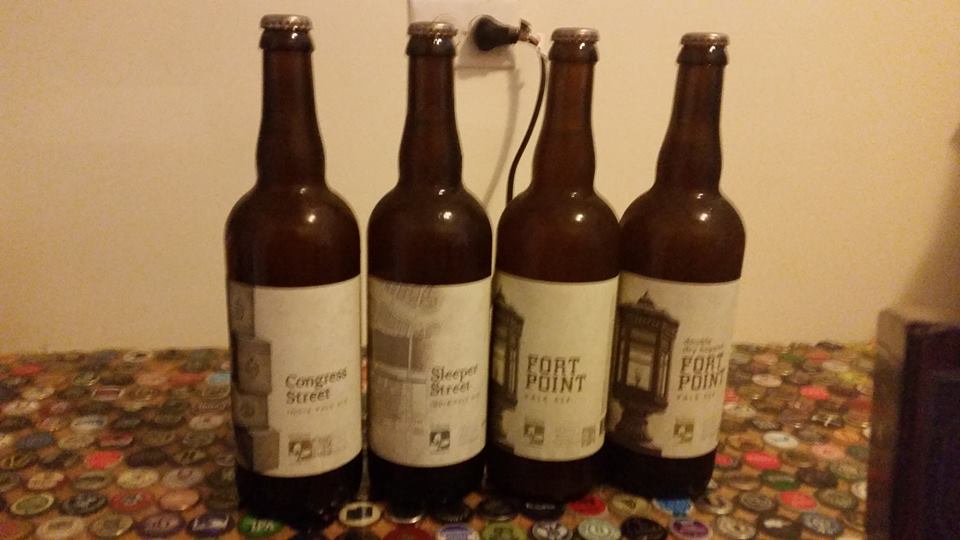
11831668_770498942307_8854838368793782674_n

Watch out West Coast IPA brewers! New England breweries are now brewing the latest and greatest hop-gasmic beers. Now, you may ask…What’s different about these New England IPAs and pale ales? Simply put, they’ve moved away from the west coast classic profile of a bitter citrusy hop character coupled with a light/dry mouthfeel and opted for a juicy tropical hop aroma and flavor coupled with a smooth, sometimes creamy mouthfeel with little to no lingering bitterness. One caveat though is that many of the breweries that have been producing New England style hoppy beers have quite limited distribution. Leaving hop-heads with the  need to plan a New England road trip or organize beer trades in order to procure these sought after (at times quite hyped) beers.

While I’ve only made one such road trip so far in order to get my hands on some of Hill Farmstead’s sought after IPAs, double IPAs, and barrel aged beers. When a friend offered to pick me some beers from Trillium Brewing Company (Boston, MA), I accepted his offer without hesitation and ended up with four beers (750ml bottles). All of which are reviewed below.

Some New England-style IPA breweries:

Quick side note: Because this post has consistently received a considerable amount of daily views I’d like to direct your attention to the Grain To Glass post that I put together for the New England style IPA that I actually brewed after being inspired by the Trillium beers reviewed below. Click here to check out a video of the entire process that I went through to produce my first New England IPA along with more information on this sub-style and written tasting notes.

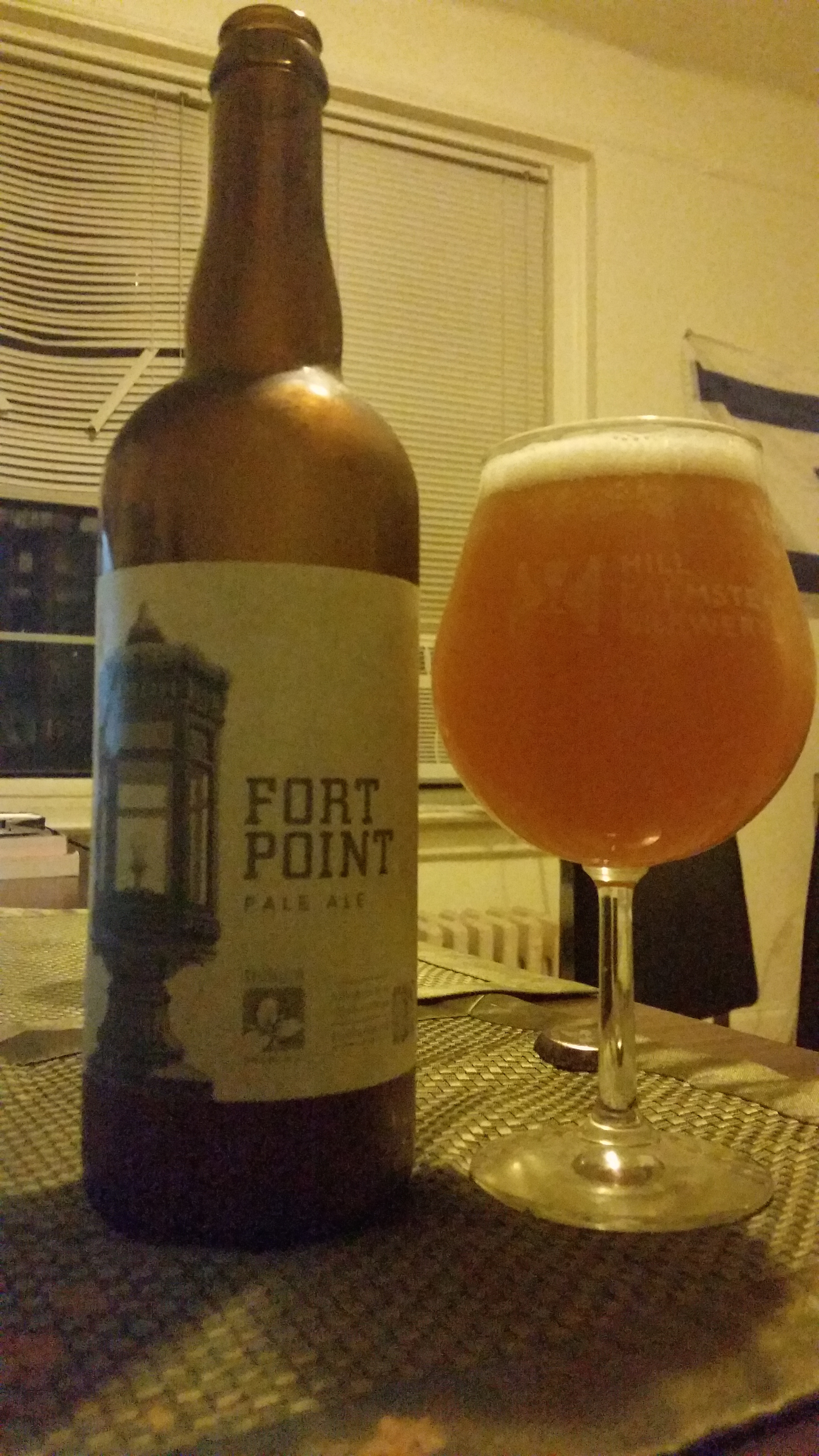
20150813_223853Trillium Fort Point Pale Ale: 

Brewery’s Description: Layers of hops-derived aromas and flavors of citrus zest and tropical fruit rest on a pleasing malt backbone in our Fort Point Pale Ale. Dangerously drinkable with a dry finish and soft mouthfeel from wheat. Our year round hoppy pale ale culminates in a restrained bitterness and dry finish.  

Tasting Notes: In true New England IPA fashion this beer poured a cloudy Straw to light gold color with a 1 finger head that left behind some impressive lacing. At first the aroma and flavor came off as being somewhat West Coast in character with grapefruit and dank hop notes throughout. However, as the beer warmed flavors of juicy pink grapefruit and apricot took over and gave the impression that I was drinking actual fruit juice. Though the dank hop notes lingered, they never took away from the juicy hop character or increased the beer’s already balanced bitterness. As eluded to above, this beer’s mouthful was smooth and its body was on the low end of medium, which lent itself to high drinkability i.e. I polished off the bottle in one sitting quite easily. Overall, as my first beer from Trillium I couldn’t have asked for more. In fact, of the four beers that I was fortunate to get my hands on, this one was my favorite. Rating: 10/10


20150818_205441Trillium DDH Fort Point (Citra and Columbus): From what I’ve heard and read Trillium dry hops towards the end of primary fermentation and again in an oxygen purged bright tank after a “closed transfer” of the beer to its tank.

Tasting Notes:  After being blown away by the base Fort Point Pale Ale it was clear that I had to try the double dry hopped version next. In terms of appearance this version poured like a “hop milkshake”.  Straw to light orange like its predecessor, but cloudier and topped by a creamier looking white foam that left behind lots of lacing. At first I was met in both the aroma and flavor by lots of grapefruit and dank hop notes upfront with a touch of malt sweetness at mid-palate, followed by moderately dry finish. However, even more grapefruit juiciness (like eating a fresh grapefruit) crept up in aftertaste as  I sipped on and was quickly accompanied by hints of melon, apricot, and papaya. Lastly, towards of the end of the bottle the intensity of the hop character reminded me of juicy fruit bubblegum with its flavors amped up a notch…Another home run from Trillium Brewing Company! Rating: 9/10

20150822_231446Trillium Sleeper Street:

Brewery’s Description: None available. According to the American IPA – Hop Bills and Analysis on The Mad Fermentationist’s website this beer is brewed with El Dorado and Trillium’s go to versatile hop, Columbus.

Having brewed with El Dorado hops I was curious to experience how they matched up with Trillium’s go to versatile hop, Columbus. Being that Trillium most likely has a base grain bill for its IPAs and pale ales, Sleeper street’s appearance did not deviate from that of Fort Point. However, I was not as wowed by its overall hop character  due to its lack of the New England hop juiciness and smooth (almost creamy) mouthfeel that I loved in Fort Point and DDH Fort Point. Upfront I was met with grassy lemon and floral notes, which I associated at the time with Columbus hops. Then at mid-palate the El Dorado surfaced with refreshing notes of candied lemon peal and lemongrass. While the finish wasn’t as juicy as the previous two beers it was crisp and lent a refreshing quality to my drinking experience. Rating: 7.5/10

20150825_215745Trillium Congress Street

 Brewery’s Description: None available.  According to the American IPA – Hop Bills and Analysis on The Mad Fermentationist’s website this beer is brewed with Galaxy and Columbus hops. 

Comparable to DDH Fort point in appearance this beer poured straw to light orange in color, had full on NE IPA cloudiness, and was topped by an off white head that dissipated quickly, but left behind a considerable amount of lacing. Congress Street’ initial aroma consisted of fresh peach, tangerine, and grapefruit with mango and a resiny quality surfacing in as warmed. The hop complexity followed seamlessly into the taste with added passionfruit and papaya notes rounding out the beer’s overall hop juiciness…Yet another tick on the NE IPA checklist came from the beer’s balanced bitterness and smooth and creamy medium body. So while the malts lent that great balance, they didn’t lend discernible flavors to the beer.  In the finish there was a touch of citrus pith, hop astringency, and dankness left on my palate which at first reminded me of a WC IPA, but as I sipped on the dankness faded and notes of fresh orange Juice, candied pineapple, and passion fruit sorbet enhanced and smoothened out the finish. Rating: 9/10 – best use of galaxy hops that I’ve tried to date.

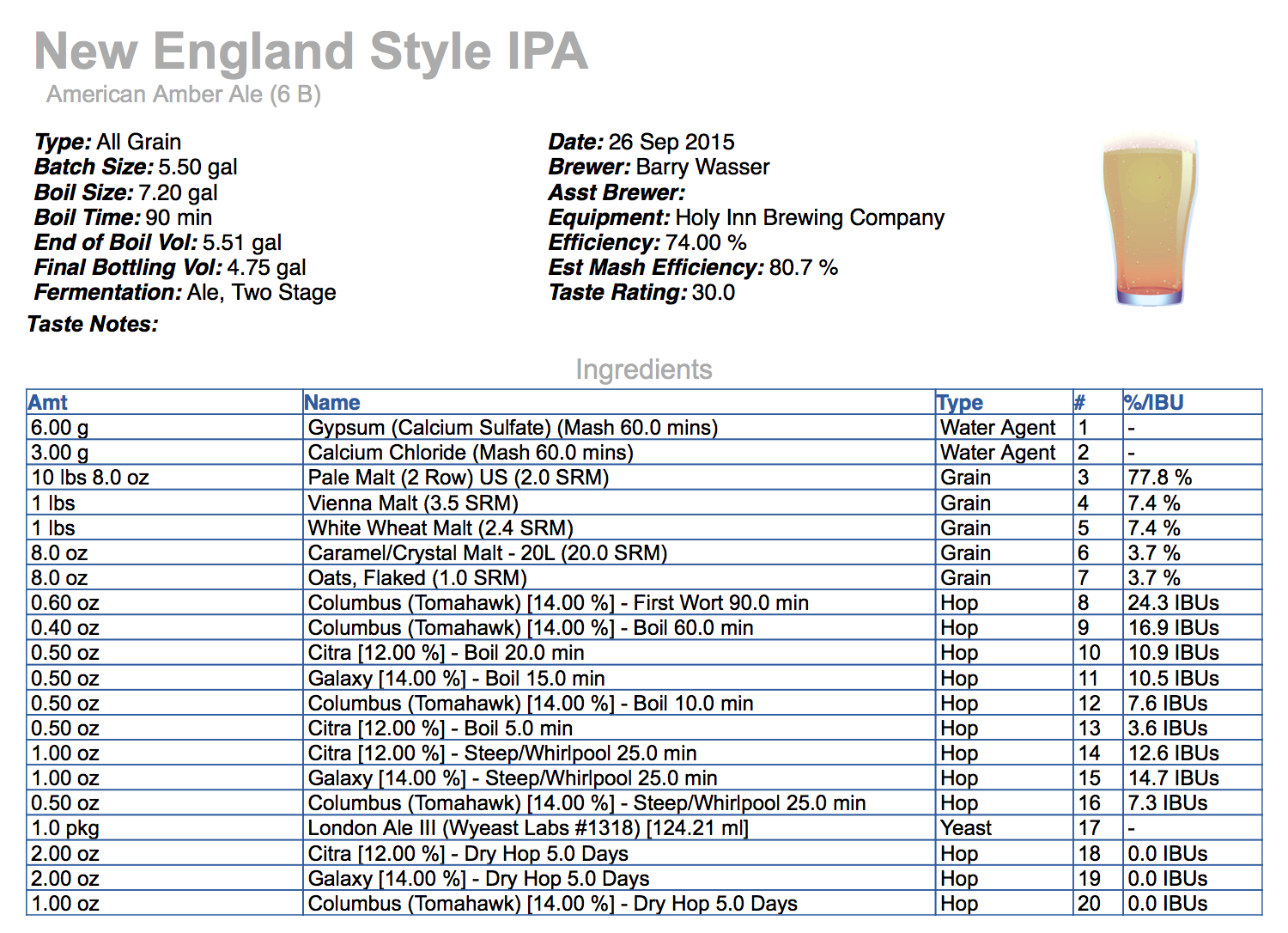
After finishing these four great beers I was inspired to put together a recipe for my own iteration of a New England style IPA. Though it may need to be tweaked a bit before I brew it, I’m happy with the first draft (below)…All feedback is welcome. Cheers!

Note: I accidently forget to the change the style to IPA in BeerSmith, but intend to do so ASAP.

Screen Shot 2015-08-26 at 11.18.03 PM
 Screen Shot 2015-08-26 at 11.18.18 PM
Posted in Beer Reviews, Homebrewing | Tagged , , , , , , | 4 Comments

Homebrew Wednesday 61: From Panic to Homebrewed Bliss


As I discussed in my previous blog post, this past Sunday’s imperial stout brew day did not go so smoothly and I therefore did not film as much as I would have for a full brew day video. I did however film a few clips detailing my reactions to the “hellish mash”, talking about the wort’s original gravity, and the start of fermentation. Hence, this week’s Homebrew Wednesday video start with that footage. Then it transitions from the panic of brew day struggles to the bliss pouring a glass of my most recent beer aka Millennium Falcon Rye IPA and giving you my initial tasting notes.

Episode Relate Links:

Ss Brewing Technologies – mash tun / All hops used were provided by Yakima Valley Hops / Grains and yeast purchased at Bitter and Esters / Millennium Falcon Rye IPA brew day / Kegs purchased from CornyKeg.com

20150812_220849Millennium Falcon Rye IPA Tasting Notes:

Aroma: At times the citrus hop notes that I picked up in the aroma and taste of this beer reminded me of Bells Two Hearted IPA in that grapefruit and orange were balanced with a fragrant floral quality that blend really well with the spiciness coming from the Millennium hops and rye malts (rye malt, flaked rye, and crystal rye). As the beer warmed I picked up I picked some peach notes and hints a freshly pealed lemons and grapefruits. While I enjoyed the aroma I was left hoping for a big more pungent fruitiness.  9/12

Appearance: The beer poured an attractive dark gold to amber (darker depending on lighting) with an off white fluffy head that hung around for most of my first glass and left minimal lacing behind. There was definite dry hop / rye haze, but from the level of clarity of this first glass I expect the beer to clear up over time. 2/3

Flavor: The taste followed the aroma quite well with a burst of citrus and floral hops quickly followed by a dry rye malt and Millennium hop spiciness which followed into the finish. As the beer warmed more orange marmalade notes came out and blended with the floral and spicy hop and malt flavors. What I liked most about the flavor is that hops and malts stayed in balance the whole time. Also, the beer didn’t finished quite clean and didn’t leave too much bitterness (86 IBUs) on my palate. With a bit more fruity hop flavor this beer’s flavor would be pretty much perfect. 16/20

Mouthfeel: This first glass had a medium mouthfeel with a great smoothness and creaminess from the rye upfront and finished with just enough dryness/bitterness and rye bite. At times a picked up a touch of astringency, but it never became overwhelming. Despite being carbonated for three days at 30 PSI and one day at 10 PSI, I still feel that the beer needs a bit more time to fully carbonate. 4/5

20150812_221358Overall Impression: As a 6.8% ABV rye IPA this beer is quite drinkable and I’m quite happy with the final result. At stated above I would just like some juicy hops upfront. So I’ll probably revert back to Wyeast 1272 next time and use more Falconer’s Flight hops in the aroma and flavor hop additions. I could see myself drinking this with spicy chicken wings and sausages and even an overstuffed corned beer or pastrami sandwich. Either way the hops and rye in the beer with complement the food and cut through any fat that’s present. 8/10

Total: 39/50

Follow up to Homebrew Wednesday 60: 

11836645_1049876651697865_7489851519321177405_nAll three of the beers that I brought to Bitter and Esters’ August beer swap were well received. I first shared a 32oz growler of my Tradition, Tradition hefeweizen and the main characteristics that my fellow home-brewers complemented it on were its balance and level of complexity. I completely agreed with them on those points, but next time I brewed this recipe I’d like to try using only German pilsner malt and white wheat and exclude the aromatic malt (melanoidin malt) in order to bring a bit more crispness to the beer.

I then cracked open a couple bottles of my Tart Tense saison which had just hit the two weeks in the bottle mark. While most of those who tried it were taken aback by its high level of lactic tartness, once discussion about the recipe ensued and they sipped more slowly, they were able to pull out flavors such as lemongrass and dill from the Sorachi Ace hops. If I do use The Yeast Bay’s Farmhouse Sour Ale blend again I will definitely make a starter to give the saison yeast strains a chance to exert themselves before the lactobacillus strains swoop in and aid their lactic tartness. If not I’d still like to brew a saison exclusively with Sorachi Ace hops to have on tap.

Lastly, I removed the green wax and cracked open a 22oz bottle of my 2014/15 Innkeeper Barleywine, which has been in bottled since November 2014. Before I discuss reactions to it a short back story is needed. Back in February of this year I got a 27/50 score at NYCHG’s Homebrew Alley competition. Judges said it was overcarbonated and had some off flavors, which I humbly agreed with. As a result I placed the rest of the batch in my fridge and keezer to stop it from carbonating further. After 2 days I wax sealed the bottled and allowed them to age for 6 months. In turn, bringing them to the beer swap was my way of doing a status check on the beer. Thankfully my steps to “save” the beer were successful and the beer, though still a bit over carbonated, is aging nicely and it a few months away from reaching its prime. As of the swap (8/5/15) its most prominent flavors are rich caramel and toffee with hints of date and fig. I’m hoping that some sherry notes will enter the equation in the next few months to complete the aged barleywine flavor profile that I’m aiming for. I’ll probably open another bottle in October and then make the call on whether I can start opening bottles more often.

Cheers and Keep on brewing!

Posted in Homebrew Wednesday | Tagged , , , , , , , | Leave a comment

Lessons Learned: The Imperial Stout Mash From Hell

20150809_192902This past Sunday I brewed an imperial stout (might be more of an imperial brown ale or porter, but more on that later), a style that I hadn’t brewed before using my new Ss InfuSsion mash tun (mistake #1 – my over-ambition)…Before recounting what went wrong, I must note that because I deviated from my usual mashing processes from the start I can place no blame on Ss Brewing Technologies for the struggles that ensued following my mashing in…In order to best describe the sequence of events that took place during the “hellish mash” and my subsequent recovery attempts, most of which took place in a state of panic and worn patience; I’ve decided to list them in bullet points and then share the lessons that I learned from this brew day in the same format.

The “Hellish Mash”:

  • Due to my new Ss InfuSsion mash tun having a false bottom I decided that I’d give underletting a try, but immediately it caused my mash tun’s thermometer to read over 10 degrees too high. After lots of stirring I added what ended up being too much cold water because the temperature just wouldn’t stabilized (it kept dropping).
  • At the start of my state of panic I added about a quart of boiling water and it hardly brought up my mash temperature. After doing so I took a reading with my usual digital thermometer and it read 7-8 degreesF lower than the mash tun’s thermometer, which in turn increased my panic.
  • I then made two more unsuccessful attempts at raising the mash temperature by bringing a gallon of runnings up to a boil and adding them back into the mash tun.
  • Enter mistake #2…While all of my mash tun thermometer struggles were ensuing I failed to take spot checks with my digital thermometer in order to check if the top half of the mash was at a reasonable mash temperature.
  • Enter mistake #3…After 90 minutes of mashing I vorlaufed and ran off my first runnings. With a first runnings gravity of 1.090 I knew I was in for a low preboil gravity…Soon after I started collecting my runnings I saw that the temperature on my mash tun thermometer went to 156F, a temperature that I could have mashed at.  However, instead of pouring some or all of my runnings back into the mash I got impatient and proceeded with my mash out and sparge.
  • After collecting my 7.2 gallons for a planned 100 minute boil I took a gravity reading and was further panicked or should I say dismayed when my refractometer read 1.075 from 22 lbs of grain. I then deduced that this was probably the worst mash efficiency that I’ve gotten since I began brewing more consistently 2 years ago.
  • In order to recover as many lost gravity points as possible I decided to add an additional 1.5 pounds of dry malt extract (DME) on top of the pound that I had already planned on using as part of my original recipe. With a new preboil gravity of 1.090 (my target was 1.098) I proceeded with the boil.
  • After 20 minutes or so I saw that my stove burner wasn’t on high so I raised it and added 10 minutes to the boil i.e. it became a 110 minute boil.
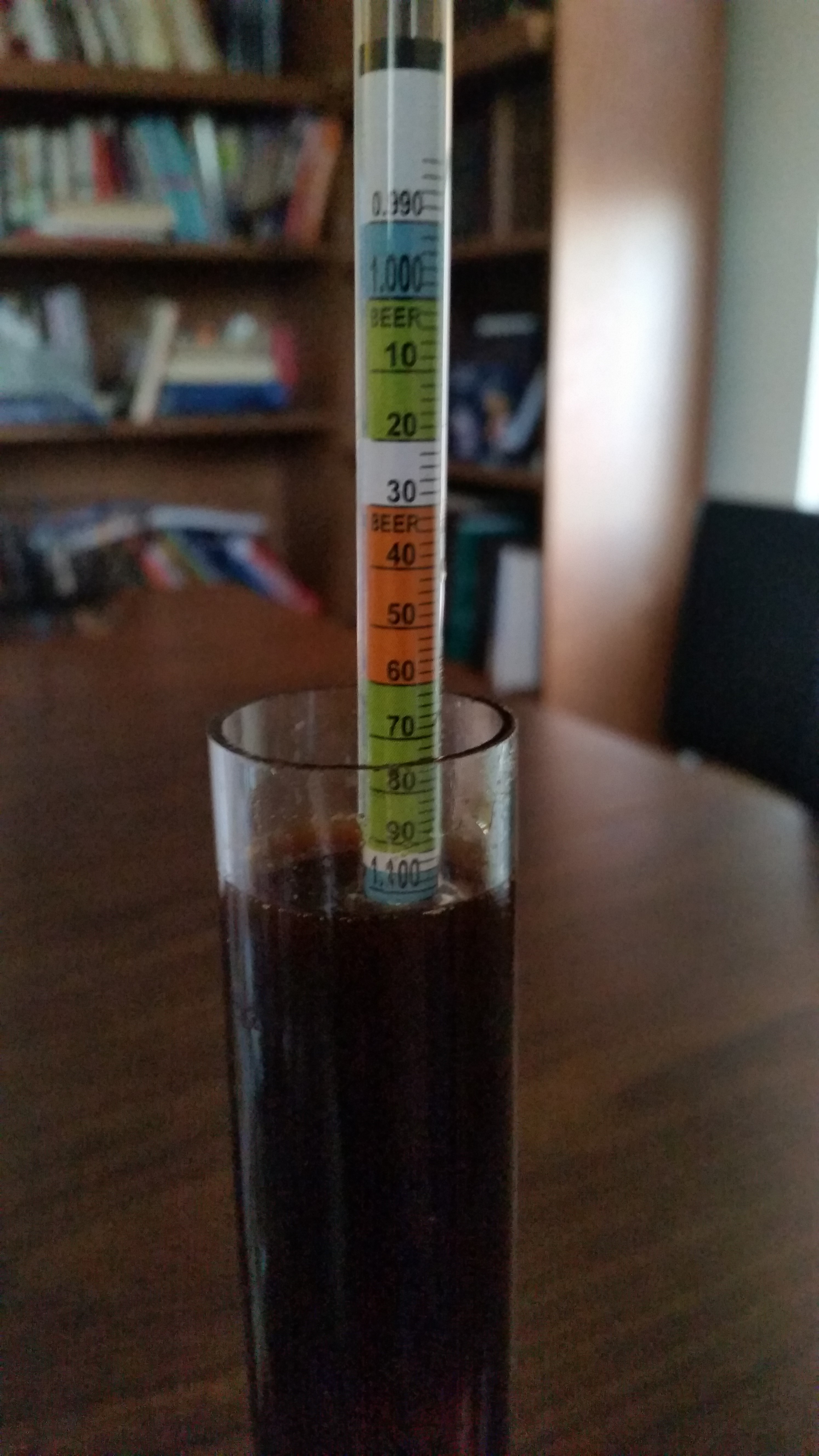
  • At the end of my boil my refractometer was giving me problems so I decided to use my hydrometer to take my original gravity reading and as you can see in the picture above it and it read 1.103. After calming down I decided that I needed to accept my missing my target OG by 11 points and focus on managing the beer’s fermentation etc…Possible mistake #4: I probably could have boiled for 10-20 minutes longer or reduced some runnings in my older kettle in order to further concentrate the wort.

Lessons learned:

  • Do NOT test out new brewing equipment by brewing a high gravity beer.
  • When testing out new equipment follow your time tested brewing processes instead of jumping at the opportunity to try new ones (techniques and processes).
  • Try your best to stay focused and utilize your brewing knowledge when things go wrong. Descending into panic mode will only make your problem/s harder to solve.
  • As per mistake #3, if an opportunity arises to fix a problem, try your best to avoid becoming impatient and take the opportunity/ies to make the necessary adjustments.
  • When brewing high gravity beers do not try new brewing techniques or processes unless absolutely necessary. The basics of high gravity brewing are hard enough to manage on brew day already.
  • Lastly, if possible, make sure to RDWHAHB during brew day to keep yourself calm and collected.

Follow up/s to brew day:

After transferring the wort to its 6 gallon Better Bottle carboy (5.25 gallons). I put it in my fermentation fridge with a blow off tube and cold crashed my 2.25 liter starter containing 2 smack packs of Wyeast 1028 London Ale over night. The next morning (Monday) I decanted off some of the starter wort and as usual didn’t decant enough and my carboy was in turn filled too high. When I returned from work  that night fermentation was off to a strong start, but I didn’t have to clean up a mess. To my surprise I woke up this (Tuesday) morning to a big mess and after cleaning it up I added more Fermcap to the wort/beer, emptied and refilled the blow off jar (keeping it half full with StarSan solution), and lowered the fermentation temperature range from 64-66F to 62-64F. Lastly, I wrote this blog post during my lunch hour at work all while worrying that I’m going to get home and have to clean up yet another mess.

Note: I plan on editing together the little bit of footage that I filmed with my phone during brew day and including it with more updates on this and other beers of mine in this week’s Homebrew Wednesday video / blog post. Cheers!

All feedback on this post is welcome…Feel free to comment below.


Posted in Homebrewing | Tagged , , , , , | 3 Comments

Homebrew Wednesday 60: Panning For Updates


After not posting an HBW video last week I chose to film a quick update video with my phone before heading out to my LHBS’ monthly bottle swap (1st Wednesday of every month). The name for this episode was inspired by my awkwardly panning my phone around between each update/topic. Cheers and HHBW!

Episode Breakdown:

  • Intro including a beer related t-shirt that my wife got me for our recent anniversary.
  • New cam-lock quick disconnects that I bought from brewhardware.com (links below).
  • Dry hopping my rye IPA aka Millennium Falcon w/ Falconer’s Flight and Columbus hops. Gravity prior to dry hopping was 1.015 or 6.45% abv
  • Bottling of my Tart Tense dry hopped sour saison (discussion, not actually bottling of the beer).
  • Which beers I brought to the Bitter and Esters August bottle swap: Tradition, Tradition Hefeweizen, Tart Tense Saison, and The Innkeeper Barleywine…I’ll be posting tasting notes on all three beers ASAP.
  • My next beer: Gorbachev’s Gift Russian Imperial Stout – testing out my new Ss mash tun and cam-lock quick disconnects.

Episode related links:

Full Ss Brewtech 10 Gallon Kettle review  Bitter and Esters (my LHBS)
Brew Hardware (BobbyfromNJ’s shop)  Brew Hardware video: Stretching Silicone Tubing over Over-sized Hose Barbs

Posted in Homebrew Wednesday | Tagged , , , , , , , , , | Leave a comment